ABC26OR0236 · Reagents Reaction Mechanisms and Named Reactions
Subject: Organic Chemistry · Chapter: Reagents Reaction Mechanisms and Named Reactions · Topic: Reagents, Reaction Mechanisms & Named Reactions – General · Exam: CSIR-NET JUNE 2014 · Marks: 2 · Difficulty: Medium
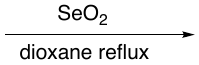
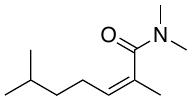
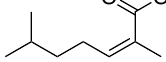
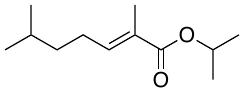
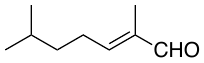
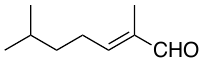
The major products A and B in the following reaction sequence are: 







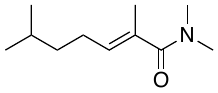
(a)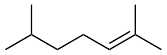

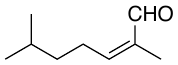
(b)
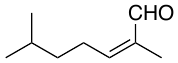
(c)

Answer
Answer (as printed): D
Explanation
$\mathrm{SeO_{2}}$ is most commonly used for allylic oxidation. First formation of allylic alcohol takes place which can be oxidized easily to a, b- unsaturated carbonyl compound if desired. The oxidation are believed to involve an ene reaction, between the alkene and the hydrated form of the dioxide, followed by a [2, 3]-sigmatropic rearrangement of the resulting allyl selenic acid and final hydrolysis Se(II) ester to the allylic alcohol. Further, oxidation of the alcohol gives the a, b- unsaturated carbonyl compound. A notable application of this reaction is in the oxidation of 1,1 dimethyl alkene to the corresponding E allylic alcohols or aldehydes by selective attack on the E- methyl group. The aldehyde formed thus reacts with cyanide to form cyanohydrin. Oxidation of cyanohydrin with $\mathrm{MnO_{2}}$ to give acyl nitrile, which then reacts with alcohol solvent to form an ester.