Biography · Chemist no. 109 of 350
Adolf Windaus: Complete Life and Legacy
Introduction
Adolf Otto Reinhold Windaus (1876–1959) was a German organic chemist who spent his working life on the sterols, the family of molecules that includes cholesterol and the provitamins of vitamin D. He proved that sunlight turns a sterol in the skin into vitamin D, and in this way explained how rickets can be prevented. He was awarded the Nobel Prize in Chemistry in 1928. As professor at Göttingen, he led one of the best organic chemistry institutes in Europe and trained Adolf Butenandt, a later Nobel laureate. His legacy is the foundation of vitamin and steroid chemistry.
Early Life and Family
Adolf Windaus was born in Berlin on 25 December 1876 into a family of textile manufacturers. He grew up in Berlin in a prosperous middle-class family.
He entered the university first to study medicine, since he wished to understand disease. This early medical interest remained strong all his life, and it explains why his chemical research always tended toward substances that matter to the human body: cholesterol, bile acids, vitamins, histamine. He combined the chemist's eye for structure with the physician's concern for health.
Education and Mentors
Windaus began studying medicine at Freiburg and Berlin. At Freiburg he came under the influence of Heinrich Kiliani, a distinguished carbohydrate and glycoside chemist known for the Kiliani–Fischer synthesis, and became interested in chemistry more than clinical medicine. He completed his doctorate in 1900 under Kiliani, on the digitonin-cholesterol complex, a topic that would shape his career. He then spent some years working at Freiburg as a lecturer, studying cholesterol, and became associate professor in 1906.
His Freiburg time with Kiliani gave him the skills of a carbohydrate chemist, and this was useful when he later worked on glycosides, the sugar-containing natural products to which digitonin belongs. He kept the habit of working with the microscopic quantities available in natural products research.
Career Timeline
| Year | Event |
|---|---|
| 1876 | Born in Berlin on 25 December. |
| 1900 | Doctorate at Freiburg under Heinrich Kiliani. |
| 1906 | Becomes associate professor at Freiburg. |
| 1907 | Synthesises histamine with Vogt. |
| 1913 | Appointed professor at the University of Innsbruck. |
| 1915 | Moves to Göttingen as successor to Otto Wallach, director of the chemical laboratory. |
| 1920s–30s | Works on provitamin D and the structure of sterols and bile acids. |
| 1928 | Awarded the Nobel Prize in Chemistry. |
| 1936 | Shows that vitamin D3 arises from 7-dehydrocholesterol. |
| 1959 | Dies in Göttingen on 9 June. |
Major Scientific Contributions
- Sterol structure: a lifetime of work on cholesterol and phytosterols, ending with the correct four-ring skeleton in 1932. See our discovery post.
- Vitamin D: identified ergosterol as provitamin D2, and 7-dehydrocholesterol as provitamin D3; characterised vitamin D as a secosteroid.
- Cholesterol and atherosclerosis: in 1910, found much more cholesterol in diseased arteries than in healthy ones.
- Digitonin method: used selective precipitation of 3β-hydroxy sterols to isolate and measure them.
- Histamine: synthesised imidazolylethylamine (histamine) in 1907 with Vogt, before its biological role was known.
- Thiamine (vitamin B1): contributed to the structural work on the antineuritic vitamin in the 1930s.
- Bile acids: contributed to establishing the link between cholesterol and bile acids, together with Heinrich Wieland.
Awards, Honours and Nobel Prize
The Nobel Prize in Chemistry for 1928 was awarded to Adolf Windaus "for the services rendered through his research into the constitution of the sterols and their connection with the vitamins". It was awarded alongside the delayed 1927 prize that went to Heinrich Wieland, so the two German pioneers of steroid chemistry were honoured together.
He was a member of scientific academies and received honorary degrees. Perhaps the greatest honour is practical: millions of children have been protected from rickets by vitamin D whose chemistry he clarified.
Personality, Struggles and Lesser-Known Facts
- From medicine to chemistry. He began as a medical student, and the shift to chemistry was influenced by Kiliani. He used his medical interests as a guide for the rest of his career.
- A brilliant teacher of Nobel laureates. Adolf Butenandt, who won the Nobel Prize in Chemistry in 1939 for sex hormone research, did his doctorate under Windaus in Göttingen. Windaus also taught many chemists who became leaders in industry.
- Persistence. The sterol structure took three decades. Early proposals were wrong, and the correction in 1932 after X-ray evidence meant that he had to abandon formulas he had published himself.
- Under the Nazi regime. Göttingen lost many outstanding scientists after 1933 when Jewish colleagues were dismissed. Windaus remained in Germany through the war years; students interested in this period should consult reliable histories of Göttingen science.
Legacy and Influence on Modern Chemistry
The sterol work of Windaus helped to open the way to a long line of Nobel Prize winning discoveries: Butenandt's isolation of the sex hormones, Reichstein's and Kendall's work on cortisone, Konrad Bloch's and Feodor Lynen's work on cholesterol biosynthesis, and Brown and Goldstein's studies of the LDL receptor. Statin drugs, which are among the most widely used medicines in India and worldwide, act on the pathway to cholesterol that these scientists mapped.
In nutrition, his work gave the world the means to prevent rickets by supplements and food fortification. The chemistry of the vitamin D photochemical ring opening is also a classical example in the teaching of pericyclic reactions, connecting organic photochemistry with human health. Finally, the Göttingen school of organic chemistry that he led from 1915 continued to produce leading chemists for decades.
Lessons for Students
- Link chemistry to a human need. Windaus's lifelong interest in disease shaped his choices.
- Be ready to revise your own results when new evidence appears, as he did with the sterol skeleton.
- Use selective reagents. The digitonin test made difficult mixtures manageable.
- Collaboration with nutrition scientists and physicians gave the key to vitamin D.
- Good teaching is part of good science; his students carried his methods into new fields.
Quick Facts Box
- Born: 25 December 1876, Berlin, Germany.
- Died: 9 June 1959, Göttingen, Germany.
- Nationality: German.
- Field: Organic chemistry; sterols, vitamins.
- Famous for: Sterol structure; provitamin D; vitamin D photochemistry.
- Nobel: Chemistry, 1928.
FAQ
What did Windaus win the Nobel Prize for?
For research on the constitution of the sterols and their connection with the vitamins, mainly vitamin D.
Who succeeded Wallach at Göttingen?
Windaus did, in 1915. Wallach had himself won the Chemistry Nobel Prize in 1910.
Which Nobel laureate studied under Windaus?
Adolf Butenandt, who received the 1939 Nobel Prize in Chemistry for his work on sex hormones.
Why is cholesterol linked to his name?
He worked out much of its chemistry and was among the first to show that cholesterol accumulates in atherosclerotic plaques.
Published by ABC Chemistry — IIT-JAM | CSIR-NET | GATE Chemistry Coaching. Visit abcchemistry.com
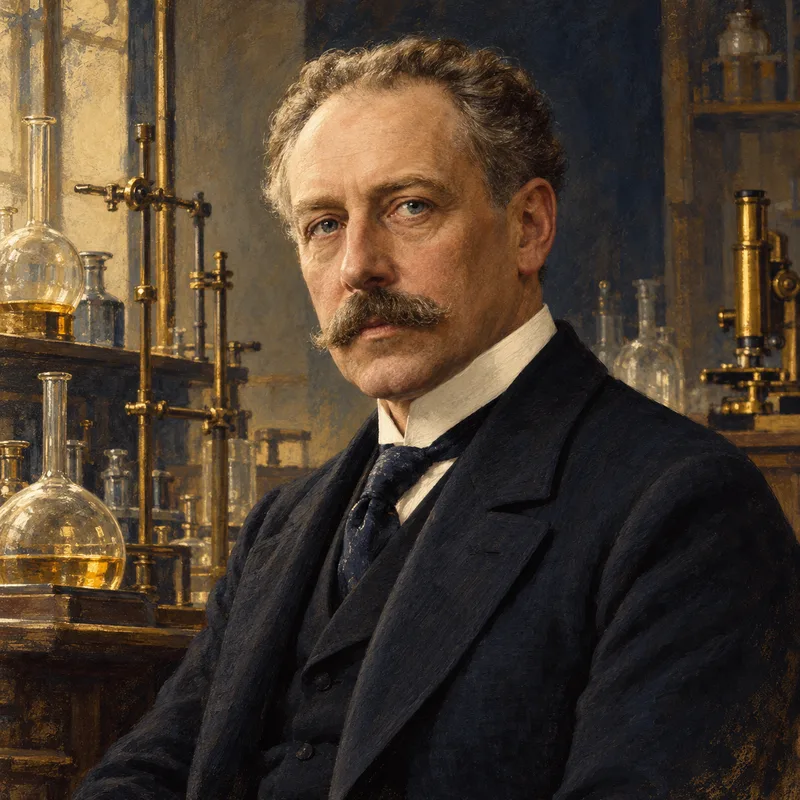
About the chemist
Adolf Windaus
1876-1959 · Germany · Nobel Chemistry 1928
Sterols and vitamin D