Biography · Chemist no. 277 of 350
Albert Ghiorso (1915–2010): The Instrument Builder Who Added Twelve Elements
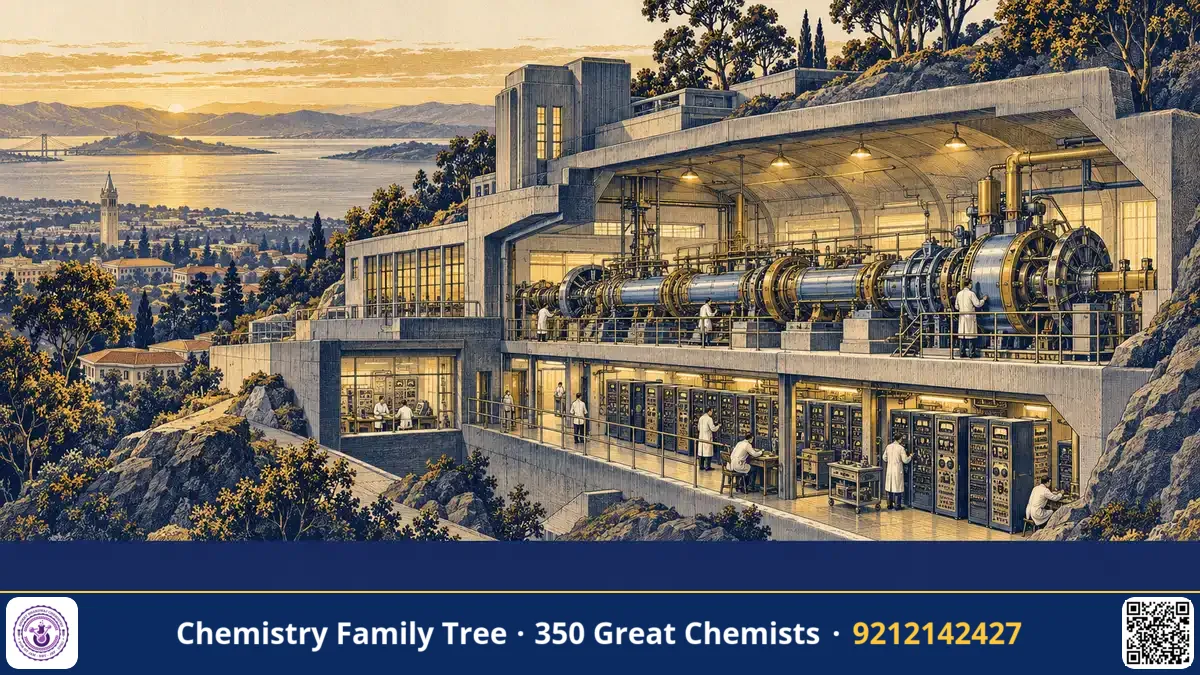
Albert Ghiorso was an American nuclear scientist, remembered as the co-discoverer of twelve elements, from americium (95) to seaborgium (106). He did not hold a doctorate; he was an engineer by training and a self-taught nuclear scientist, who earned his place through brilliant detectors and electronics. Together with Glenn Seaborg, he extended the periodic table beyond uranium and trained generations of nuclear chemists.
Early Life and Family
Albert Ghiorso was born on 15 July 1915 in Vallejo, California, USA. His family was of Italian origin. He grew up in the San Francisco Bay area during the early days of radio. As a boy, he was fascinated by electronics and built radio equipment; he was an amateur radio operator and was known throughout his life for his practical, hands-on skills with electrical devices.
Education and Mentors
He studied electrical engineering at the University of California, Berkeley, graduating in 1937. He did not pursue a doctoral degree. In 1942 he joined the Manhattan Project's Metallurgical Laboratory at the University of Chicago, where he met Glenn Seaborg. There he built sensitive radiation detectors. His key mentors were Seaborg and Ernest Lawrence. After the war, he returned to Berkeley, where he spent almost his entire career.
Career Timeline
| Year | Event |
|---|---|
| 1915 | Born in Vallejo, California (15 July). |
| 1937 | Graduates in electrical engineering from UC Berkeley. |
| 1942 | Joins the Metallurgical Laboratory in Chicago for the Manhattan Project. |
| 1944–45 | Co-discovers americium and curium. |
| 1946 | Returns to Berkeley (Radiation Laboratory). |
| 1949–50 | Co-discovers berkelium and californium. |
| 1952–53 | Co-discovers einsteinium and fermium from nuclear test debris. |
| 1955 | Co-discovers mendelevium. |
| 1958 | Nobelium experiments at the Berkeley HILAC (priority later disputed). |
| 1961 | Co-discovers lawrencium. |
| 1969–1974 | Leads teams that produce rutherfordium, dubnium and seaborgium. |
| 1970s–1990s | Continues work on heavy-ion accelerators (SuperHILAC, Bevalac) and superheavy elements at Berkeley. |
| 2010 | Dies in Berkeley, California (26 December). |
Major Scientific Contributions
Twelve elements. He is a co-discoverer of americium, curium, berkelium, californium, einsteinium, fermium, mendelevium, nobelium, lawrencium, rutherfordium, dubnium and seaborgium. See our discovery article for the reactions and methods used.
Mendelevium and the one-atom chemistry. The mendelevium experiment is often cited as a high point of ingenuity. Only a few atoms were made in each run, so each experiment was a race against the short half-life, and the result relied on the position at which the atoms came off an ion-exchange column.
²⁵³Es + ⁴He → ²⁵⁶Md + ¹n
Instruments and automation. Ghiorso led the design of detector systems with computers to record decay chains. For elements 104–106, he used rotating wheels and moving tape systems to move atoms quickly from the target to detectors.
Heavy-ion accelerators. He played a leading role in the HILAC and the SuperHILAC at Berkeley, which accelerated heavy ions to bombard targets. Later, the Bevalac (a combination of the SuperHILAC and the Bevatron) allowed heavy ions to be used in studies of nuclear matter and in cancer therapy.
Awards, Honours and Nobel Prize
Ghiorso did not receive a Nobel Prize. Seaborg and McMillan received the 1951 Nobel Prize in Chemistry for the discovery of the transuranium elements, an award that did not include Ghiorso, who began his major discoveries after that date. He received scientific awards and honours during his long career. Element 106, seaborgium, was named after his friend Glenn Seaborg while Seaborg was still alive.
Personality, Struggles and Lesser-Known Facts
- No doctorate. He had a Bachelor's degree only. His example shows that skills in practical engineering can make a scientist as valuable as a theorist.
- Credit disputes. The claims of Berkeley and the Soviet Union's Joint Institute for Nuclear Research at Dubna for elements 102–106 led to the "Transfermium Wars", with arguments over discovery and naming that lasted until 1997. Berkeley scientists, including Ghiorso, defended their claims.
- Ham radio. His lifelong interest in amateur radio fed his passion for electronics.
- Long career. He worked in nuclear science for more than six decades.
- A handful of atoms. The mendelevium discovery began with a sample of einsteinium far too small to see, and each experiment produced only a few atoms of the new element.
Legacy and Influence on Modern Chemistry
Ghiorso's elements are present in everyday life: americium in smoke detectors, californium in neutron sources, curium in space power research. The method he developed of correlating decay chains is used in labs in the USA, Germany, Russia, Japan and other countries to discover new superheavy elements. The completed seventh period of the periodic table, with elements up to 118, owes much to the foundations he laid. For Indian students, he is a model for how engineering skill and chemistry combine. Indian nuclear laboratories use related actinide separation chemistry.
Lessons for Students
- Good instruments make new science. Build and understand your tools.
- You do not need every degree to contribute at the highest level, but you need dedication and skill.
- Teamwork matters: all twelve discoveries were group achievements.
- Be ready to defend your results with evidence when others dispute them.
Quick Facts
- Born: 15 July 1915, Vallejo, California, USA.
- Died: 26 December 2010, Berkeley, California, USA.
- Nationality: American.
- Field: Nuclear chemistry and instrumentation.
- Famous for: Co-discovering twelve elements (95–106).
- Nobel Prize: None.
FAQ
Which elements did Ghiorso co-discover?
Elements 95 to 106: Am, Cm, Bk, Cf, Es, Fm, Md, No, Lr, Rf, Db and Sg.
Did he have a PhD?
No. He had an engineering degree from Berkeley.
Who was his main collaborator?
Glenn T. Seaborg, with many other Berkeley colleagues such as Stanley Thompson, Gregory Choppin and Torbjørn Sikkeland.
Where did he work?
Mostly at the Radiation Laboratory in Berkeley, later called the Lawrence Berkeley Laboratory.
Published by ABC Chemistry — IIT-JAM | CSIR-NET | GATE Chemistry Coaching. Visit abcchemistry.com
About the chemist
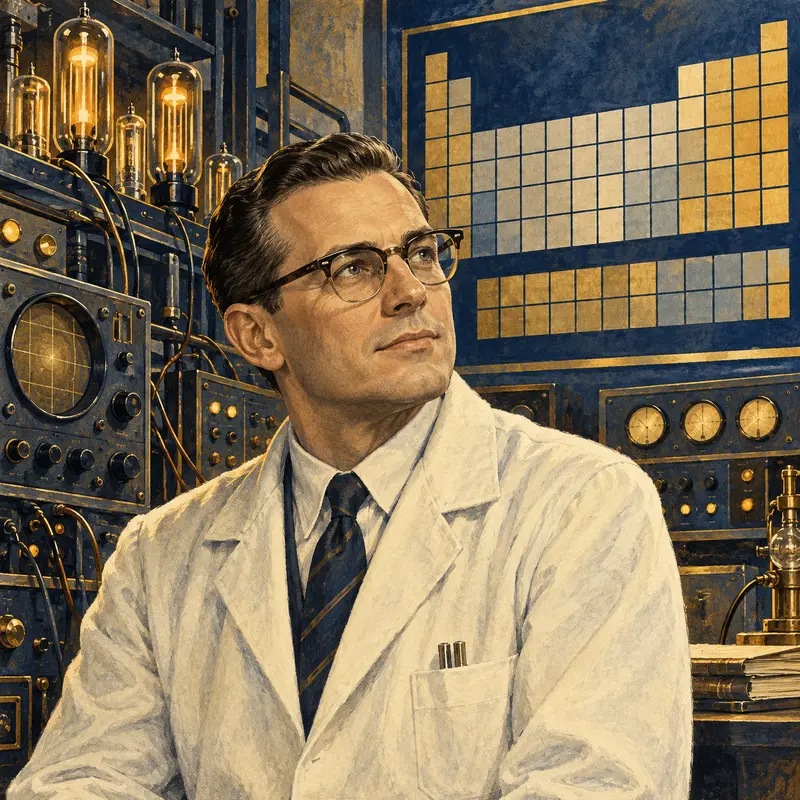
Albert Ghiorso
1915-2010 · United States
Co-discovered many transuranium elements