Biography · Chemist no. 133 of 350
Alexander Robertus Todd, Baron Todd (1907-1997): The Scottish Chemist Who Built the Molecules of Life
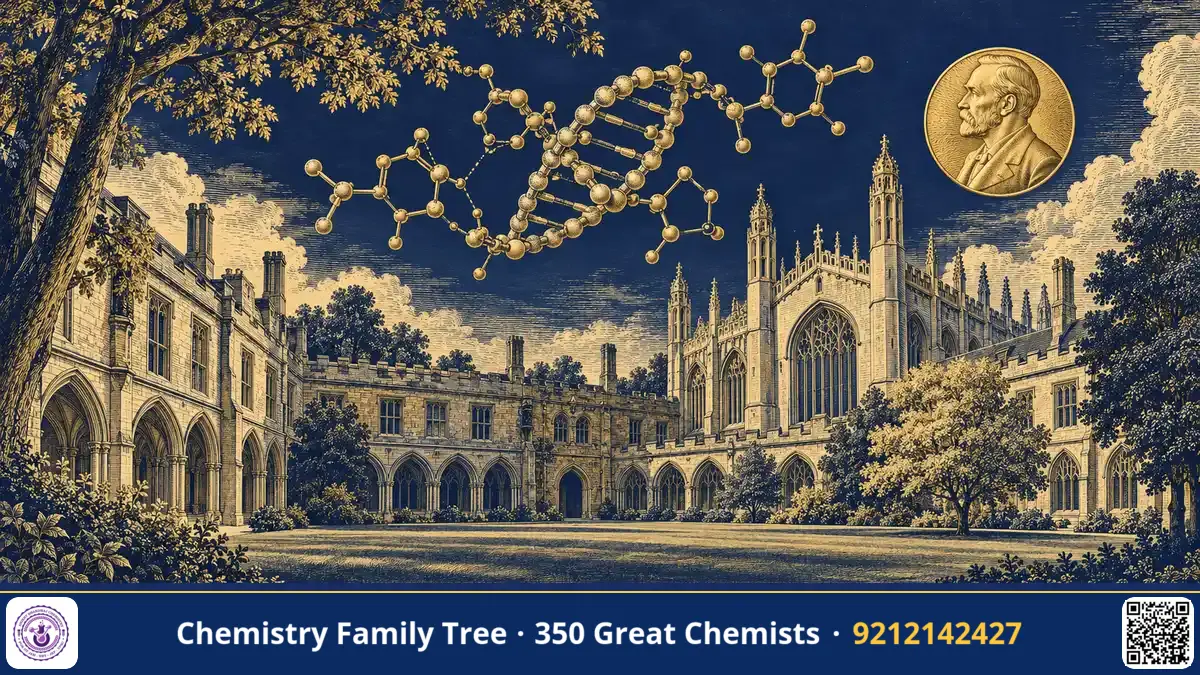
Alexander Todd was a Scottish organic chemist who determined the structure of nucleotides and nucleosides, synthesised ATP and several coenzymes, and clarified how DNA and RNA are linked together. For this he received the 1957 Nobel Prize in Chemistry. He also became one of the most influential scientific statesmen in Britain, serving as President of the Royal Society and as a government adviser, and was made a life peer. His legacy in one line: he showed that the molecules of heredity and energy can be understood, and made, by organic chemistry.
Early Life and Family
Todd was born on 2 October 1907 in Glasgow, Scotland. His family lived in modest circumstances, but education was valued at home. Todd attended Allan Glen's School in Glasgow, a school that emphasised science and technical subjects, and it was there that his enthusiasm for chemistry grew.
Education and Mentors
He studied chemistry at the University of Glasgow, receiving a BSc in 1928. He then moved to Germany and obtained his doctorate at the University of Frankfurt in 1931 under Walter Borsche, with a thesis on the chemistry of bile acids. He returned to Britain and went to Oxford, working with Sir Robert Robinson, one of the great organic chemists, on natural products including anthocyanin pigments; he received a DPhil in 1933. He then worked at the University of Edinburgh and the Lister Institute in London, where he began his work on vitamins and nucleotides. These three schools, Glasgow, Frankfurt and Oxford, gave him strong skills in structure determination and synthesis.
Career Timeline
| Year | Event |
|---|---|
| 1907 | Born in Glasgow |
| 1928 | BSc, University of Glasgow |
| 1931 | PhD, University of Frankfurt (bile acids) |
| 1933 | DPhil, University of Oxford, with Robert Robinson |
| 1934-1936 | Works in Edinburgh and at the Lister Institute, London, on vitamin B1 and related compounds |
| 1937 | Marries Alison Dale, daughter of Sir Henry Dale |
| 1938 | Professor of Organic Chemistry, University of Manchester |
| 1944 | Professor of Organic Chemistry, University of Cambridge |
| 1948 | Synthesis of ATP |
| 1957 | Nobel Prize in Chemistry |
| 1962 | Created a life peer, Baron Todd of Trumpington |
| 1963-1978 | Master of Christ's College, Cambridge |
| 1975-1980 | President of the Royal Society |
| 1997 | Dies in Cambridge |
Major Scientific Contributions
Nucleosides and nucleotides. Todd and his co-workers established that the sugar in nucleosides is a furanose ring attached through a β-glycosidic bond to the base, and that nucleotides carry the phosphate at the 3′, 5′ (or 2′) position of the sugar. The synthesis of nucleotides confirmed the structures.
ATP and coenzymes. His group's chemical synthesis of adenosine triphosphate in 1948 showed that ATP is a nucleotide with two phosphoanhydride bonds. They also synthesised ADP, FAD and related coenzymes.
Phosphodiester linkage. With D. M. Brown, he showed that DNA and RNA chains are joined by 3′-5′ phosphodiester bonds. This was key background to the 1953 DNA double helix model.
Vitamins and natural products. He contributed to the chemistry and synthesis of vitamin B1, vitamin E, vitamin B12 (degradation studies that helped establish its structure) and the active principles of cannabis.
See the companion discovery article for the chemistry in detail.
Awards, Honours and Nobel Prize
Todd received the 1957 Nobel Prize in Chemistry "for his work on nucleotides and nucleotide co-enzymes". He was elected a Fellow of the Royal Society in 1942, received the Royal Medal and the Copley Medal, was knighted in 1954, and became Baron Todd in 1962. He was appointed to the Order of Merit in 1977. He served as President of the Royal Society from 1975 to 1980, and held the presidencies of the Chemical Society and of the British Association for the Advancement of Science. He was awarded many honorary degrees around the world.
Personality, Struggles and Lesser-Known Facts
- Todd was born into a family of modest means and became a lord. He remained known for his practical, straightforward Scottish manner.
- His wife Alison was the daughter of Sir Henry Dale, himself a Nobel laureate in Physiology or Medicine (1936), which linked chemistry and physiology in the family.
- Besides his own research, he took heavy responsibility as an adviser. From 1952 to 1964 he chaired the Advisory Council on Scientific Policy in Britain, influencing government policy on science and universities.
- He trained many students and postdoctoral fellows, including researchers from overseas, and built Cambridge's organic chemistry department into a world-class centre.
- He was Master of Christ's College, Cambridge, from 1963 to 1978, and was active in the intellectual life of the university as well as the laboratory.
Legacy and Influence on Modern Chemistry
The structure of nucleic acids that Todd clarified is the basis for genetics, DNA sequencing, PCR and modern gene editing. Methods of nucleotide phosphorylation that he developed led, through many hands, to automated oligonucleotide synthesis and the production of RNA and DNA drugs. Nucleoside analogues used as antivirals and anticancer drugs are direct descendants of nucleoside chemistry. His textbooks and his many students shaped organic chemistry in Britain. For Indian students, topics such as nucleoside and nucleotide structure, the 3′-5′ phosphodiester linkage, and ATP chemistry are core material in organic and bioorganic chemistry for IIT-JAM, CSIR-NET and GATE.
Lessons for Students
- Master synthesis. Proving a structure by making the molecule remained Todd's strongest argument.
- Study widely under different mentors, as Todd did in Glasgow, Frankfurt and Oxford.
- Combine research with service to the scientific community.
- Choose problems that connect chemistry to life, because they stay important for generations.
Quick Facts Box
- Born: 2 October 1907, Glasgow, Scotland
- Died: 10 January 1997, Cambridge, England
- Nationality: British (Scottish)
- Field: Organic and bioorganic chemistry
- Famous for: Structure and synthesis of nucleotides, ATP and coenzymes; 3′-5′ phosphodiester link
- Nobel Prize: Chemistry, 1957
FAQ
Why was Todd made a lord?
He was created a life peer in 1962 in recognition of his scientific achievements and service as a scientific adviser to government.
Who was his supervisor at Oxford?
Sir Robert Robinson, himself a Nobel laureate in Chemistry (1947).
What did he do for DNA research?
He proved that nucleotides are joined by 3′-5′ phosphodiester links, which is essential to understanding DNA and RNA structure.
Where did he spend most of his career?
At the University of Cambridge, where he was Professor of Organic Chemistry from 1944.
Published by ABC Chemistry — IIT-JAM | CSIR-NET | GATE Chemistry Coaching. Visit abcchemistry.com
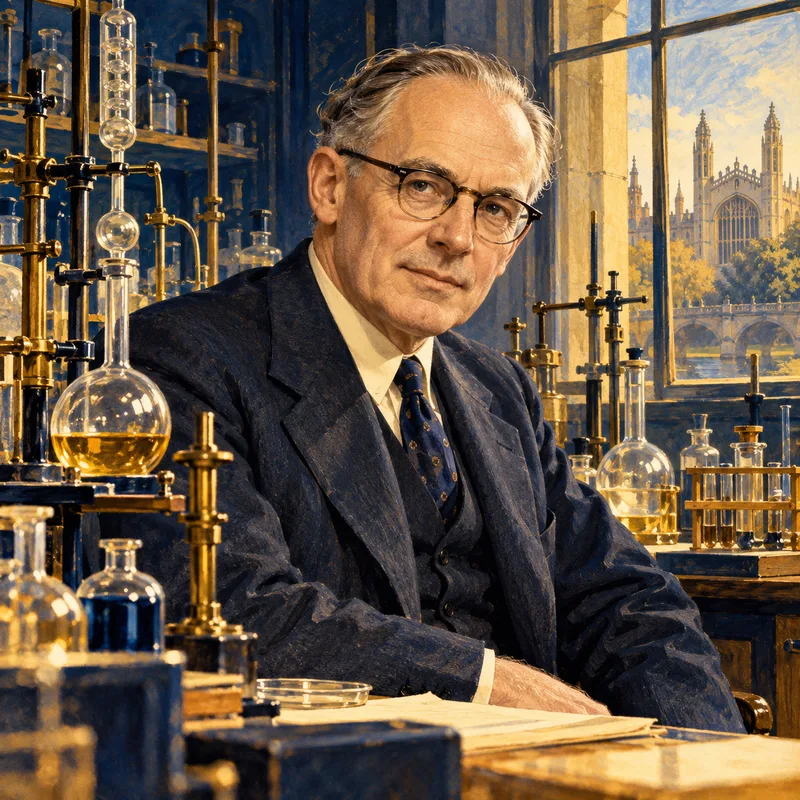
About the chemist
Alexander Todd
1907-1997 · United Kingdom · Nobel Chemistry 1957
Nucleotides and nucleotide coenzymes