Biography · Chemist no. 350 of 350
Alice Ball: The Young Chemist Whose Work Helped Thousands With Leprosy
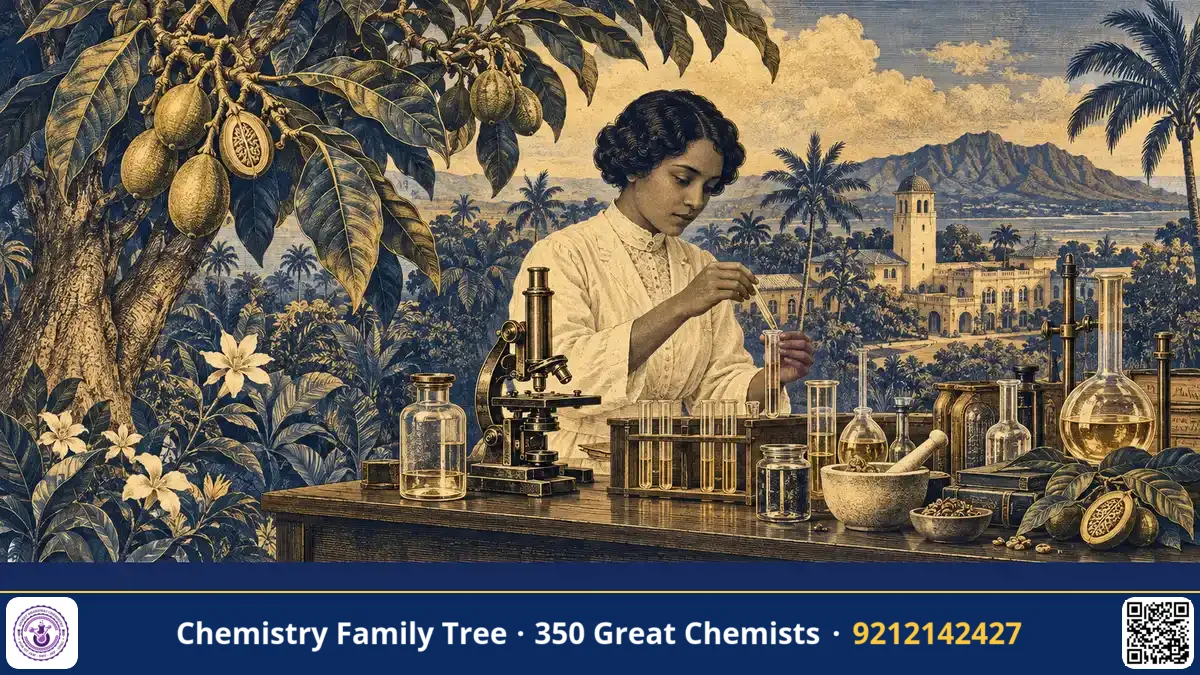
Alice Augusta Ball (1892-1916) was an African American chemist who, at the age of just 23, found a way to turn chaulmoogra oil into an injectable treatment for leprosy (Hansen's disease). Her method, completed in 1915, helped patients in Hawaii and around the world for about thirty years. She died the next year, aged 24, and for many decades her contribution was not properly credited. Her one-line legacy: a brilliant young scientist who broke racial and gender barriers, and whose work became the first effective treatment for a feared disease. Her story is now a source of pride for students everywhere.
Early Life and Family
Alice Ball was born on 24 July 1892 in Seattle, Washington. Her family was educated and accomplished. Her father, James Presley Ball Jr., was a lawyer, newspaper editor and photographer, and her mother, Laura, was also a photographer. Her grandfather, James Presley Ball Sr., was a well-known African American photographer who pioneered daguerreotype portraiture and ran studios in Cincinnati and elsewhere. This artistic and scientific background, with chemistry involved in photography, may have encouraged her interest in the subject. Around 1902 the family moved to Honolulu, Hawaii, partly because of her grandfather's health, and they returned to Seattle a few years later. Alice completed her schooling in Seattle, where she showed ability in science.
Education and Mentors
Ball attended Seattle High School and then the University of Washington. There she earned two bachelor's degrees: a Bachelor of Science in pharmaceutical chemistry (1912) and a second in pharmacy (1914). While still a student she co-authored a paper in the Journal of the American Chemical Society with her chemistry professor, which was a rare honour for an undergraduate at the time. She received a scholarship to continue her studies at the College of Hawaii (now the University of Hawaii at Manoa), where she earned a master's degree in chemistry in 1915. She was the first woman and the first African American to receive a master's degree from the college. At Hawaii she worked with the physician Harry Hollmann, who treated leprosy patients and needed an injectable medicine. Her earlier Washington chemistry teacher, William Dehn, was her co-author.
Career Timeline
| Year | Event |
|---|---|
| 1892 | Born in Seattle, Washington |
| 1912 | BS in pharmaceutical chemistry, University of Washington |
| 1914 | BS in pharmacy, University of Washington |
| 1914 to 1915 | Moves to Hawaii for graduate study at the College of Hawaii |
| 1915 | Earns master's degree; develops the injectable chaulmoogra preparation (Ball Method); becomes the college's first female chemistry instructor |
| 1916 | Falls ill and dies in Honolulu on 31 December, aged 24 |
| 1922 | Harry Hollmann publishes a paper crediting her and naming it the Ball Method |
| 2000 | University of Hawaii honours her; 29 February is declared "Alice Ball Day" in Hawaii |
Major Scientific Contributions
- The Ball Method: conversion of the fatty acids of chaulmoogra oil into ethyl esters, which could be injected.
- Chemistry of chaulmoogra acids: work on hydnocarpic acid and chaulmoogric acid, both with a cyclopentene ring.
- Applied chemistry: she used saponification, acidification and esterification:
RCOOH + C₂H₅OH ⇌ RCOOC₂H₅ + H₂O. - Plant chemistry: her research in Hawaii also included the chemistry of the kava plant.
The companion discovery article explains the reactions step by step.
Awards, Honours and Nobel Prize
Alice Ball did not receive a Nobel Prize, and little formal recognition in her lifetime. The honours that followed came later:
- In 2000, the University of Hawaii awarded her a Regents' Medal of Distinction, posthumously.
- The lieutenant governor of Hawaii declared 29 February 2000 as "Alice Ball Day", and it is marked in leap years.
- In 2007 the university placed a bronze plaque on the campus at the base of the only chaulmoogra tree, honouring her.
- She has also been included in lists and exhibitions about pioneering women of science and African American scientists.
Personality, Struggles and Lesser-Known Facts
- Youth and speed. She completed her work on the injectable form within about a year, while working on her master's degree.
- Two firsts at once. She was both the first woman and the first African American to gain a master's from the College of Hawaii, as well as the first woman to teach chemistry there.
- Credit denied. After her death, the college president, Arthur L. Dean, continued her work and published it without crediting her, and the technique became known for a while as the "Dean Method". Hollmann later wrote a paper that gave her credit and renamed it the Ball Method in 1922.
- A short life. She fell ill in late 1916 and died on 31 December at the age of 24. The cause of death is described differently in different sources, and students should treat popular stories with care.
- A lost name. Her record was largely forgotten until historians and university staff revived her story in later decades.
Legacy and Influence on Modern Chemistry
Many patients who had spent years in isolation settlements, such as Kalaupapa on Molokai, were able to return home because of the injections. The method was used worldwide, including in leprosy centres in India, until the sulphone drug dapsone was introduced in the 1940s, followed by multidrug therapy in the 1980s. Today leprosy is curable. The chemistry of Ball's work, esterification, saponification and transesterification, is basic organic chemistry, now used to make everything from biodiesel to prodrugs. Her story also helped to start important conversations about credit and recognition in science, especially for women and people of colour. Her life shows how much talent may be lost when opportunity is unequal.
Lessons for Students
- Age is not a limit. Important discoveries can be made at any stage.
- Apply basic reactions creatively. Esterification is a standard school-level reaction, yet in her hands it helped to heal.
- Keep records and publish. Documenting work protects your credit.
- Work with others. Her partnership with a physician linked the laboratory with patients.
- Remember those left out. Check history for people whose contributions were overlooked.
Quick Facts Box
- Born: 24 July 1892, Seattle, Washington, USA
- Died: 31 December 1916, Honolulu, Hawaii, aged 24
- Nationality: American
- Field: Pharmaceutical and organic chemistry
- Famous for: The Ball Method, injectable chaulmoogra oil esters for leprosy (1915)
- Nobel Prize: None; University of Hawaii Regents' Medal of Distinction (2000, posthumous)
FAQ
What is the Ball Method?
It is a process that converts the active fatty acids in chaulmoogra oil into ethyl esters, which can be injected to treat leprosy.
Why was she not credited at first?
She died young, before publishing her results, and the college president published the work and called it his own method until a physician later restored her credit.
Is leprosy curable today?
Yes. Multidrug therapy, provided free by the WHO, cures it, and early treatment prevents disability.
Which tree gives chaulmoogra oil?
Trees of the genus Hydnocarpus, such as Hydnocarpus wightianus, found in India and South-East Asia.
Published by ABC Chemistry — IIT-JAM | CSIR-NET | GATE Chemistry Coaching. Visit abcchemistry.com
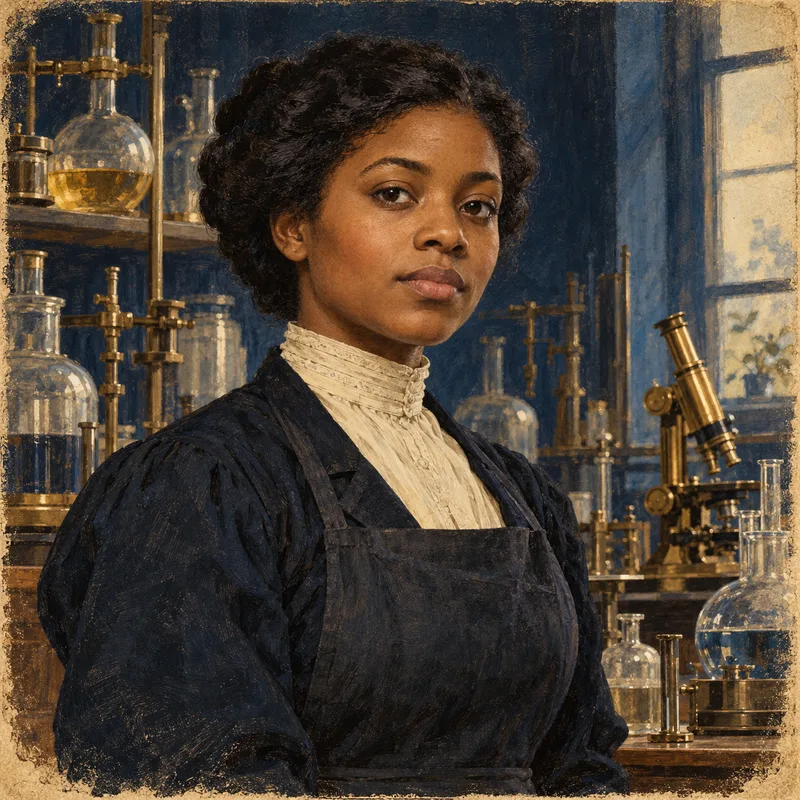
About the chemist
Alice Ball
1892-1916 · United States
Ball method for leprosy treatment