Biography · Chemist no. 125 of 350
Arne Tiselius: The Swedish Pioneer of Electrophoresis and Chromatography
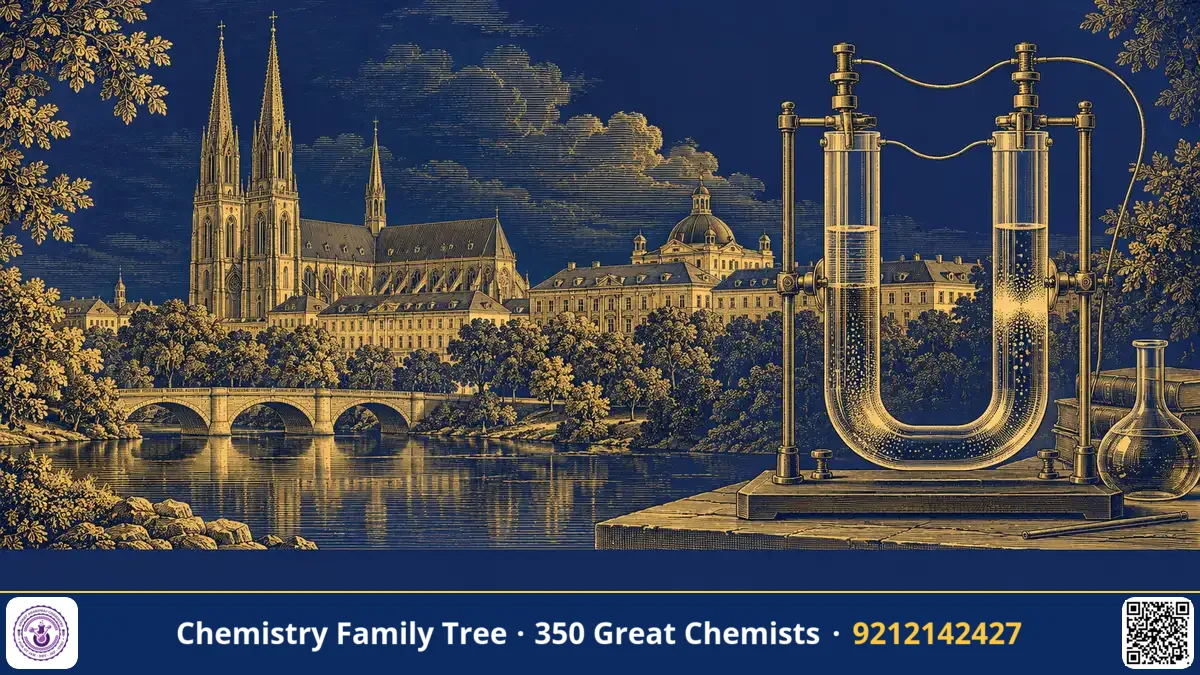
Arne Wilhelm Kaurin Tiselius (1902-1971) was a Swedish biochemist who spent most of his career at Uppsala University. He developed moving-boundary electrophoresis, used it to show that blood serum contains albumin and several globulins, and improved adsorption chromatography. He received the Nobel Prize in Chemistry for 1948 and later served as a leader of the Nobel Foundation. His legacy is the set of separation methods that every biochemistry and molecular biology laboratory still uses.
Early Life & Family
Tiselius was born on 10 August 1902 in Stockholm, Sweden. His father, Hans Abraham J. Tiselius, was an insurance man, and he died when Arne was only about seven years old. His mother, Rosa Kaurin, came from a Norwegian family, and this explains his middle name Kaurin. After the death of his father, the family moved to Gothenburg, where he grew up and attended school. His mother raised him in a modest household, and he developed his interests at school in chemistry and biology.
In 1930 he married Greta Dalén, and the couple had a son and a daughter. Friends described the family as warm, and the household was a place where visiting scientists were welcome.
Education & Mentors
He entered Uppsala University in 1921 to study chemistry, physics and mathematics. At Uppsala he found his mentor in The Svedberg, the physical chemist who invented the ultracentrifuge and would win the Nobel Prize in Chemistry in 1926 for his work on disperse systems. Tiselius started to work in Svedberg's laboratory as an assistant, and he took his doctorate in 1930 with a thesis on the electrophoresis of proteins.
Svedberg's approach, which was to design precision instruments to measure the physical properties of large molecules, was a model for Tiselius. In the 1930s, he spent time abroad, with a Rockefeller fellowship, to visit laboratories in the United States, including Princeton, where he worked with Hugh Taylor on adsorption, and he met many American biochemists. These visits gave him a network of friends and collaborators, such as Elvin Kabat.
Career Timeline
| Year | Event |
|---|---|
| 1902 | Born in Stockholm |
| 1921 | Enters Uppsala University |
| 1930 | Doctorate under The Svedberg; thesis on electrophoresis of proteins |
| 1930s | Research associate and lecturer at Uppsala |
| 1937 | Publishes the improved moving-boundary electrophoresis apparatus; five serum fractions identified |
| 1938 | Appointed professor of biochemistry at Uppsala |
| 1939 | With Kabat, shows that antibodies are in the γ-globulin fraction |
| 1948 | Awarded the Nobel Prize in Chemistry |
| 1947 | Becomes Vice President of the Nobel Foundation |
| 1960-1964 | President of the Nobel Foundation |
| 1971 | Dies in Uppsala |
Major Scientific Contributions
The main achievements of Tiselius are listed below. For the experimental details and the underlying chemistry, please see our discovery post.
- The Tiselius apparatus. A U-tube electrophoresis cell, run at about 4 °C with Schlieren optics, which allowed reliable measurements of protein mobility.
- Serum protein fractions. Identification of albumin and α₁-, α₂-, β- and γ-globulins in blood serum.
- Antibodies. With Kabat, the finding that antibodies are in the γ-globulin fraction.
- Adsorption analysis. Development of chromatographic methods such as frontal analysis and displacement analysis, and the use of hydroxyapatite.
- Training and organisation. He guided students such as Jerker Porath, who helped to invent gel filtration, and Stellan Hjertén, who worked on capillary electrophoresis.
Awards, Honours & Nobel Prize
Tiselius received the Nobel Prize in Chemistry for 1948 "for his research on electrophoresis and adsorption analysis, especially for his discoveries concerning the complex nature of the serum proteins". He was a member of the Royal Swedish Academy of Sciences and of many foreign academies, and he received honorary degrees from universities in several countries. He became Vice President of the Nobel Foundation in 1947 and was its President from 1960 to 1964. He also chaired the Swedish Natural Science Research Council and advised on scientific policy in Sweden.
Personality, Struggles & Lesser-Known Facts
- Early loss. He lost his father at a young age, and his mother's Norwegian family background formed part of his identity.
- Instrument builder. He was known for designing and improving apparatus himself. The cooling of the cell to 4 °C, where water is densest, was a clever answer to the problem of convection.
- Science administrator. His roles in the Nobel Foundation and in research councils made him an influential figure in Swedish science. He worked for the organisation of research and for international cooperation.
- Concern for developing countries. He was one of the scientists who took an interest in science policy and the support of research in developing countries, including training of scientists from these countries.
- Heart trouble. He died in Uppsala in 1971 at the age of 69, after a heart attack.
Legacy & Influence on Modern Chemistry
The idea that a mixture of proteins can be separated by electric charge led to a whole family of techniques: paper electrophoresis, gel electrophoresis, SDS-PAGE, isoelectric focusing and capillary electrophoresis. These are used in hospitals to diagnose disease, in forensic laboratories for DNA profiling, and in research laboratories to analyse nearly every protein and nucleic acid. Capillary electrophoresis machines were used to read the human genome. His chromatography work helped to establish separation science, and his group's tradition at Uppsala continues in Sweden's biotechnology industry. Students in India learn electrophoresis and chromatography as basic techniques in JAM, NET and GATE biochemistry and analytical chemistry.
Lessons for Students
- Build the right tool. A good instrument can open a whole new field.
- Solve practical problems with simple physical ideas, such as water's density maximum at 4 °C.
- Collaborate across fields. His work with Kabat joined physical chemistry and immunology.
- Support the next generation. Tiselius' students developed new methods of their own.
Quick Facts Box
- Born: 10 August 1902, Stockholm, Sweden
- Died: 29 October 1971, Uppsala, Sweden
- Nationality: Swedish
- Field: Biochemistry, physical chemistry
- Famous for: Electrophoresis apparatus; discovery of serum protein fractions; adsorption chromatography
- Nobel: Chemistry, 1948
FAQ
Who was Tiselius' teacher?
The Svedberg, inventor of the ultracentrifuge and Nobel laureate in Chemistry (1926), at Uppsala University.
What did Tiselius find in blood serum?
Five main protein fractions: albumin, α₁-, α₂-, β- and γ-globulins, with antibodies found in γ-globulin.
Which role did Tiselius have in the Nobel Foundation?
He served as Vice President from 1947 and as President from 1960 to 1964.
Did Tiselius win the Nobel Prize in Medicine?
No. His prize was in Chemistry, for 1948.
Published by ABC Chemistry — IIT-JAM | CSIR-NET | GATE Chemistry Coaching. Visit abcchemistry.com
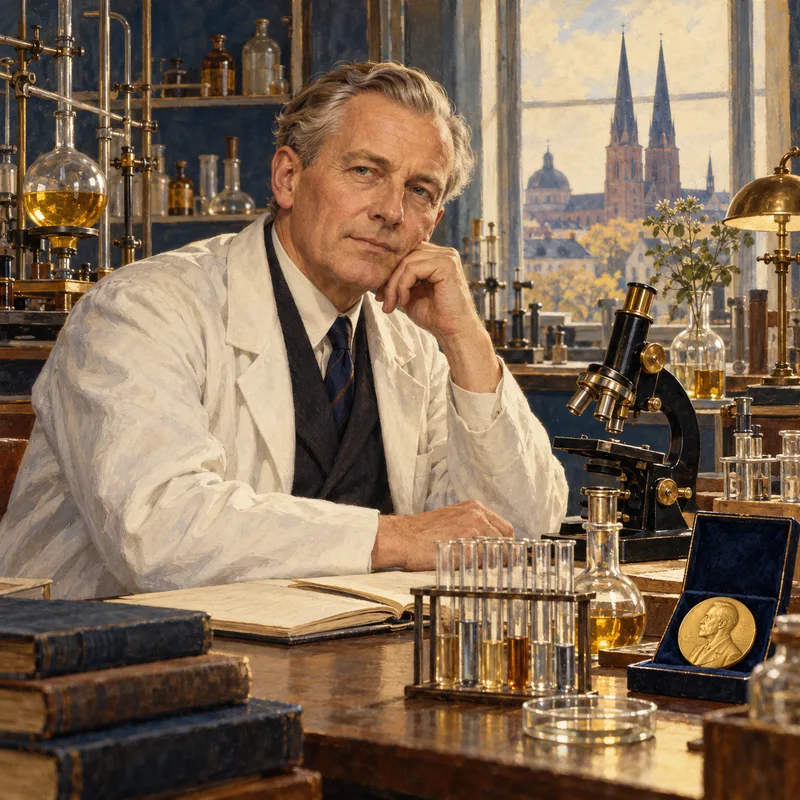
About the chemist
Arne Tiselius
1902-1971 · Sweden · Nobel Chemistry 1948
Electrophoresis and adsorption analysis