The discovery, explained · Chemist no. 218 of 350
Proline Organocatalysis: How Benjamin List Taught a Simple Amino Acid to Build Chiral Molecules
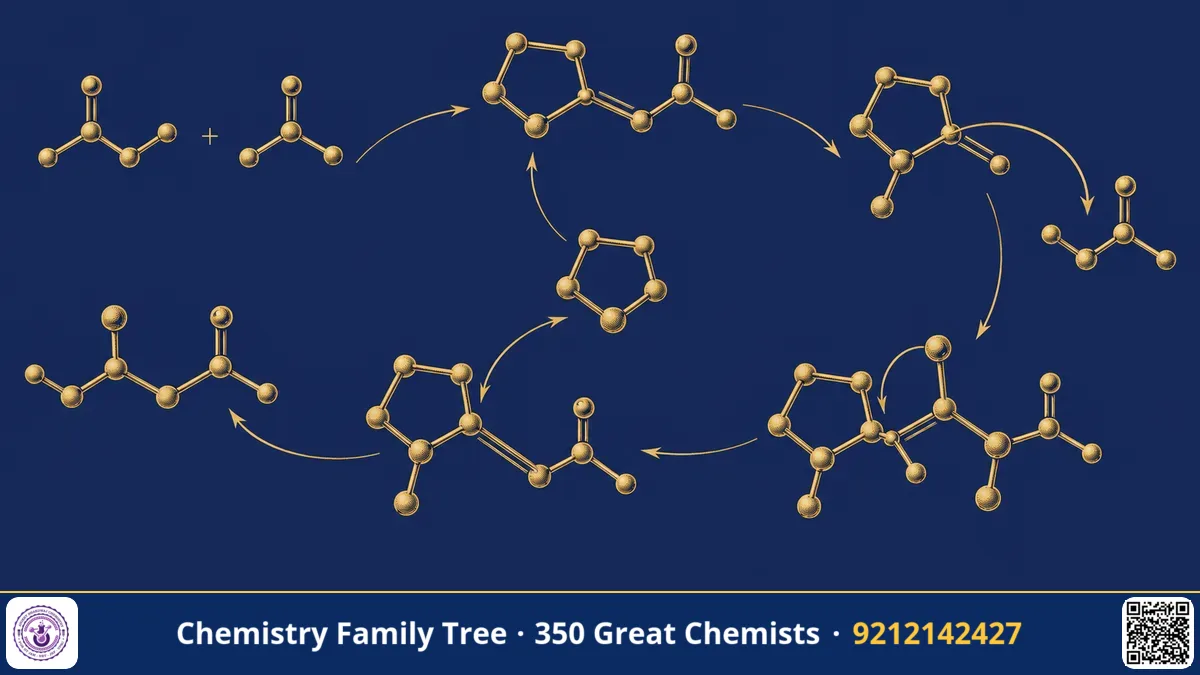
In the year 2000, a young German chemist working in California mixed acetone, an aldehyde and a small amount of L-proline, one of the twenty natural amino acids. A few hours later he found a chiral product, formed with high enantioselectivity, without any metal at all. That chemist was Benjamin List, and the experiment opened a new field called asymmetric organocatalysis. In 2021 he shared the Nobel Prize in Chemistry with David MacMillan "for the development of asymmetric organocatalysis".
Why does this matter? Many medicines, fragrances and agrochemicals are chiral: they exist as two mirror-image forms called enantiomers, and the body treats them differently. Making only the useful enantiomer is one of the central tasks of organic synthesis. List showed that a cheap, non-toxic, air-stable organic molecule can do this job. This post explains the problem, the experiment, the mechanism and the exam points you should remember.
The Scientific Problem Before the Discovery
Until about 2000, chemists believed that there were only two big families of catalysts: metals (including organometallic complexes) and enzymes. Asymmetric catalysis with metals was already a Nobel-winning area (Knowles, Noyori and Sharpless, 2001). Chiral ligands such as BINAP wrapped around metals like rhodium and ruthenium to give excellent enantioselectivity.
But metal catalysts have drawbacks. Many are expensive, rare, sensitive to air and moisture, and toxic. Removing traces of metal from a drug is costly. Enzymes are wonderful but are large, work under narrow conditions and are not available for every reaction.
There was also a historical puzzle. In the early 1970s, two industrial groups (Hajos and Parrish at Hoffmann-La Roche; Eder, Sauer and Wiechert at Schering) had used proline to catalyse an intramolecular aldol cyclisation of a triketone to a bicyclic ketol, a key step toward steroid building blocks. This is the Hajos-Parrish-Eder-Sauer-Wiechert reaction. It was treated as a curiosity, and people assumed it mimicked a special enzyme-like process. Nobody generalised it.
The Discovery / Experiment
List was a postdoctoral researcher and then a young faculty member at the Scripps Research Institute, in the group of Richard Lerner and Carlos Barbas III, where catalytic antibodies were studied. Aldolase antibodies use a lysine side chain to form an enamine with a ketone. List wondered: if the key actor is just an amine, could a small amino acid do the same thing?
He tested this with the intermolecular aldol reaction between acetone and aldehydes. The conditions reported in 2000 were simple:
- Dissolve the aldehyde (for example 4-nitrobenzaldehyde) in a mixture of DMSO and a large excess of acetone.
- Add about 30 mol% of L-proline.
- Stir at room temperature for several hours.
- Isolate the aldol product, a beta-hydroxy ketone.
CH3COCH3 + ArCHO  --(L-proline, DMSO)-->  ArCH(OH)CH2COCH3
(acetone)   (aldehyde)                      (chiral aldol, high ee)
With 4-nitrobenzaldehyde he obtained the aldol in good yield with about 60-65% enantiomeric excess; with more hindered aldehydes such as isobutyraldehyde the enantioselectivity rose to well above 90%. For a reaction with no metal and no special precautions, this was remarkable. The paper (co-authored with Lerner and Barbas) is one of the most cited in modern organic chemistry.
The Chemistry Behind It
Proline is special because it has two functional groups in one small ring: a secondary amine (a nucleophilic N-H) and a carboxylic acid. It works as a "micro-aldolase", with the following catalytic cycle:
- Enamine formation. The amine of proline condenses with acetone to form an iminium ion, losing water. Loss of a proton from the alpha carbon gives a nucleophilic enamine.
- C-C bond formation. The enamine attacks the carbonyl carbon of the aldehyde. The carboxylic acid group of proline hydrogen-bonds to the aldehyde oxygen, orienting it. A chair-like, Zimmerman-Traxler-type transition state is used to explain which face is attacked.
- Hydrolysis. The new iminium ion is hydrolysed by water, releasing the chiral aldol and regenerating proline.
This is called enamine catalysis. The same idea (a secondary amine temporarily converting a carbonyl compound into a more reactive species) was extended by List and others to many reactions: Mannich, Michael, alpha-amination, alpha-chlorination and more. MacMillan independently developed the complementary iminium catalysis (activating enals as electrophiles) in the same year.
Later, List introduced other ideas. Asymmetric counteranion-directed catalysis (ACDC) uses a chiral anion, such as a chiral phosphate, paired with an achiral cationic intermediate to control stereochemistry. He also developed very strong, confined Bronsted acids (imidodiphosphates) that can control reactions of small, hard-to-differentiate substrates. These extended organocatalysis from amines to acid catalysis.
| Catalyst type | Example | Main limitation |
|---|---|---|
| Metal complex | Rh-BINAP | Cost, toxicity, air sensitivity |
| Enzyme | Aldolase | Narrow scope, conditions |
| Organocatalyst | L-proline | Often needs higher loading |
Applications Today
- Pharmaceutical synthesis. Organocatalytic steps appear in routes to drugs and drug candidates, including antivirals and cardiovascular agents. Avoiding metals simplifies purification and regulatory approval.
- Green chemistry. Organocatalysts are usually stable in air, cheap and non-toxic, so reactions can be run in simple glassware, sometimes even in water.
- Natural product synthesis. Complex molecules such as strychnine and several terpenoids have been built using organocatalytic key steps.
- India context. Indian research groups and generic-drug manufacturers have adopted organocatalysis, and it is a common topic in M.Sc. organic chemistry courses and research at IITs and IISERs.
Exam Corner
- Organocatalysis uses small metal-free organic molecules as catalysts; proline works through enamine intermediates in aldol reactions.
- The aldol reaction forms a beta-hydroxy carbonyl compound and creates up to two stereocentres.
- The Hajos-Parrish-Eder-Sauer-Wiechert reaction is an intramolecular proline-catalysed aldol, 1970s.
- Enantiomeric excess: ee (%) = |R - S| / (R + S) x 100.
- List and MacMillan shared the 2021 Nobel Prize in Chemistry; MacMillan's approach is iminium catalysis.
Common Misconceptions
- "Proline is a chiral catalyst, so any product it makes is pure." Not true. Selectivity is measured as ee and depends on substrate, solvent and conditions.
- "Organocatalysis was invented in 2000 from nothing." The earlier proline work of the 1970s existed, but List recognised its generality and mechanism and showed the intermolecular version.
- "Organocatalysts are always weaker than metals." Modern confined acids and amines match or beat metal catalysts for many reactions.
Quick Revision Box
- Discovery year: 2000 (Scripps Research Institute, USA).
- Catalyst: L-proline, about 30 mol% in DMSO.
- Reaction: acetone + aldehyde gives a chiral aldol.
- Mechanism: enamine formation, C-C bond formation, hydrolysis.
- Later ideas: ACDC and confined imidodiphosphate acids.
- Nobel Prize in Chemistry 2021, shared with David MacMillan.
FAQ
What is organocatalysis?
It is catalysis by small organic molecules containing mainly C, H, N, O, S and P, without a metal. They speed up reactions and, if chiral, can control which enantiomer forms.
Why is proline a good catalyst?
It is cheap, available in both enantiomeric forms, non-toxic and bifunctional: its secondary amine forms enamines while its carboxylic acid directs the electrophile by hydrogen bonding.
How is List's work different from MacMillan's?
List's proline chemistry uses enamines made from nucleophilic carbonyl compounds. MacMillan's imidazolidinone catalysts form iminium ions that activate alpha,beta-unsaturated aldehydes toward nucleophiles and cycloadditions.
Is this topic important for JAM, NET and GATE?
Yes. Aldol reactions, enamine chemistry, enantiomeric excess and asymmetric synthesis are regular topics, and the 2021 Nobel Prize makes organocatalysis a likely general-awareness question.
Published by ABC Chemistry — IIT-JAM | CSIR-NET | GATE Chemistry Coaching. Visit abcchemistry.com
About the chemist
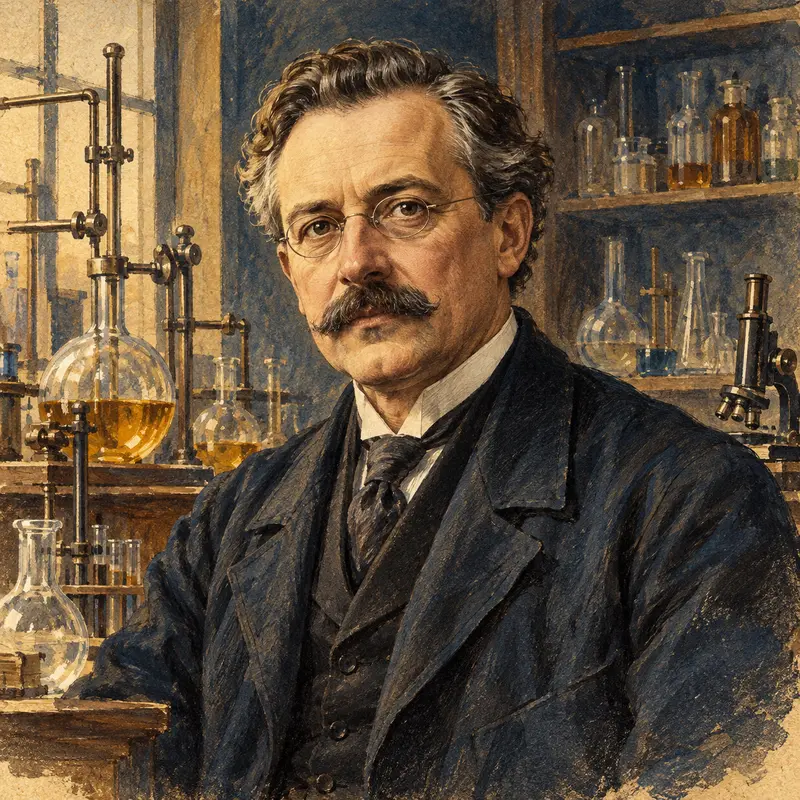
Benjamin List
1968- · Germany · Nobel Chemistry 2021
Asymmetric organocatalysis