Biography · Chemist no. 196 of 350
Brian K. Kobilka (born 1955): The Scientist Who Photographed a Receptor at Work
Introduction
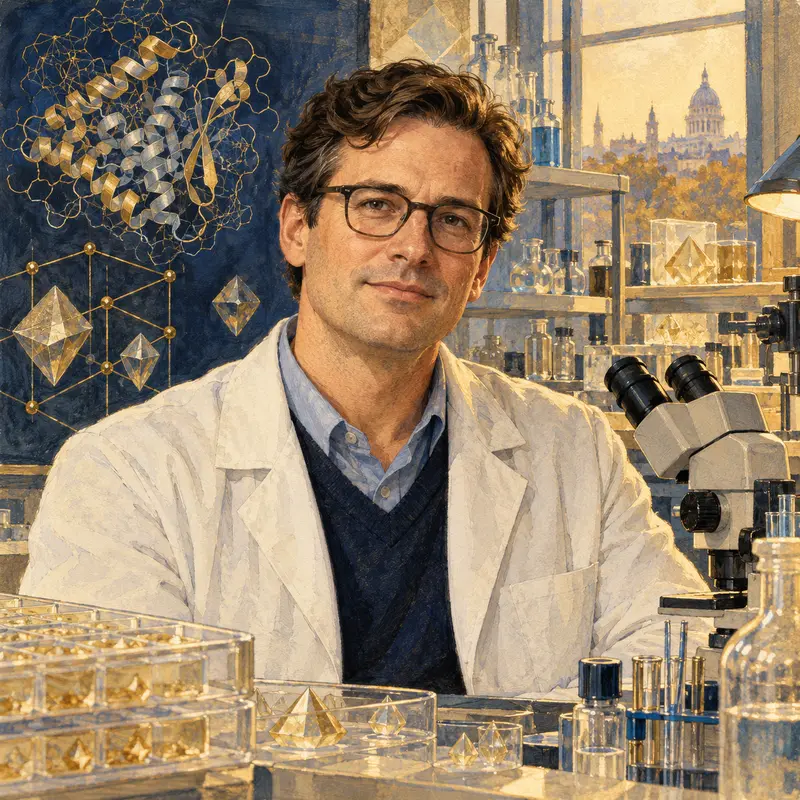
Brian Kent Kobilka is an American physician and molecular physiologist who made one of the hardest membrane proteins of all, a human G protein-coupled receptor, reveal its atomic structure. A professor at Stanford University School of Medicine, he built on the work of his mentor Robert Lefkowitz and, over two decades, moved from gene cloning to X-ray crystallography. In 2012 the two shared the Nobel Prize in Chemistry. His legacy is a clear three-dimensional view of how a hormone receptor switches on.
Early Life and Family
Kobilka was born on 30 May 1955 in Little Falls, Minnesota, in the American Midwest. He grew up in a small town of that region, in a family of Polish and German descent, and his father worked as a baker. He has often spoken of the quiet, hard-working environment of rural Minnesota. He is married to Tong Sun Kobilka, a scientist who has collaborated with him on receptor research, and they have two children. He has described a preference for a simple life and for the outdoors.
Education and Mentors
Kobilka studied biology and chemistry at the University of Minnesota Duluth, receiving his bachelor's degree in 1977. He then earned an MD at Yale University School of Medicine in 1981. He did his residency in internal medicine at Barnes Hospital, Washington University in St. Louis, and became interested in the biology of cell receptors during his clinical training, seeing patients whose hearts and lungs responded to receptor-targeting drugs. In 1984 he joined Robert Lefkowitz's laboratory at Duke University as a postdoctoral fellow, where he took on the daunting task of cloning the gene of the β₂-adrenergic receptor. Lefkowitz was his key mentor. Kobilka moved to Stanford University in 1989.
Career Timeline
| Year | Event |
|---|---|
| 1955 | Born in Little Falls, Minnesota |
| 1977 | Bachelor's degree, University of Minnesota Duluth |
| 1981 | MD from Yale University School of Medicine |
| 1984 | Postdoctoral fellow with Lefkowitz at Duke University |
| 1986 | Cloned the β₂-adrenergic receptor gene with Lefkowitz and colleagues |
| 1989 | Joined the faculty of Stanford University |
| 2007 | First crystal structure of a human GPCR (β₂ receptor) published |
| 2011 | Structure of the β₂ receptor–Gs protein complex |
| 2012 | Nobel Prize in Chemistry |
Major Scientific Contributions
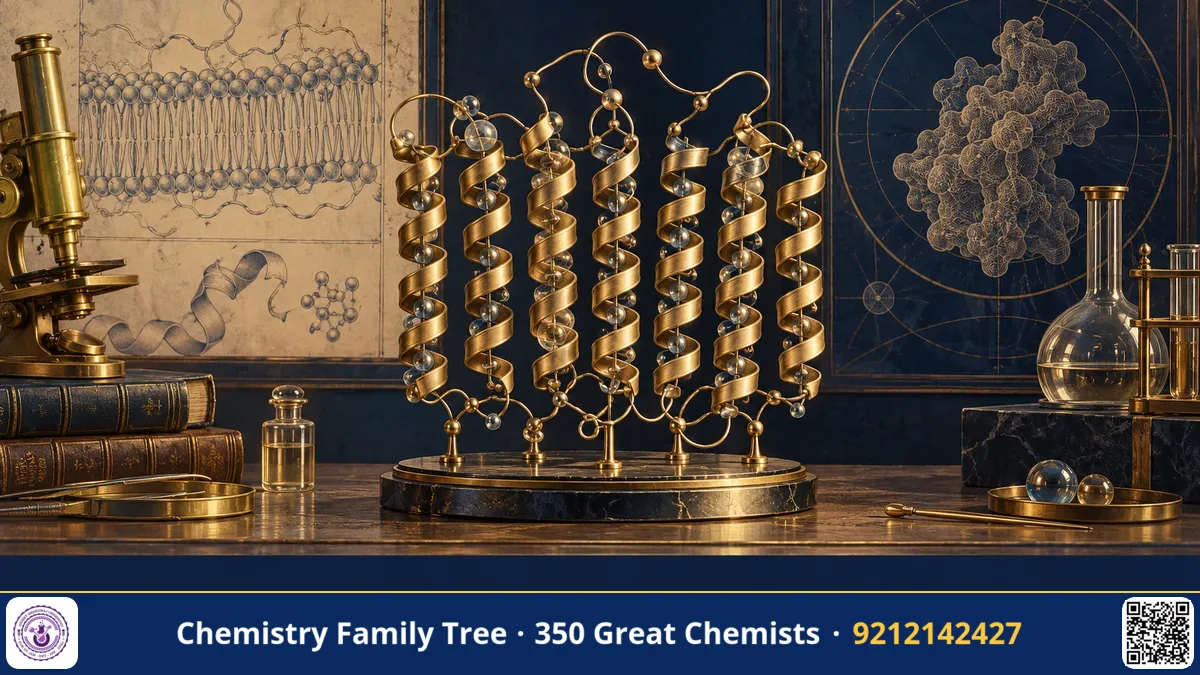
Kobilka's career has had two phases. In the first, at Duke, he did the molecular biology that revealed the amino acid sequence of the β₂-adrenergic receptor and its seven-transmembrane design. In the second, at Stanford, he asked how the receptor moves. He used fluorescence spectroscopy to show that the receptor changes shape when ligands bind, and he developed protein-engineering tricks to make crystals: replacing a flexible loop with T4 lysozyme, using lipidic cubic phase, and later using a nanobody to hold the receptor in its active state. This led to the crystal structures of 2007 and 2011. His laboratory later studied other receptors, such as opioid and muscarinic receptors, and used cryo-electron microscopy. For the full chemistry see our discovery post on his structures.
Awards, Honours and Nobel Prize
- Nobel Prize in Chemistry 2012 with Robert Lefkowitz, "for studies of G-protein-coupled receptors".
- Membership of the US National Academy of Sciences and the Institute of Medicine (National Academy of Medicine).
- Professor of Molecular and Cellular Physiology at Stanford University School of Medicine.
Personality, Struggles and Lesser-Known Facts
- Small-town origins. He came from a small Minnesota town.
- A very long project. From cloning in 1986 to the first crystal structure in 2007 took more than two decades, with many failed attempts at stable protein.
- Science as a family business. His wife Tong Sun Kobilka worked with him on receptor biochemistry and has contributed to the experimental work.
- Moving to a risky field. He left a clinical career for basic research at a time when GPCR structure was thought to be out of reach.
- Quiet style. Colleagues describe him as modest and low-key, a contrast to the high drama of the Nobel announcement.
Legacy and Influence on Modern Chemistry
Before Kobilka, drug discovery for GPCRs was largely trial and error. After the β₂ structure, scientists could see the pocket, the activation switch and the G protein interface. Within a decade, hundreds of GPCR structures were solved, and structure-based design became routine for many drug targets. The methods he helped to develop, such as fusion partners, lipidic cubic phase and nanobody stabilisation, are now used by laboratories all over the world. He also demonstrated that dynamic, flexible proteins can be studied by combining spectroscopy and crystallography.
Lessons for Students
- Stay with a hard problem. Twenty years of work made the 2007 structure possible.
- Use many tools. Molecular biology, spectroscopy, protein engineering and crystallography all contributed.
- Choose a good mentor and a good team. Lefkowitz and Kobilka both stress team work.
- Start small, think big. A boy from small-town Minnesota became a Nobel laureate through steady effort.
Quick Facts Box
- Born: 30 May 1955, Little Falls, Minnesota, USA
- Died: Living (as of writing)
- Nationality: American
- Field: Molecular physiology, structural biology
- Famous for: Crystal structures of the β₂-adrenergic receptor, including its complex with Gs
- Nobel: Chemistry 2012 (with Robert Lefkowitz)
FAQ
Was Kobilka a student of Lefkowitz?
He was a postdoctoral fellow in Lefkowitz's laboratory at Duke from 1984, after finishing his medical degree and residency.
Where does he work?
At Stanford University School of Medicine in California, since 1989.
What was special about his structures?
They were the first atomic-level views of a human hormone receptor, and of one in complex with its G protein.
Does his work affect everyday medicines?
Yes. Drugs such as beta-blockers and asthma inhalers act on the receptor he studied, and structure-based design uses his findings.
Published by ABC Chemistry — IIT-JAM | CSIR-NET | GATE Chemistry Coaching. Visit abcchemistry.com
About the chemist
Brian Kobilka
1955- · United States · Nobel Chemistry 2012
Structure of G-protein-coupled receptors