Biography · Chemist no. 51 of 350
Carl Bosch: The Engineer-Chemist Who Fed the World at Industrial Scale
Introduction
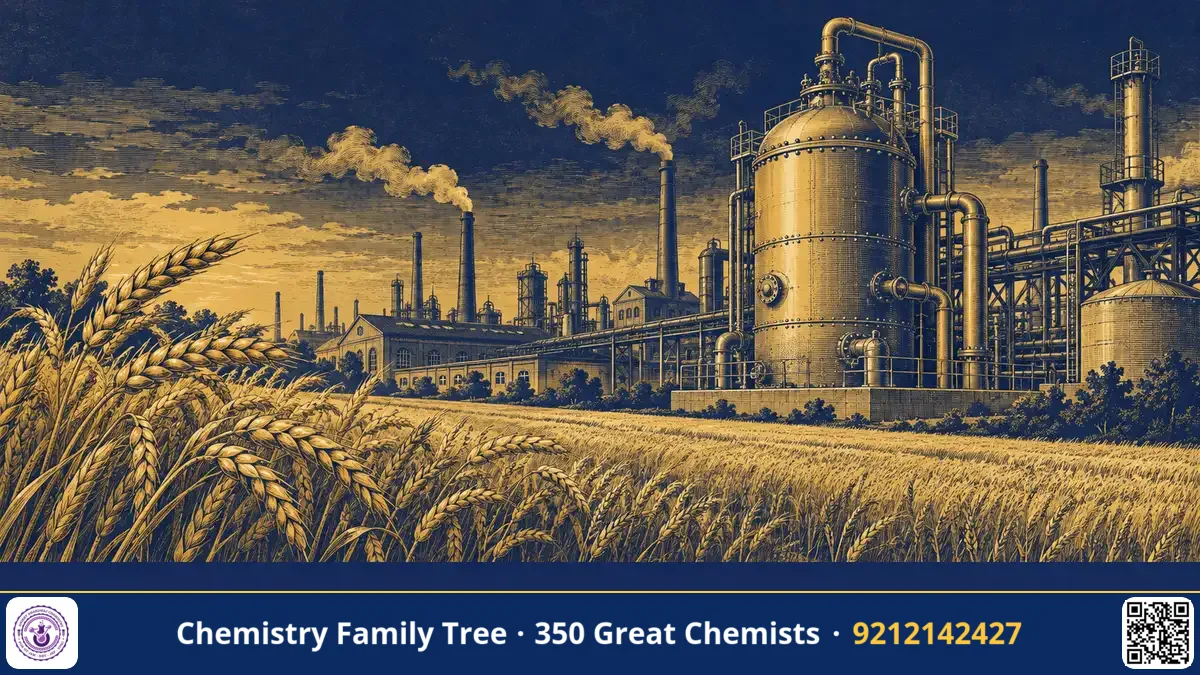
Carl Bosch (1874-1940) was a German chemist and engineer who transformed Fritz Haber's laboratory ammonia synthesis into a giant industrial process. He pioneered chemical engineering at pressures and temperatures that no one had used before, and later led IG Farben, one of the world's largest chemical companies. He won the 1931 Nobel Prize in Chemistry, shared with Friedrich Bergius. Legacy in one line: he made synthetic fertiliser possible on a global scale, and with it changed world agriculture.
Early Life & Family
Carl Bosch was born on 27 August 1874 in Cologne, Germany. His father, Carl Friedrich Alexander Bosch, ran a successful business supplying gas and plumbing equipment, which gave the boy exposure to practical engineering. His uncle Robert Bosch, the inventor of the spark plug magneto and the founder of the Bosch electrical company, was a famous industrialist. Carl grew up in a practical, technically minded home, and he developed an interest in both mechanics and science. In the workshop at home he learned metalwork and developed skills with tools that would help him later in his career.
Education & Mentors
After school, Bosch spent a year as an apprentice in an ironworks in Cologne, getting hands-on training in metalworking. He then studied metallurgy and mechanical engineering at the Technische Hochschule in Berlin-Charlottenburg, and chemistry at the University of Leipzig. At Leipzig he completed his PhD in 1898 under Johannes Wislicenus, a leading organic chemist, working on organic chemistry. Bosch's mix of engineering and chemistry, unusual at that time, proved to be the key to his later success.
Career Timeline
| Year | Event |
|---|---|
| 1874 | Born in Cologne |
| 1898 | PhD at Leipzig under Wislicenus |
| 1899 | Joins BASF (Badische Anilin- & Soda-Fabrik) in Ludwigshafen |
| 1909 | Haber demonstrates ammonia synthesis; BASF commits to scale-up with Bosch in charge |
| 1913 | The Oppau ammonia plant begins production in September |
| 1916-1917 | Leuna plant built for ammonia production in central Germany |
| 1919 | Becomes a member of the BASF board |
| 1921 | Oppau explosion on 21 September kills hundreds |
| 1923 | BASF starts industrial methanol synthesis using high-pressure methods |
| 1925 | Becomes head of the newly formed IG Farben |
| 1931 | Awarded the Nobel Prize in Chemistry with Friedrich Bergius |
| 1935 | Becomes chairman of the supervisory board of IG Farben |
| 1940 | Dies in Heidelberg on 26 April |
Major Scientific Contributions
- Industrial ammonia synthesis: engineering design of high-pressure converters, with the iron catalyst developed by Alwin Mittasch. See our companion article on the Haber-Bosch process for the chemistry.
- High-pressure technology: solved the problem of hydrogen attack on steel by lining reactors with soft iron.
- Hydrogen production: developed large-scale production by the water-gas shift reaction, CO + H₂O → CO₂ + H₂.
- Synthetic methanol: BASF's 1923 process, using a zinc oxide/chromium oxide catalyst at high pressure.
- Chemical engineering as a discipline: he showed how to run reactions at high temperature, high pressure and in huge volumes, a model for modern chemical plants.
- Fuel from coal: he supported development of high-pressure hydrogenation of coal at IG Farben, based on Bergius's earlier work.
Awards, Honours & Nobel Prize
Bosch received the Nobel Prize in Chemistry in 1931 (with Friedrich Bergius) "in recognition of their contributions to the invention and development of chemical high pressure methods". He also received honorary doctorates and other German honours. In 1937 he became president of the Kaiser Wilhelm Society, the leading German research organisation.
Personality, Struggles & Lesser-Known Facts
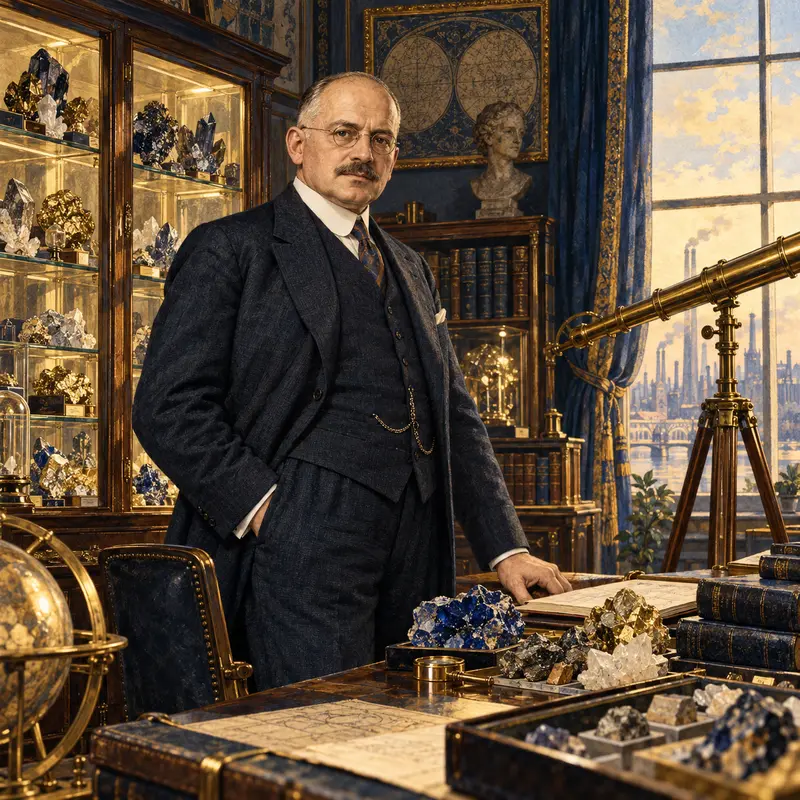
- A hobbyist of many interests. Bosch was a keen amateur astronomer, with a private observatory, and also collected minerals and insects, especially beetles.
- The Oppau disaster. On 21 September 1921, a storage silo holding a mixture of ammonium sulphate and ammonium nitrate fertiliser exploded at Oppau, killing about 560 people. The disaster shook the company, and the plant was later rebuilt.
- Two Nobel Prizes for one process. Haber won the Nobel Prize in 1918 for the synthesis itself, while Bosch had to wait until 1931.
- The cost of success. The pressure of managing a huge corporation, and the political situation in Germany, made his later years difficult.
- Opposition to Nazi policy. According to historical accounts, in 1933 Bosch tried to persuade Hitler not to dismiss Jewish scientists such as Haber, warning that Germany would lose its science. His efforts failed, and in later years his influence in the company declined.
- Nobel Prize for two. He shared the 1931 prize with Friedrich Bergius, whose own coal-hydrogenation work also needed high-pressure technology.
Legacy & Influence on Modern Chemistry
The Haber-Bosch process now produces well over 100 million tonnes of ammonia every year and uses about 1-2 per cent of the world's energy. It supports roughly half of the world's population through fertiliser. India's Green Revolution and its present food security depend heavily on urea made from ammonia. High-pressure chemical engineering developed by Bosch influenced petrochemicals, methanol, hydrogenation and polymer industries. The environmental cost of nitrogen fertilisers (water pollution, greenhouse gas N₂O) is also a part of his legacy, and research on cleaner "green ammonia" continues to this day.
Lessons for Students
- Scale-up is a science. Moving from gram to tonne needs new ideas.
- Combine disciplines. He used engineering to solve a chemical problem.
- Systematic testing works. Mittasch's team tested thousands of catalysts.
- Technology has ethical consequences. Ammonia feeds people and can also make explosives.
Quick Facts Box
- Born: 27 August 1874, Cologne, Germany
- Died: 26 April 1940, Heidelberg, Germany
- Nationality: German
- Field: Industrial chemistry and chemical engineering
- Famous for: Industrial Haber-Bosch process; high-pressure chemistry
- Nobel: Chemistry, 1931 (shared with Friedrich Bergius)
FAQ
Was Carl Bosch related to the Bosch electrical company?
Yes. Robert Bosch, the founder of that company, was his uncle, although Carl worked for BASF.
What did Bosch contribute beyond Haber's work?
Industrial-scale reactors, the engineering solution to hydrogen attack on steel, and the large plant at Oppau.
When did Bosch win the Nobel Prize?
In 1931, jointly with Friedrich Bergius, for chemical high-pressure methods.
Where did he die?
In Heidelberg, in 1940.
Published by ABC Chemistry — IIT-JAM | CSIR-NET | GATE Chemistry Coaching. Visit abcchemistry.com
About the chemist
Carl Bosch
1874-1940 · Germany · Nobel Chemistry 1931
Industrial Haber-Bosch ammonia process