Biography · Chemist no. 217 of 350
Emmanuelle Charpentier: The Scientist Who Helped Turn Bacteria's Defence into a Gene-Editing Tool
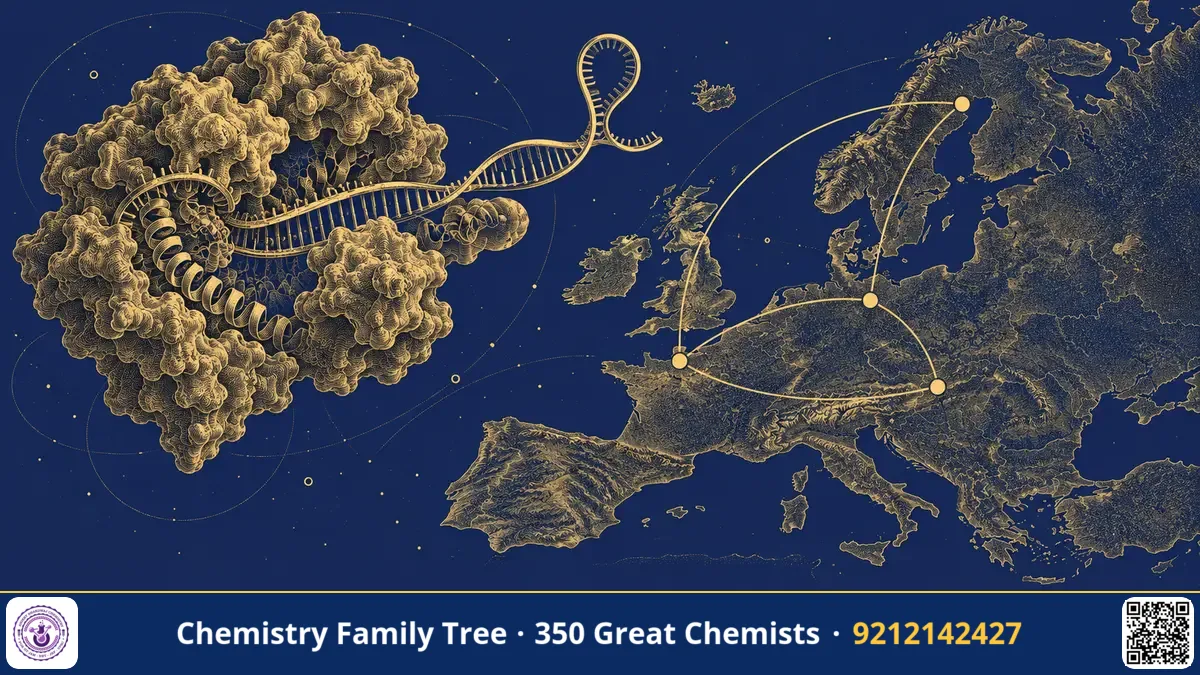
Emmanuelle Marie Charpentier (born 11 December 1968) is a French microbiologist, geneticist and biochemist. She is the founding and acting director of the Max Planck Unit for the Science of Pathogens in Berlin. In 2020 she shared the Nobel Prize in Chemistry with Jennifer Doudna "for the development of a method for genome editing". Her legacy in one line: she discovered tracrRNA and, with Doudna, converted the bacterial CRISPR-Cas9 system into a programmable gene-editing technology.
Early Life and Family
Charpentier was born in Juvisy-sur-Orge, near Paris, France. She has described herself as curious about biology from a young age and mentioned that she was fascinated by the Pasteur Institute in Paris, a place linked to microbiology and the history of medicine. She also had a strong interest in the arts, including dance and piano. Her early interest in the mechanisms of infection and disease led her toward microbiology.
Education and Mentors
Charpentier studied biochemistry, microbiology and genetics at Pierre and Marie Curie University (now Sorbonne University) in Paris. She did her doctoral research at the Pasteur Institute, completing her PhD in 1995 on antibiotic resistance in bacteria. She then worked as a postdoctoral researcher at Rockefeller University in New York, studying how bacteria cause disease and become resistant to antibiotics, and later held research positions at New York University and in the United States before returning to Europe.
Career Timeline
| Year | Event |
|---|---|
| 1968 | Born in Juvisy-sur-Orge, France |
| 1995 | PhD at the Pasteur Institute, Paris |
| 1996 onwards | Postdoctoral work at Rockefeller University, New York, and further research posts in the USA |
| 2002 | Group leader at the University of Vienna (Max F. Perutz Laboratories) |
| 2009 | Moves to Umeå University, Sweden |
| 2011 | Publishes the discovery of tracrRNA in Nature |
| 2012 | With Doudna, publishes the programmable Cas9 paper in Science |
| 2013 | Moves to the Helmholtz Centre for Infection Research in Braunschweig and Hannover Medical School, Germany |
| 2015 | Becomes director at the Max Planck Institute for Infection Biology, Berlin |
| 2018 | Founds the Max Planck Unit for the Science of Pathogens |
| 2020 | Shares the Nobel Prize in Chemistry |
Major Scientific Contributions
- tracrRNA: discovery of the trans-activating CRISPR RNA in Streptococcus pyogenes, essential for CRISPR RNA maturation.
- Programmable Cas9: with Doudna, showed that Cas9 plus a dual RNA, later fused into a single guide RNA, cuts chosen DNA sequences.
- Bacterial RNA biology: studies of regulatory RNAs in bacterial pathogens.
- Biotechnology: co-founded companies such as CRISPR Therapeutics and ERS Genomics to develop and license applications.
- Science policy: contributed to discussions about the ethical use of genome editing, especially editing of the human germline.
The chemistry of the Cas9 mechanism is set out in our companion discovery post.
Awards, Honours and Nobel Prize
The 2020 Nobel Prize in Chemistry went to Emmanuelle Charpentier and Jennifer Doudna. It was the first time that two women shared a science Nobel Prize without a male co-recipient. Before this, they received many awards together, including the Kavli Prize in Nanoscience (2018), the Princess of Asturias Award for Technical and Scientific Research (2015), the Breakthrough Prize in Life Sciences (2015) and the Japan Prize (2017). She is a foreign member of the United States National Academy of Sciences and the Royal Society, among other academies. In 2015 she received the Gruber Genetics Prize.
Personality, Struggles and Lesser-Known Facts
- A frequent traveller: She moved between laboratories in France, the United States, Austria, Sweden and Germany. She has said that moving frequently was a conscious way of broadening her scientific perspective, though it was not always easy.
- Surprise discovery: tracrRNA was found while she was working on bacterial regulatory RNAs, not on gene editing.
- Patent dispute: A long legal contest in the United States over who holds the rights to CRISPR-Cas9 in eukaryotic cells involved her and Doudna on one side and the Broad Institute on the other. It underlines how valuable the technology is.
- Interest in the arts: She has trained in classical music and dance.
- Private person: She generally prefers to talk about science rather than her personal life.
Legacy and Influence on Modern Chemistry
CRISPR-Cas9 has become one of the most widely used techniques in biology. It allows scientists to switch genes off, correct mutations and test gene function quickly and cheaply. Approved therapies for blood disorders show its medical promise, and variants such as base editors and prime editors build on its principles. At the same time, her voice is respected in debates about ethical limits, especially on editing human embryos. For students, her story shows how basic curiosity about how bacteria defend themselves can lead to a revolution in medicine.
Lessons for Students
- Follow unexpected results. The tracrRNA appeared where nobody was looking for it.
- Collaborate across fields. Microbiology and structural biochemistry together opened the path.
- Be open to moving. Working in different countries broadens your skills.
- Understand the ethics. Powerful tools carry responsibility.
- Basic research pays off. Studying bacterial immunity eventually helped human medicine.
Quick Facts Box
- Born: 11 December 1968, Juvisy-sur-Orge, France
- Died: Living (as of this writing)
- Nationality: French
- Field: Microbiology, genetics, biochemistry
- Famous for: tracrRNA discovery; CRISPR-Cas9 genome editing
- Nobel: Chemistry 2020, shared with Jennifer Doudna
FAQ
Did Charpentier win a Nobel Prize in Medicine?
No. She received the Nobel Prize in Chemistry in 2020.
Where does she work now?
In Berlin, Germany, at the Max Planck Unit for the Science of Pathogens, which she founded.
Who is her Nobel co-laureate?
Jennifer Doudna of the University of California, Berkeley.
What should I remember for competitive exams?
The key terms are CRISPR, Cas9, tracrRNA, guide RNA, PAM, and the year 2020 for the Nobel Prize.
Published by ABC Chemistry — IIT-JAM | CSIR-NET | GATE Chemistry Coaching. Visit abcchemistry.com
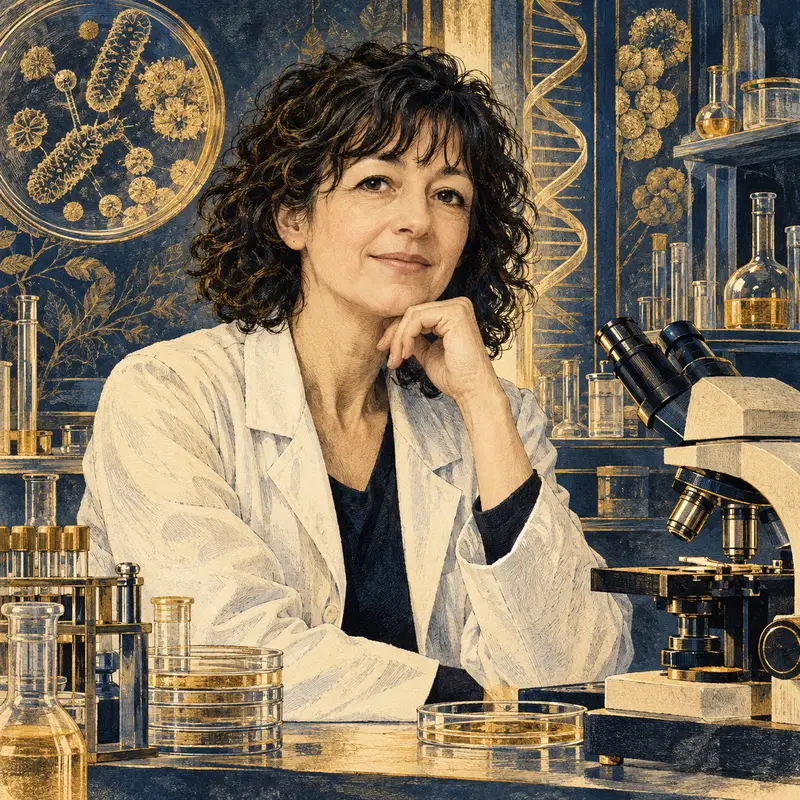
About the chemist
Emmanuelle Charpentier
1968- · France · Nobel Chemistry 2020
CRISPR-Cas9 genome editing