Biography · Chemist no. 345 of 350
Gertrude Elion: The Chemist Who Designed Life-Saving Drugs
Gertrude Belle Elion (1918-1999) was an American biochemist and pharmacologist whose chemistry gave patients drugs for leukaemia, gout, malaria, bacterial infections, organ transplants and herpes. In 1988 she shared the Nobel Prize in Physiology or Medicine with George Hitchings and Sir James Black, for discoveries of important principles of drug treatment. Her one-line legacy: she showed that medicines could be designed on the basis of biochemical knowledge instead of being found by chance. She did this without ever completing a doctoral degree, which makes her story special for students.
Early Life and Family
Gertrude Elion was born on 23 January 1918 in New York City. Her father, Robert Elion, was a dentist who had emigrated from Lithuania, and her mother, Bertha, came from Russia (now Poland). The family was close and put great value on education. Gertrude was a fast learner who skipped grades and finished high school at 15. She was deeply affected when her grandfather died of cancer when she was a teenager. She has said that this loss helped to convince her to devote her life to research that might help to cure disease. Her family was hit by financial hardship in the Great Depression, which limited her choices for further study.
Education and Mentors
Elion enrolled at Hunter College in New York, a free college for women, and graduated in chemistry in 1937 with the highest honours, at about 19. Despite her record, she found it extremely hard to get a job or a laboratory position because few employers were willing to hire a woman as a chemist. She worked in several temporary posts, including as a lab assistant and a teacher, and saved money to study further. She earned a master's degree in chemistry from New York University in 1941, while teaching during the day. She did not complete a PhD because it would have required full-time study, and she chose to continue working. Later, she received many honorary doctorates. Her key mentor was George Hitchings, who hired her in 1944 at Burroughs Wellcome and shaped her approach to research.
Career Timeline
| Year | Event |
|---|---|
| 1918 | Born in New York City |
| 1937 | Graduates from Hunter College in chemistry |
| 1941 | Master's degree in chemistry, New York University |
| 1944 | Joins George Hitchings at Burroughs Wellcome |
| 1950s | Develops 6-mercaptopurine and thioguanine for leukaemia |
| 1957 to 1960s | Work leading to azathioprine and allopurinol |
| 1970s | Leads research that produces acyclovir |
| 1983 | Retires from Burroughs Wellcome but stays active as a consultant |
| 1988 | Nobel Prize in Physiology or Medicine, shared with Hitchings and James Black |
| 1999 | Dies in North Carolina |
Major Scientific Contributions
- Rational drug design: using differences in nucleic acid metabolism between host and invader to guide synthesis of drugs.
- 6-Mercaptopurine and thioguanine: purine analogues for acute leukaemia, in which sulphur replaces oxygen at C6.
- Azathioprine: an immunosuppressant making kidney transplantation possible.
- Allopurinol: an inhibitor of xanthine oxidase for gout, which prevents conversion of hypoxanthine to uric acid.
- Trimethoprim and pyrimethamine: inhibitors of dihydrofolate reductase in bacteria and malaria parasites.
- Acyclovir: antiviral nucleoside analogue lacking a 3'-OH group, which terminates viral DNA chains.
The discovery article explains the mechanisms in depth.
Awards, Honours and Nobel Prize
Elion won the Nobel Prize in Physiology or Medicine in 1988, shared with George H. Hitchings and Sir James W. Black. It was awarded for discoveries of important principles for drug treatment. Note that this was not the Nobel Prize in Chemistry. Other honours include:
- The National Medal of Science (1991).
- Induction into the National Inventors Hall of Fame (1991), as the first woman to be inducted.
- Election to the US National Academy of Sciences (1990).
- Many honorary doctorates from universities in the United States and elsewhere.
Personality, Struggles and Lesser-Known Facts
- Motivated by personal loss. The cancer death of her grandfather pushed her towards medical research, and she later lost her fiancé to a bacterial infection of the heart, at a time when no effective cure existed.
- Doors closed to women. After college, she was told in interviews that women in laboratories could be a distraction. She persisted and found work by accepting low-status jobs and then moving upward.
- No PhD, but a Nobel. She is among the few Nobel laureates in science who did not hold a doctorate at the time of the award. Her excellence came from work, not degrees.
- Wartime opportunity. With many men away during the Second World War, laboratories opened up positions to women, and she began her career with Hitchings in 1944.
- A teacher. Even after retiring she mentored younger scientists and helped to develop new drug projects, and she was interested in encouraging students to enter science.
- Wide interests. She loved travel, opera, photography and music, and she often said that she regarded research as a pleasure.
Legacy and Influence on Modern Chemistry
Elion's approach lives on in today's drug industry: define a target in a disease process, understand its biochemistry, then design a molecule to fit. Methods such as structure-based design, enzyme inhibitors and targeted cancer therapy all follow her philosophy. The drugs she made saved or improved millions of lives and remain on the World Health Organization's list of essential medicines or are the models for later ones. In India, her drugs such as allopurinol, acyclovir and trimethoprim are used daily in clinics and hospitals. She is also a symbol for women in science, showing how persistence can overcome discrimination.
Lessons for Students
- Combine chemistry and biology. Medicinal chemistry needs both.
- Do not wait for perfect conditions. She started in modest posts and moved ahead.
- Ask a better question. Instead of testing random chemicals, she asked how cells make DNA.
- Value teamwork. Her partnership with Hitchings lasted for decades.
- Let purpose guide you. Personal losses gave her a strong aim.
Quick Facts Box
- Born: 23 January 1918, New York City, USA
- Died: 21 February 1999, North Carolina, USA
- Nationality: American
- Field: Biochemistry, pharmacology, medicinal chemistry
- Famous for: Rational drug design; 6-MP, allopurinol, azathioprine, acyclovir
- Nobel: Physiology or Medicine, 1988 (shared)
FAQ
Did Gertrude Elion win a Nobel Prize in Chemistry?
No. She won the Nobel Prize in Physiology or Medicine in 1988, although her work was largely chemical.
Which drugs did she help to create?
6-mercaptopurine, thioguanine, azathioprine, allopurinol, pyrimethamine, trimethoprim and acyclovir.
Did she have a PhD?
No. She had a bachelor's and a master's degree and later received many honorary doctorates.
What is rational drug design?
It is the process of designing drugs based on knowledge of biochemical targets and differences between healthy and diseased cells.
Published by ABC Chemistry — IIT-JAM | CSIR-NET | GATE Chemistry Coaching. Visit abcchemistry.com
About the chemist
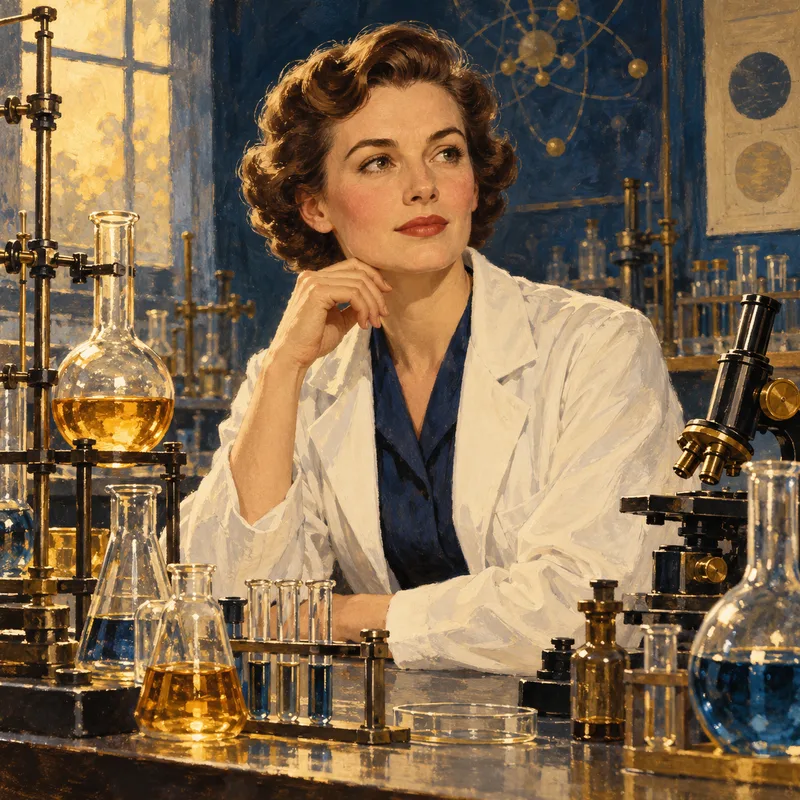
Gertrude Elion
1918-1999 · United States · Nobel Physiology/Medicine 1988
Rational drug design; azathioprine, acyclovir