Biography · Chemist no. 72 of 350
Sir Hans Krebs: The Biochemist Who Found the Cycles of Life
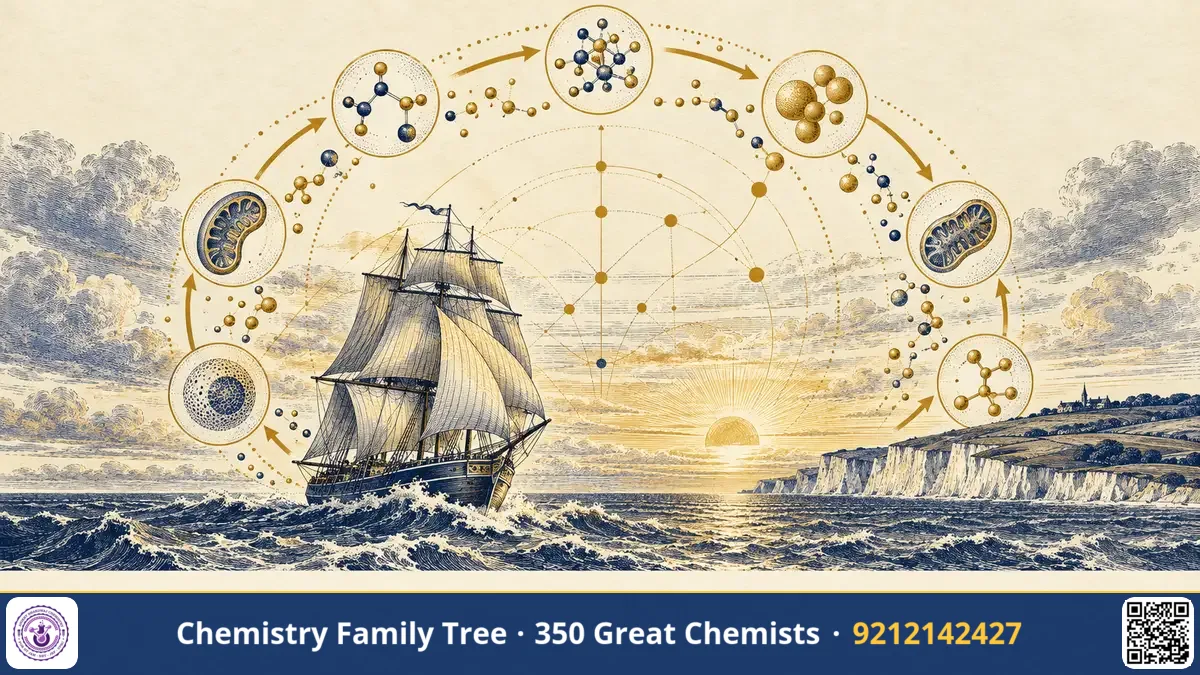
Sir Hans Adolf Krebs (1900-1981) was a German-born British biochemist who discovered two of the most important pathways in the living cell: the urea cycle in 1932 and the citric acid cycle in 1937. For the second discovery he shared the 1953 Nobel Prize in Physiology or Medicine with Fritz Lipmann. His legacy in one line: he showed that metabolism is organised in cycles, and these cycles connect the chemistry of food to the chemistry of energy.
Early Life and Family
Hans Krebs was born on 25 August 1900 in Hildesheim, Germany. His father, Georg Krebs, was a respected ear, nose and throat surgeon, and his mother, Alma Davidson, came from a Jewish family. Hans grew up in a cultured home with an emphasis on education and music. He initially thought of studying medicine like his father, partly because of the family atmosphere and the example of his father's profession. His boyhood was influenced by the First World War, and he served briefly in the army at the very end of the war.
Education and Mentors
Krebs studied medicine at the universities of Göttingen, Freiburg and Munich, and received his medical degree from Hamburg in 1925. He also studied chemistry because he understood that medicine needed a chemical foundation. His most important teacher was Otto Warburg, the great biochemist of Berlin, with whom he worked from 1926 to 1930. Warburg taught him the use of the manometer for measuring tissue respiration and the use of thin tissue slices. These methods became the basis of Krebs's experiments. Krebs always remembered Warburg's rigour though he did not always agree with his strict, stern approach.
Career Timeline
| Year | Event |
|---|---|
| 1900 | Born in Hildesheim, Germany |
| 1925 | Medical degree, University of Hamburg |
| 1926-30 | Works with Otto Warburg in Berlin |
| 1932 | Discovers the urea cycle with Kurt Henseleit at Freiburg |
| 1933 | Dismissed under Nazi laws; moves to Cambridge |
| 1935 | Appointed to the University of Sheffield |
| 1937 | Proposes the citric acid cycle |
| 1945 | Becomes Professor of Biochemistry at Sheffield |
| 1953 | Nobel Prize in Physiology or Medicine |
| 1954 | Moves to Oxford as Whitley Professor of Biochemistry |
| 1958 | Knighted |
| 1981 | Dies in Oxford |
Major Scientific Contributions
Krebs made three major contributions. First, in 1932, he and Kurt Henseleit described the ornithine (urea) cycle in liver, in which ammonia, carbon dioxide and aspartate are turned into urea. Second, in 1937, he proposed the citric acid cycle based on experiments with pigeon breast muscle and the inhibitor malonate. Third, in 1957, he and Hans Kornberg described the glyoxylate cycle, which allows bacteria and plants to convert fats to carbohydrates. In addition, he worked on energy metabolism and the thermodynamics of the cell. The cycles' reactions are explained in detail in our discovery post.
Awards, Honours and Nobel Prize
- Nobel Prize in Physiology or Medicine, 1953, shared with Fritz Lipmann, for the discovery of the citric acid cycle. Lipmann's share was for the discovery of coenzyme A.
- Fellow of the Royal Society (1947).
- Knighted in 1958.
- Copley Medal of the Royal Society (1961).
Personality, Struggles and Lesser-Known Facts
- Forced to flee: In April 1933, the Nazi government dismissed Krebs from his post at Freiburg because of his Jewish ancestry. He moved to England at the invitation of Frederick Gowland Hopkins at Cambridge.
- The rejected paper: His 1937 paper on the citric acid cycle was rejected by Nature and was published in Enzymologia instead. Krebs later pointed out that it was a reminder that even great discoveries can be refused.
- Humble beginnings in Sheffield: At Sheffield he started with limited laboratory space and small funding, but built a department known throughout the world.
- Teacher of the next generation: Many of his students became leaders in biochemistry, including Hans Kornberg.
- Family and music: He married Margaret Fieldhouse in 1938 and had three children. He was fond of music.
- Humanitarian: He supported refugee scientists and helped many young researchers who left Germany.
Legacy and Influence on Modern Chemistry
Almost every biochemistry textbook starts the study of metabolism with the Krebs cycle. His discovery gave a framework to understand how cells extract energy and also how they make building blocks for fats, amino acids and heme. The same ideas guide modern studies in cancer metabolism, diabetes and mitochondrial disease. In India, the cycle is a core topic for B.Sc., M.Sc. and competitive examinations such as CSIR-NET Life Sciences and Chemical Sciences. Krebs also set an example for scientific ethics and care for fellow scientists in difficult times.
Lessons for Students
- Do not give up when a journal or a teacher rejects your idea; test it and present your evidence.
- Use simple models, such as tissue slices, to answer big questions.
- Learn techniques from the best teachers, then develop your own ideas.
- Help others, especially those who are in difficulty.
Quick Facts Box
- Born: 25 August 1900, Hildesheim, Germany
- Died: 22 November 1981, Oxford, England
- Nationality: German-born, British
- Field: Biochemistry, metabolism
- Famous for: Urea cycle; citric acid (Krebs) cycle
- Nobel: Physiology or Medicine, 1953
FAQ
Did Krebs win a Nobel Prize in Chemistry?
No. He won the Nobel Prize in Physiology or Medicine in 1953, although his work is core to biochemistry and chemistry syllabi.
Why did he leave Germany?
He was dismissed in 1933 because of his Jewish background under Nazi laws, and he moved to England.
Which discovery came first, the urea cycle or the TCA cycle?
The urea cycle in 1932; the citric acid cycle followed in 1937.
Who was Krebs's teacher in Berlin?
Otto Warburg, a pioneer of cell respiration studies.
Published by ABC Chemistry — IIT-JAM | CSIR-NET | GATE Chemistry Coaching. Visit abcchemistry.com
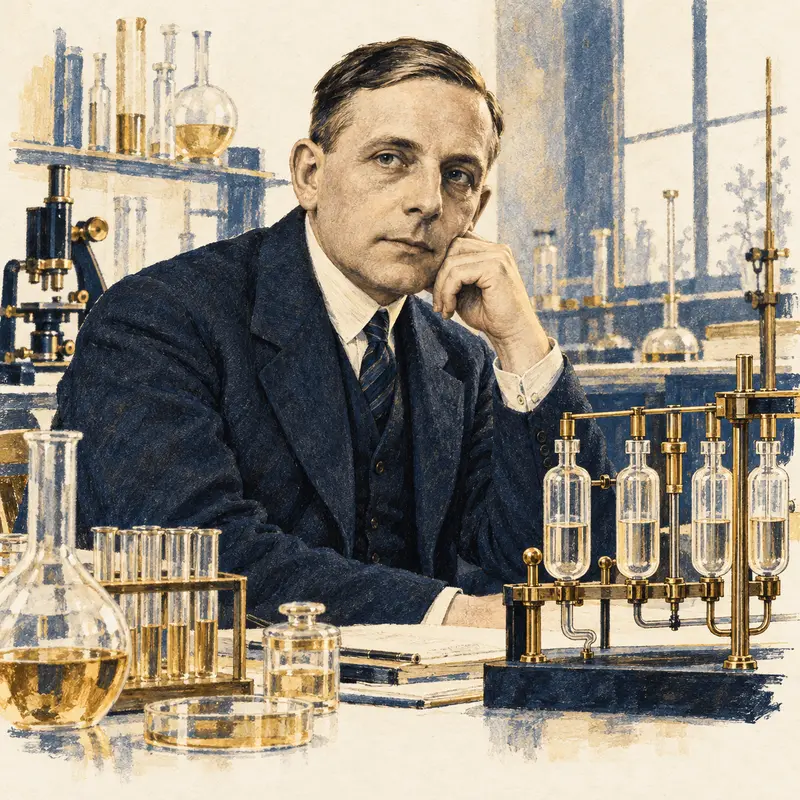
About the chemist
Hans Krebs
1900-1981 · Germany/United Kingdom · Nobel Physiology/Medicine 1953
Citric acid cycle; urea cycle