Biography · Chemist no. 121 of 350
James B. Sumner: The Determined Chemist Who Made Enzymes Crystallise
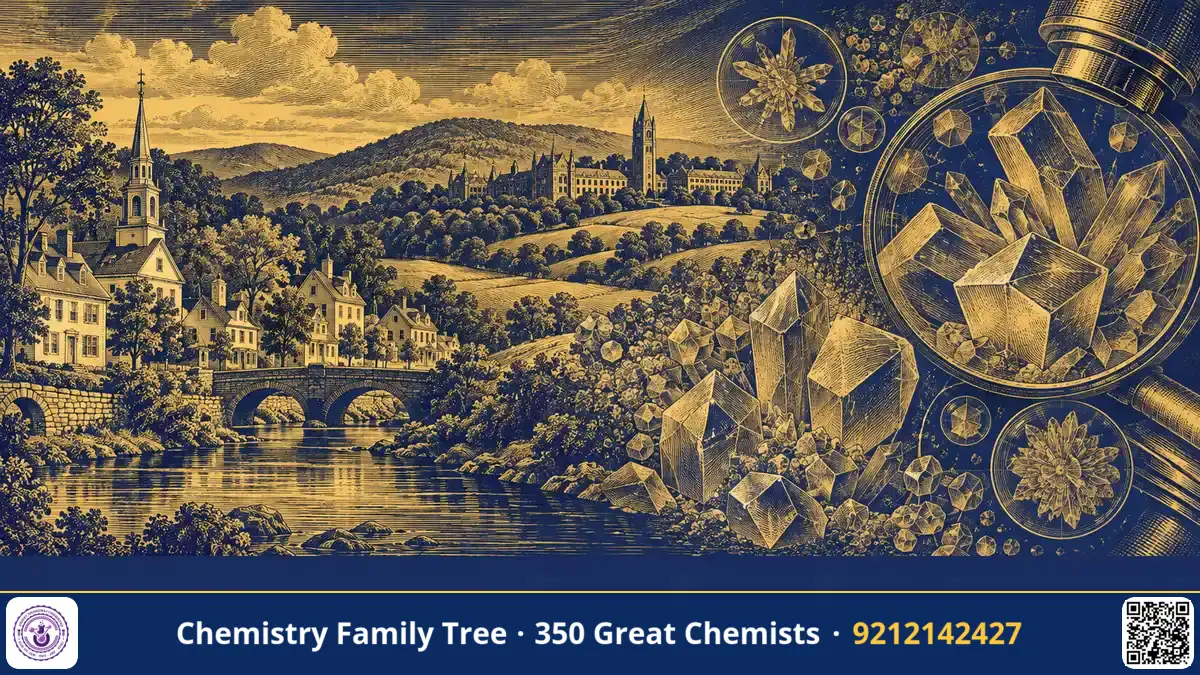
James Batcheller Sumner (1887-1955) was an American biochemist who proved that enzymes are proteins by crystallising urease in 1926. He spent almost all of his working life at Cornell University and shared the 1946 Nobel Prize in Chemistry with John Howard Northrop and Wendell Stanley. His story is also one of stubborn persistence: he worked for years against the expert opinion of his time, and he did it after losing his left arm in a boyhood accident.
Early Life & Family
Sumner was born on 19 November 1887 in Canton, Massachusetts, into a wealthy and well-established New England family. The family was well off, and he grew up in Canton and attended school in Massachusetts before going to university.
As a teenager, he suffered a serious accident while out hunting with friends, when he was around 17 years old. His left arm was injured so badly that it had to be amputated below the elbow. Since he was left-handed, this made things more difficult. It did not stop him from taking part in sports and later he became a keen tennis player. The accident might have ended many careers in a laboratory, but he learned to use his right hand and carried out delicate experimental work.
Education & Mentors
Sumner entered Harvard University and completed his Bachelor's degree in chemistry in 1910. After a short period working in his family's business and teaching, he returned to Harvard to study biochemistry under Otto Folin, one of the founders of American clinical and biological chemistry. Folin was a great analytical chemist who developed many colour tests for blood and urine. Sumner received his PhD in 1914.
The same year, he joined the Cornell University Medical College in Ithaca, New York, as an assistant professor of biochemistry. He stayed at Cornell for the rest of his career. Folin's influence is clear in Sumner's approach, which emphasised quantitative methods, and Sumner developed a number of analytical methods himself, including a test with 3,5-dinitrosalicylic acid for reducing sugars, which is still used in laboratories.
Career Timeline
| Year | Event |
|---|---|
| 1887 | Born in Canton, Massachusetts |
| 1910 | Bachelor's degree in chemistry, Harvard University |
| 1914 | PhD at Harvard under Otto Folin; joins Cornell University Medical College, Ithaca |
| 1917 | Begins attempts to isolate the enzyme urease from jack beans |
| 1926 | Announces the crystallisation of urease and the proof that it is a protein |
| 1937 | Crystallises catalase from beef liver |
| 1946 | Receives half of the Nobel Prize in Chemistry; the other half goes to Northrop and Stanley |
| 1947 | Becomes director of the Enzyme Chemistry laboratory at Cornell |
| 1955 | Dies in Buffalo, New York |
Major Scientific Contributions
The main achievement is the crystallisation of urease. Sumner showed that the crystals are protein and carry the full activity of the enzyme. This overturned the view of the leading chemists of the time, and opened the way for the study of enzymes as ordinary chemical substances with a definite structure and mass. You can read the details of the experiment in our discovery post.
His other contributions include:
- Catalase. Crystallisation of catalase from beef liver in 1937, showing that this enzyme contains iron in a haem group.
- Lipoxidase (lipoxygenase). Work on this soybean enzyme and its action on unsaturated fats, which is important in the flavour and rancidity of foods.
- Analytical methods. Quantitative methods for sugar, such as the dinitrosalicylic acid method, and microanalysis methods.
- Antibodies and enzymes. He studied the antibody response to crystalline urease, an early example of treating an enzyme as an antigen.
- Books. He co-authored a widely used textbook on the chemistry and methods of enzymes.
Awards, Honours & Nobel Prize
The Nobel Prize in Chemistry for 1946 was divided. One half went to James B. Sumner "for his discovery that enzymes can be crystallized". The other half was shared by John Howard Northrop and Wendell Meredith Stanley "for their preparation of enzymes and virus proteins in a pure form". He was also elected to the National Academy of Sciences in the United States.
Personality, Struggles & Lesser-Known Facts
- One-armed chemist. After losing his left arm, he mastered laboratory work with one hand and continued to play tennis and to take part in sports.
- Nine years on one problem. He began work on urease in 1917 and announced crystals in 1926, even though many colleagues doubted that it could succeed. His persistence is the heart of his story.
- Years of doubt. His discovery was challenged by Richard Willstätter's school, who felt that the protein was not the enzyme itself. Sumner patiently answered his critics with experiments.
- Sport. He remained keen on tennis and outdoor activity throughout his life.
- Cancer research. In his later years he took interest in the biochemistry of cancer and other medical applications of enzymes, as part of a research programme at Cornell.
Legacy & Influence on Modern Chemistry
When Sumner showed that enzymes are proteins, he established the base on which all of molecular biology rests. Today, enzymes are crystallised and examined by X-ray diffraction, and we see their active sites in atomic detail. Drug design, industrial biocatalysis, enzyme engineering and mechanism-based inhibitors depend on this view. Urease, the very first crystalline enzyme, remains a topic of research for agriculture and medicine. Indian laboratories continue to work on enzyme purification, assays and crystallography, and the questions that appear in JAM, NET and GATE on enzyme kinetics start from this discovery.
Lessons for Students
- Do not give up when experts disagree, but answer them with data.
- Pick a good experimental system. Urease and jack bean were an excellent choice.
- Physical limits need not stop a career. Sumner worked with one arm.
- Patience is a scientific method. His result came after nine years.
Quick Facts Box
- Born: 19 November 1887, Canton, Massachusetts, USA
- Died: 12 August 1955, Buffalo, New York, USA
- Nationality: American
- Field: Biochemistry, enzymology
- Famous for: Crystallisation of urease (1926); proof that enzymes are proteins
- Nobel: Chemistry, 1946 (half; other half to Northrop and Stanley)
FAQ
What disability did Sumner have?
He lost his left arm below the elbow in a hunting accident when he was a teenager.
Where did Sumner work?
At Cornell University Medical College and Cornell University in Ithaca, New York, from 1914 until the end of his career.
Who shared the 1946 Nobel Prize in Chemistry with Sumner?
John Howard Northrop and Wendell Meredith Stanley, who shared the other half of the prize.
Who criticised Sumner's claim?
Richard Willstätter and his school, who believed that enzymes were not proteins.
Published by ABC Chemistry — IIT-JAM | CSIR-NET | GATE Chemistry Coaching. Visit abcchemistry.com
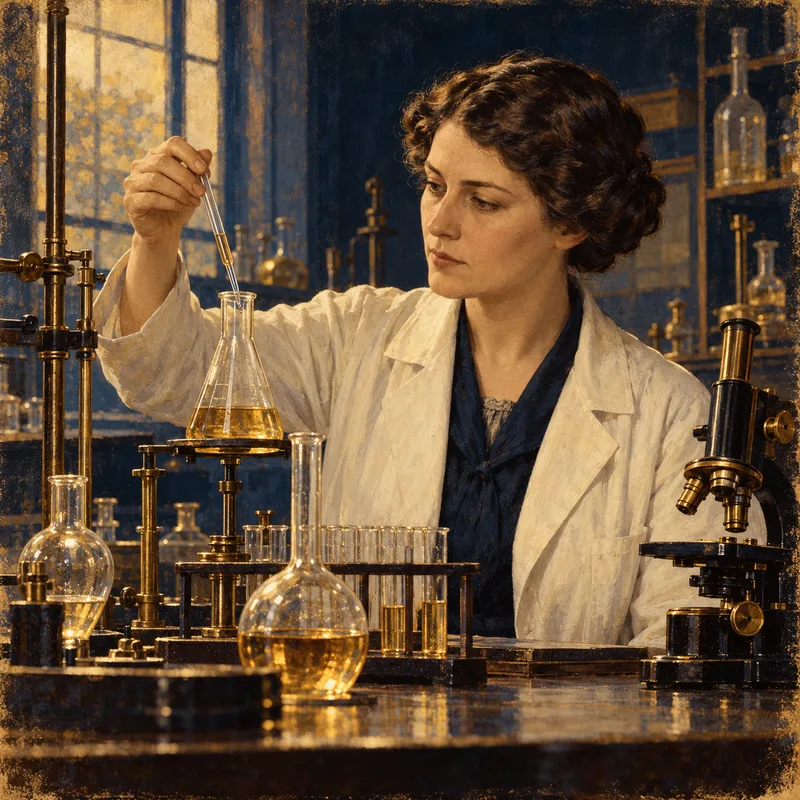
About the chemist
James B. Sumner
1887-1955 · United States · Nobel Chemistry 1946
Crystallization of urease