Biography · Chemist no. 239 of 350
Louis Nicolas Vauquelin: The Farm Boy Who Found Two Elements
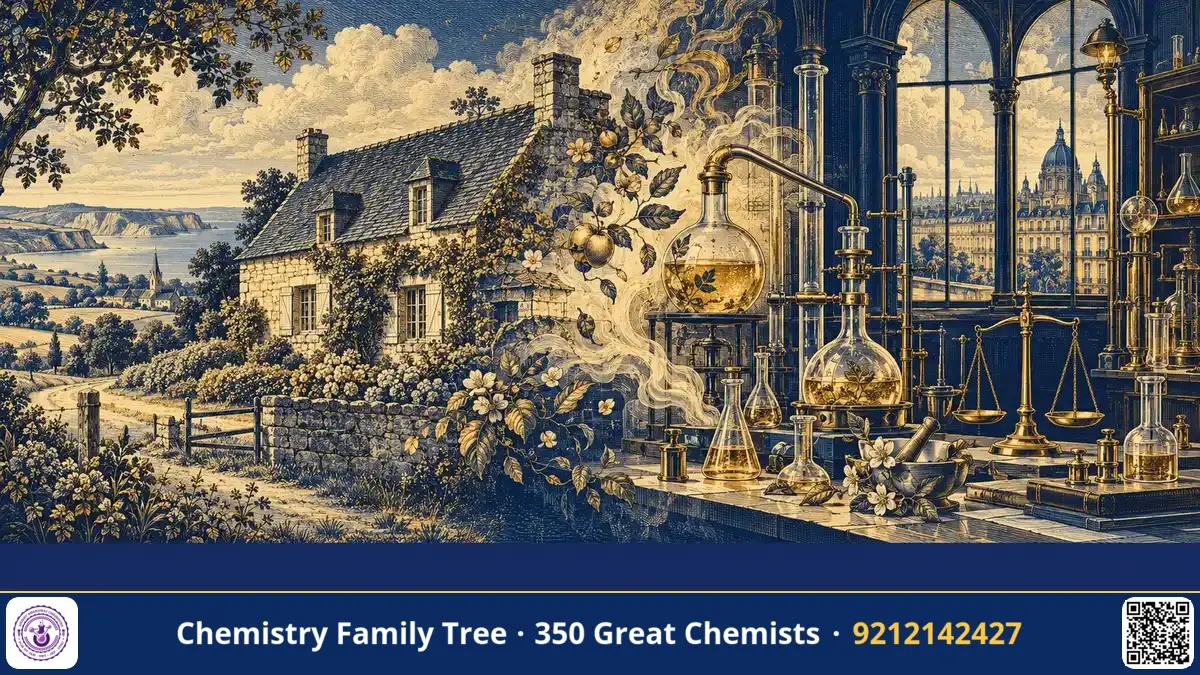
Louis Nicolas Vauquelin (1763–1829) rose from a peasant family in Normandy to become one of France's foremost analytical chemists. He discovered chromium and beryllium, analysed hundreds of minerals and natural products, and trained a generation of chemists. His one-line legacy: a careful analyst whose patience gave us two elements and a model of chemical analysis.
Early Life and Family
He was born on 16 May 1763 in Saint-André-d'Hébertot, a village in Normandy, into a poor farming family. His parents could not afford to send him to school, but he learned to read and write with the help of a local priest and showed unusual ability. As a young man he worked in farm and kitchen jobs before moving into pharmacy. The family's circumstances were modest throughout his childhood, and he never forgot his origins, remaining plain-spoken and unpretentious throughout his life.
Education and Mentors
He started work as a kitchen boy in the household of a pharmacist in Rouen, then as an assistant in pharmacies in Rouen and then Paris. Around 1780, he worked in a Parisian pharmacy where he met Antoine François de Fourcroy, who was impressed by his skill and kept him as his laboratory assistant. Fourcroy became his lifelong mentor and gave him access to the scientific circles of Paris, including contact with Lavoisier's group. Vauquelin had no university degree at the start, and learned chemistry through his work and reading, which makes his later professorships even more remarkable.
Career Timeline
| Year | Event |
|---|---|
| 1763 | Born in Saint-André-d'Hébertot, Normandy. |
| 1780s | Works in pharmacies in Rouen and Paris; becomes assistant to Fourcroy. |
| 1791 | Becomes a member of the Academy of Sciences. |
| 1794 | Appointed as an inspector at the School of Mines and teaches at the École Polytechnique after its creation. |
| 1797 | Discovers chromium in crocoite. |
| 1798 | Discovers beryllium (as glucine) in beryl and emerald. |
| 1801 | Becomes professor at the Collège de France. |
| 1802 | Succeeds Fourcroy as chemistry professor at the Jardin des Plantes. |
| 1806 | With Robiquet, isolates asparagine from asparagus juice, the first amino acid isolated. |
| 1809 | Becomes professor of chemistry at the Faculty of Medicine in Paris. |
| 1829 | Dies on 14 November in his home village. |
Major Scientific Contributions
- Chromium (1797): from crocoite; see our discovery blog for the equations and the gem-colour chemistry.
- Beryllium (1798): found as the oxide "glucine" in beryl and emerald.
- Asparagine (1806): with Pierre-Jean Robiquet, the first amino acid to be isolated from a natural source.
- Quinic acid: isolated from cinchona bark.
- Mineral and biochemical analysis: he analysed many minerals, urine, bone, and plant materials, refining analytical procedures and recording quantities with care.
- Camphoric acid and other acids: studies of organic acids from natural products.
- Industrial chemistry: practical work on pigments, ceramics and metal alloys, including chromium-based pigments such as chrome yellow (lead chromate) and green chromium oxide used in painting and in porcelain.
Awards, Honours and Nobel Prize
There was no Nobel Prize during Vauquelin's lifetime. His honours were academic and civic: membership of the Academy of Sciences, professorships at the École Polytechnique, the Collège de France, the Jardin des Plantes and the Faculty of Medicine in Paris, and election as a deputy for his home department of Calvados. The mineral vauquelinite, a lead copper chromate, is named after him.
Personality, Struggles and Lesser-Known Facts
- The kitchen boy. He is described as starting at a very low level of employment and learning pharmacy practically from the ground up.
- Collaboration over credit. For many years, Vauquelin published jointly with Fourcroy, and a number of discoveries were attributed to both. He seems to have been content to let his mentor take the public role.
- Pupils. Michel Eugène Chevreul, later famous for his chemistry of fats, worked as his assistant.
- A quiet end. He retired to his native village in Normandy, where he spent his last years. He never married and lived modestly.
Legacy and Influence on Modern Chemistry
Vauquelin demonstrated what a skilled analyst can do with simple tools: precipitations, fusions and careful weighing. His methods contributed to the growth of analytical chemistry and the idea that every mineral can be separated into its components. Chromium is now a key industrial metal; beryllium is vital in aerospace and nuclear technology. The first amino acid, asparagine, opened the way to protein chemistry. His students and assistants spread careful analysis through French and German laboratories.
Lessons for Students
- Humble beginnings are no barrier. Skill and diligence took a farm boy to a professorship.
- Look at the details. The sweet taste of beryllium salts and the colour of emerald pointed him to new elements. (Never taste chemicals in your lab, however.)
- Value a mentor. Fourcroy's support made his career possible.
- Analysis matters. Accurate separation and identification underlie all new discoveries.
Quick Facts Box
- Born: 16 May 1763, Saint-André-d'Hébertot, Normandy
- Died: 14 November 1829, Saint-André-d'Hébertot
- Nationality: French
- Field: Analytical and inorganic chemistry
- Famous for: Discovery of chromium and beryllium; asparagine
- Nobel Prize: None (pre-dates the prize)
FAQ
Who was Vauquelin's mentor?
Antoine François de Fourcroy, who employed him as an assistant and helped him enter French scientific life.
Which elements did he discover?
Chromium (1797) and beryllium (1798). He also contributed to the knowledge of other elements by his analyses.
What is asparagine?
It is an amino acid first isolated from asparagus juice in 1806 by Vauquelin and Robiquet.
Why is he important for analytical chemistry?
Because he systematically analysed minerals and natural materials with accuracy, creating methods used for generations.
Published by ABC Chemistry — IIT-JAM | CSIR-NET | GATE Chemistry Coaching. Visit abcchemistry.com
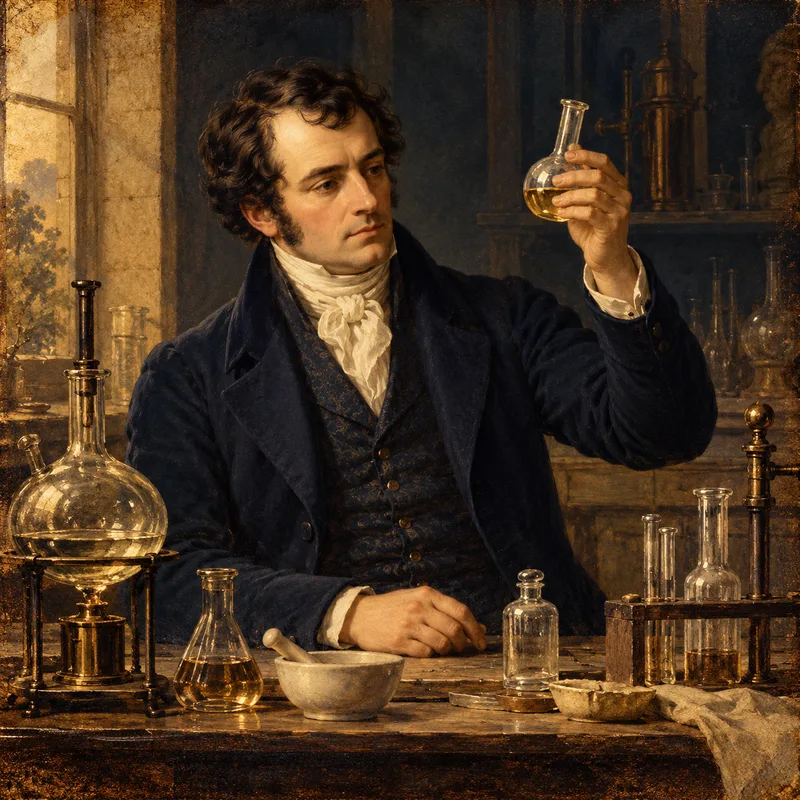
About the chemist
Louis Nicolas Vauquelin
1763-1829 · France
Discovered chromium and beryllium