Biography · Chemist no. 71 of 350
Luis Federico Leloir: Argentina's Nobel Laureate in Biochemistry
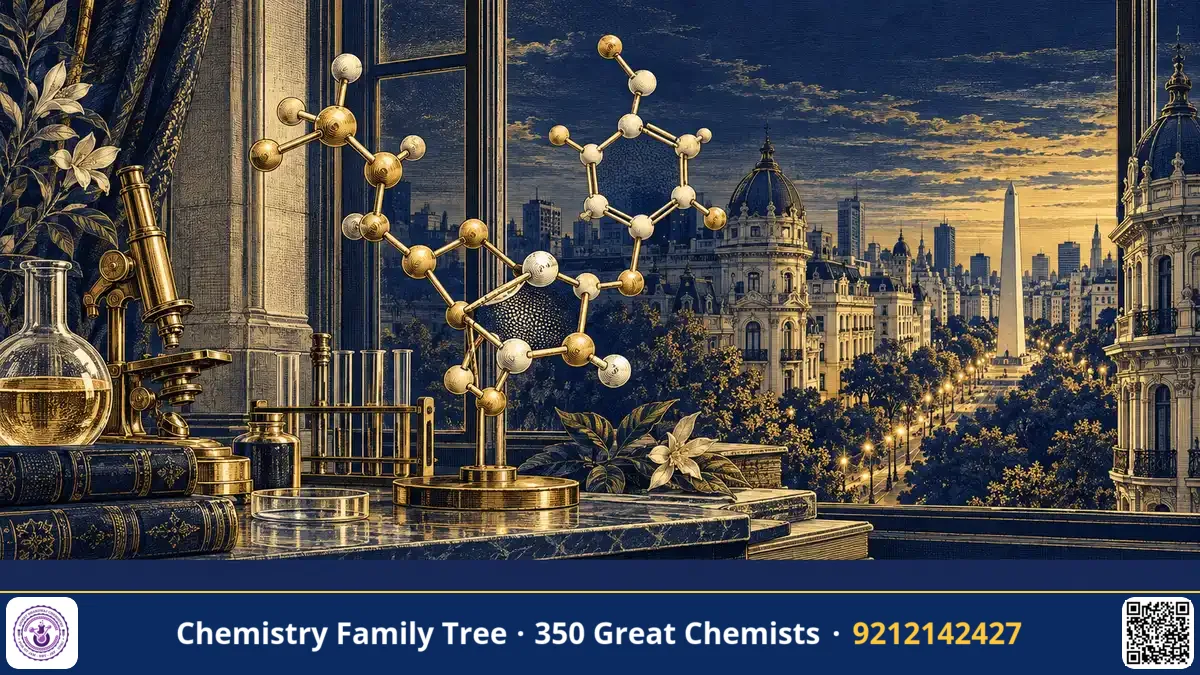
Luis Federico Leloir (1906-1987) was an Argentine physician and biochemist who discovered sugar nucleotides and explained how cells make carbohydrates. He received the Nobel Prize in Chemistry in 1970, and he is the first person from Latin America to win a Nobel Prize in Chemistry. His legacy in one line: he proved that excellent science can be done in a small laboratory with limited resources if the questions are good and the work is careful.
Early Life and Family
Luis Federico Leloir was born on 6 September 1906 in Paris, France, to Argentine parents who were visiting Europe. The family returned to Argentina when he was two years old, and he grew up in Buenos Aires. His family owned farmland (estancia) and had a comfortable position in society. Leloir was therefore raised in Argentina and always regarded himself as Argentine. In his school years he was not a particularly outstanding student, and he chose to study medicine, in part because there were few formal opportunities in science in the country at that time.
Education and Mentors
He studied medicine at the University of Buenos Aires and graduated in 1932. During his training he met the physiologist Bernardo Houssay, who would win the Nobel Prize in Physiology or Medicine in 1947. Houssay encouraged Leloir to turn from clinical practice to research, and Leloir completed a doctorate under his guidance on adrenal glands and carbohydrate metabolism. In 1936 he travelled to Cambridge, England, where he worked in the laboratory of Frederick Gowland Hopkins and studied enzymes. Later he spent time in the United States, working with Carl and Gerty Cori at Washington University in St Louis and with David Green at Columbia University. These experiences gave him skills in enzyme chemistry that he took back to Argentina.
Career Timeline
| Year | Event |
|---|---|
| 1906 | Born in Paris to Argentine parents |
| 1932 | Graduates in medicine, University of Buenos Aires |
| 1936 | Works with Hopkins at Cambridge |
| 1944 | Returns to Buenos Aires after research in the USA |
| 1947 | Founds the Instituto de Investigaciones Bioquímicas (Fundación Campomar) |
| 1948-49 | Identifies UDP-glucose as a coenzyme in galactose metabolism |
| 1950s | Shows UDP-glucose is the donor in glycogen synthesis |
| 1970 | Nobel Prize in Chemistry |
| 1987 | Dies in Buenos Aires |
Major Scientific Contributions
Leloir's best-known contribution is the discovery of sugar nucleotides, in particular UDP-glucose, and their role as activated donors of sugar units in the biosynthesis of glycogen, starch and other polysaccharides. He also worked out the pathway by which galactose is converted to glucose, now known as the Leloir pathway, with the enzymes galactokinase, galactose-1-phosphate uridylyltransferase and UDP-galactose 4-epimerase. In earlier work he studied the oxidation of fatty acids in liver and the formation of the hormone-related enzymes in the adrenal glands. Reactions and mechanisms are explained in detail in our discovery post.
Awards, Honours and Nobel Prize
- Nobel Prize in Chemistry, 1970, for the discovery of sugar nucleotides and their role in the biosynthesis of carbohydrates. He received the prize alone.
- Foreign member of the Royal Society and of the US National Academy of Sciences.
- Gairdner Foundation International Award (1960).
- Many honorary degrees and Argentine national honours.
Personality, Struggles and Lesser-Known Facts
- Limited resources: The Campomar institute was founded in 1947 with private support from Jaime Campomar, and its laboratory was modest. Leloir's group did first-rate work with simple equipment.
- Modest style: He was known for his shy personality and dislike of publicity. He liked to say that the progress of science depended on many people working together.
- A physician, not a chemist by training: He did not hold a formal degree in chemistry, yet received the Nobel Prize in Chemistry, which shows how biochemistry connects medicine and chemistry.
- Political difficulties: Argentina went through periods of political upheaval during his career, and science funding was often unstable.
- Team building: He trained many young researchers who later became leading biochemists in Latin America.
- Family: He married Amelia Zuberbühler in 1943 and had a daughter.
Legacy and Influence on Modern Chemistry
Every course on metabolism teaches the role of UDP-glucose and glycogen synthase. The concept of activated sugar donors has grown into the entire field of glycobiology, which studies sugar chains on proteins and cells that affect immunity, infection and cancer. Medical screening for galactosaemia saves infants every year. In Latin America, Leloir is a national hero of science, and many students and institutions look to his story as proof that scientific excellence can come from anywhere. For students in India, his journey from a modest laboratory to the Nobel Prize is an important example.
Lessons for Students
- You do not need the biggest laboratory to do great science, only clear questions and careful experiments.
- Learn from many places and bring ideas back to your own community.
- Build a team and train the next generation.
- Be modest and focus on the work rather than on fame.
Quick Facts Box
- Born: 6 September 1906, Paris, France
- Died: 2 December 1987, Buenos Aires, Argentina
- Nationality: Argentine
- Field: Biochemistry, carbohydrate metabolism
- Famous for: Sugar nucleotides; Leloir pathway
- Nobel: Chemistry, 1970
FAQ
Was Leloir born in Argentina?
No, he was born in Paris to Argentine parents but grew up in Buenos Aires and is regarded as an Argentine scientist.
What is the Leloir pathway?
It is the route by which galactose is converted to glucose-1-phosphate, involving galactokinase, a uridylyltransferase and an epimerase.
Who was Leloir's mentor?
Bernardo Houssay, a Nobel Prize winner in Physiology or Medicine.
Where did he establish his research institute?
In Buenos Aires, where the Instituto de Investigaciones Bioquímicas was set up with private support in 1947.
Published by ABC Chemistry — IIT-JAM | CSIR-NET | GATE Chemistry Coaching. Visit abcchemistry.com
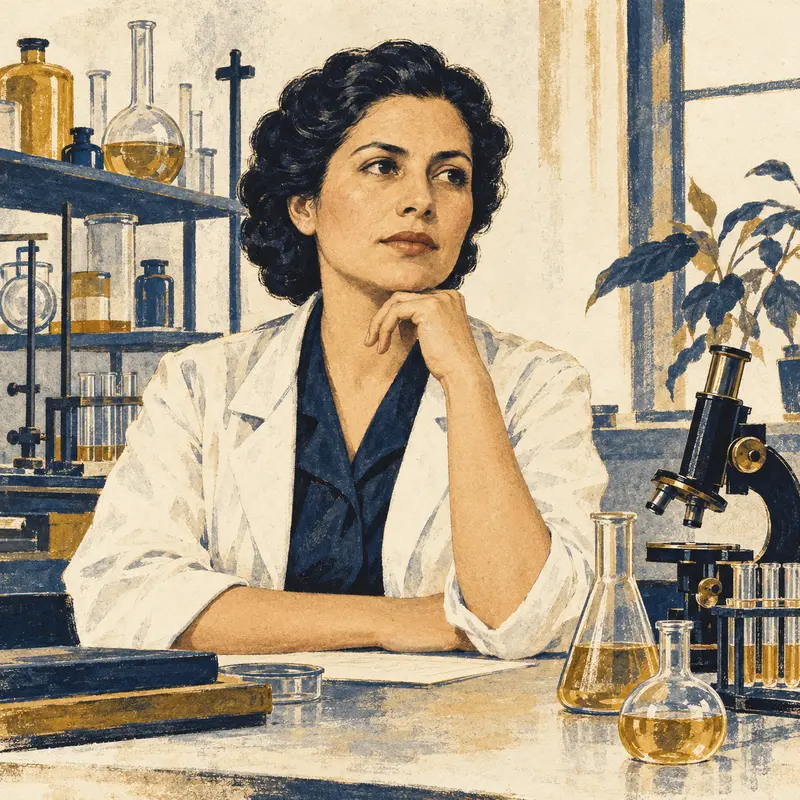
About the chemist
Luis Federico Leloir
1906-1987 · Argentina · Nobel Chemistry 1970
Sugar nucleotides; carbohydrate metabolism