Biography · Chemist no. 189 of 350
Martin Chalfie: The Worm Biologist Who Made GFP a Tool
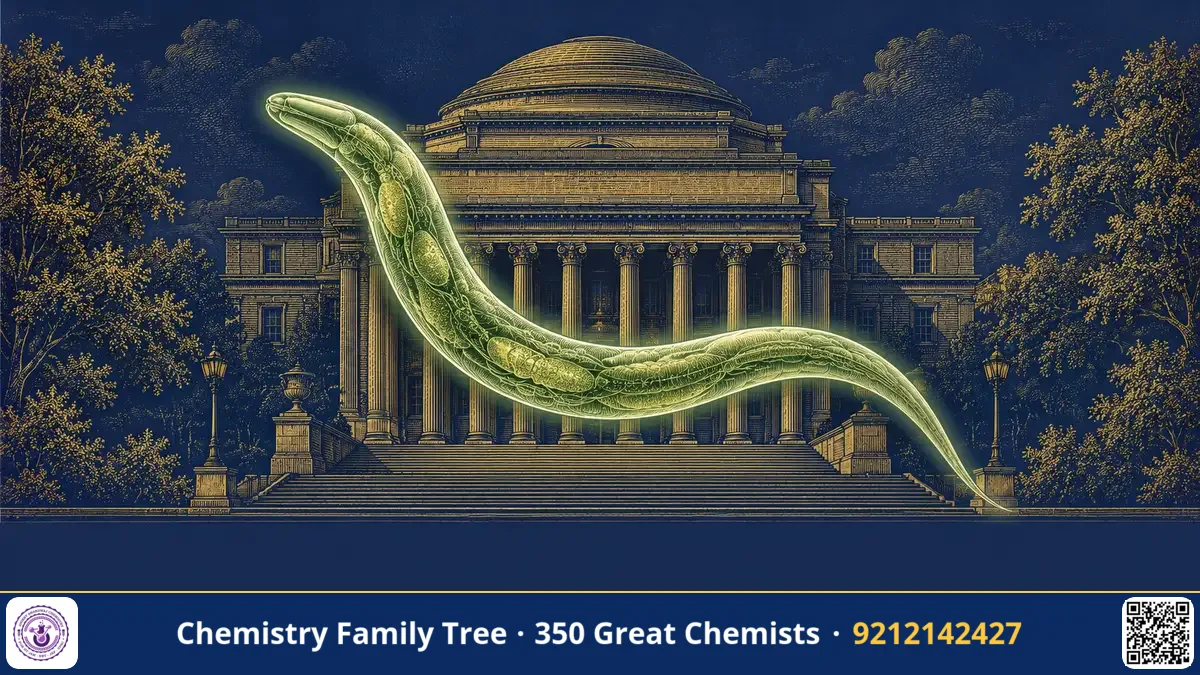
Martin Chalfie (born 15 January 1947) is an American biologist and professor at Columbia University in New York. He studies how touch is sensed by neurons of the tiny roundworm Caenorhabditis elegans. In 1993–94 he showed that the green fluorescent protein from a jellyfish can be used to light up cells in other living organisms, a discovery for which he shared the 2008 Nobel Prize in Chemistry with Osamu Shimomura and Roger Tsien. He once joked about being a biologist who won a chemistry prize, a reminder of how closely the two sciences are linked.
Early Life and Family
Chalfie was born in Chicago, Illinois, and grew up in Chicago and the New York area. He has said in interviews that as a student he did not know what career he wanted, and his early interest was spread over many subjects, so his path to a scientific career was not straight. He came from a family without a scientific tradition. He is known for his interest in teaching.
Education and Mentors
He studied biochemistry at Harvard University and graduated in 1969. During his undergraduate years he worked in laboratories, and he found that his first experiments often failed, a experience that he has since mentioned to encourage students. He received his PhD in neurobiology from Harvard Medical School in 1977, studying under Robert Perlman. He then did postdoctoral research at the MRC Laboratory of Molecular Biology in Cambridge, England, in the group of Sydney Brenner, with John Sulston as a colleague; both received the 2002 Nobel Prize in Physiology or Medicine for work on C. elegans (Brenner, Sulston and Robert Horvitz). In Cambridge he learned to use the worm to study the genes behind nerve function. In 1982 he joined the faculty of Columbia University.
Career Timeline
| Year | Event |
|---|---|
| 1947 | Born in Chicago, Illinois |
| 1969 | BA in biochemistry, Harvard University |
| 1977 | PhD in neurobiology, Harvard |
| 1977–1982 | Postdoctoral work at the MRC Laboratory of Molecular Biology, Cambridge, with Sydney Brenner |
| 1982 | Joined Columbia University |
| 1989 | Heard about GFP at a seminar and realised its potential as a marker |
| 1994 | Published expression of GFP in E. coli and in C. elegans touch neurons |
| 2008 | Nobel Prize in Chemistry (shared) |
Major Scientific Contributions
Chalfie made two major contributions. First, he identified genes (the mec genes) needed for the worm to sense gentle touch, showing how ion channels in sensory neurons respond to mechanical force. Second, he demonstrated that GFP can be expressed in other species and fluoresces without additional jellyfish factors. Fusing the GFP gene to the mec-7 promoter made six touch-receptor neurons glow green in living worms. Because the GFP chromophore forms spontaneously from the Ser-Tyr-Gly sequence in the presence of oxygen, GFP is a general tag. The chemistry is explained in our discovery article.
Later his laboratory worked on the molecular basis of neuron development and function, including mechanosensation, and he promoted the use of GFP in teaching as well as research.
Awards, Honours and Nobel Prize
- Nobel Prize in Chemistry 2008: shared by Osamu Shimomura, Martin Chalfie and Roger Y. Tsien "for the discovery and development of the green fluorescent protein, GFP". It was a Chemistry prize, though Chalfie is a neurobiologist.
- Member of the US National Academy of Sciences.
- Honorary degrees from various universities.
- He has served as chair of the Department of Biological Sciences at Columbia University.
Personality, Struggles and Lesser-Known Facts
- A clear thinker and a communicator: He is known for lively lectures and for writing in an accessible way.
- The seminar chance: His first contact with GFP came during a seminar on bioluminescence for which he was not even the target audience; he took notes and thought about it for a couple of years.
- Prasher's story: Douglas Prasher, who cloned the GFP gene, was not part of the 2008 prize. After his funding dried up he left academic research and for a time worked in jobs unrelated to science, before returning to the field. Chalfie and others have publicly credited Prasher for his key contribution.
- Student collaborators: The first successful bacterial experiment was done by a graduate student, Ghia Euskirchen, underscoring the importance of students in research.
- Biologist among chemists: He has often made light of receiving a Chemistry prize as a biologist.
Legacy and Influence on Modern Chemistry
After 1994, GFP fusions became routine in laboratories around the world. The idea of a genetically encoded fluorescent tag launched the field of live-cell imaging, and later led to calcium sensors, voltage sensors, optogenetic tools and the super-resolution microscopy awarded the Nobel Prize in Chemistry in 2014. In Indian laboratories, students use GFP in practicals to demonstrate transformation of bacteria, and researchers use it to study development, infection and neuroscience. For chemistry students, GFP provides an example of how a small change in the conjugation of a chromophore alters its colour.
Lessons for Students
- Pay attention in seminars outside your field; an idea may be waiting there.
- A simple model organism can answer deep questions.
- Credit the contributions of others, such as Prasher.
- Do not worry about early failures; many scientists begin with them.
- Good tools are as valuable as good theories.
Quick Facts Box
- Born: 15 January 1947, Chicago, Illinois, USA
- Died: Living
- Nationality: American
- Field: Neurobiology, molecular biology
- Famous for: Using GFP as a marker for gene expression
- Nobel: Chemistry 2008 (shared with Osamu Shimomura and Roger Tsien)
FAQ
Is Martin Chalfie a chemist?
He is a biologist who studies neurons, but his Nobel Prize was awarded in Chemistry for the development of GFP as a tool.
Where does he work?
At Columbia University in New York, where he is a professor of biological sciences.
What organism did he use?
The roundworm Caenorhabditis elegans, and E. coli for the first test.
Who gave him the GFP gene?
Douglas Prasher, who had cloned the gene.
Published by ABC Chemistry — IIT-JAM | CSIR-NET | GATE Chemistry Coaching. Visit abcchemistry.com
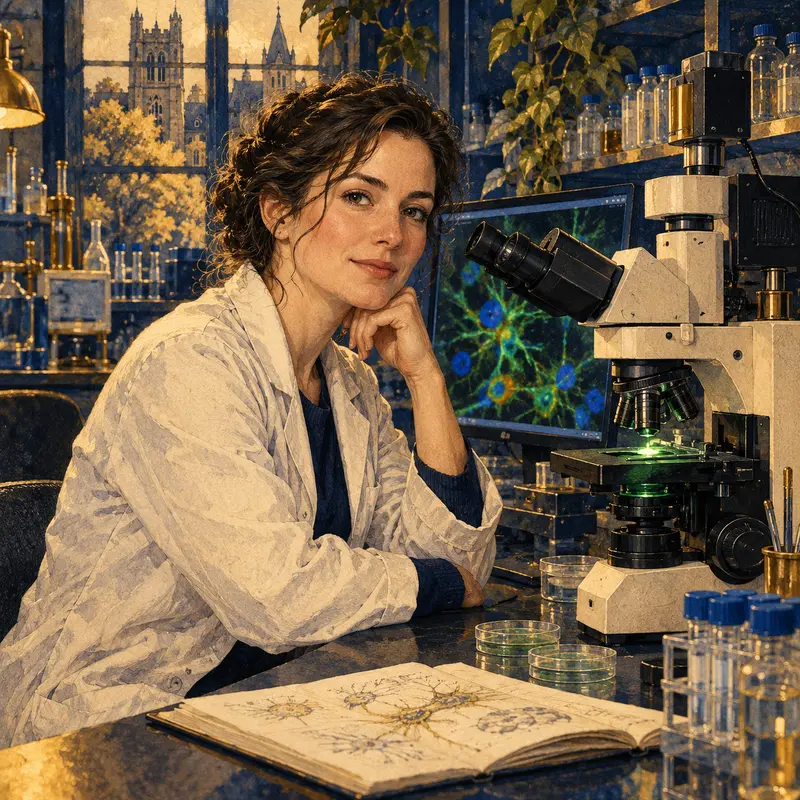
About the chemist
Martin Chalfie
1947- · United States · Nobel Chemistry 2008
GFP as a biological marker