Biography · Chemist no. 86 of 350
Paul Crutzen (1933-2021): The Bridge Engineer Who Became an Atmospheric Chemist
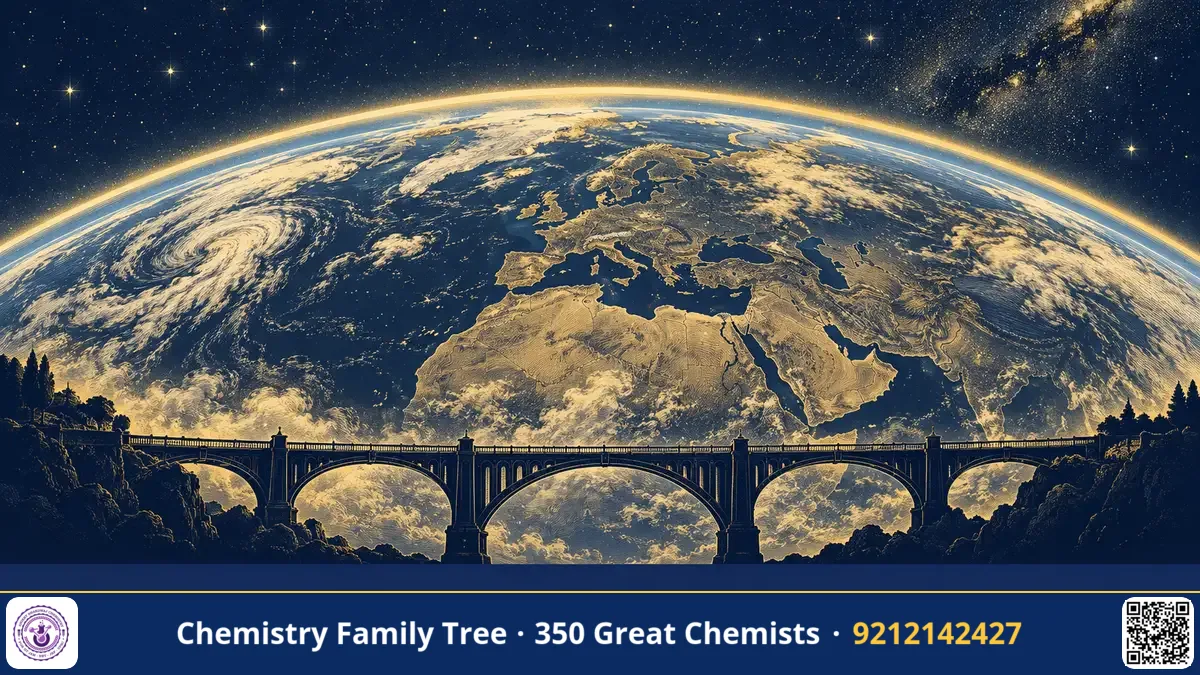
Paul Josef Crutzen was a Dutch atmospheric chemist who showed how nitrogen oxides control the ozone layer, and who later made the world think about the age of human influence on Earth, which he called the Anthropocene. His legacy in one line: he turned the atmosphere into a chemical system that could be studied, modelled and protected. He shared the 1995 Nobel Prize in Chemistry with Mario Molina and F. Sherwood Rowland. His life is also a story of how a person without a traditional academic start can reach the top of science.
Early Life & Family
Crutzen was born on 3 December 1933 in Amsterdam, the Netherlands. He grew up in a modest family, and his childhood was affected by the Second World War and the German occupation of his country. The last winter of the war in 1944-45, known as the "Hunger Winter", was extremely hard in the western Netherlands. After the war, he went through the school system, but his family did not have the money for a full university education. This shaped his future, because he took a more practical route into a profession at first.
Education & Mentors
Crutzen trained as a civil engineer at a technical college in Amsterdam, finishing in the mid-1950s. He then moved to Sweden, where he worked for a construction company designing bridges and buildings. In Sweden he met his future wife, Terttu Soininen, who was from Finland. In the late 1950s he took a job at Stockholm University working with computers in the Department of Meteorology, a very new field at that time. There he studied mathematics, statistics and meteorology in his spare time and was encouraged by senior scientists, notably Bert Bolin, a leading Swedish meteorologist who later became important in climate science. His early research was on the chemistry of ozone, where he used his computing skills to model the atmosphere. He received his doctorate in Stockholm, and his first big paper on nitrogen oxides appeared in 1970.
Career Timeline
| Year | Event |
|---|---|
| 1933 | Born in Amsterdam (3 December) |
| mid-1950s | Civil engineering studies in Amsterdam; moves to Sweden as a structural engineer |
| late 1950s | Joins the Meteorology Department of Stockholm University as a programmer |
| 1970 | Publishes the NOx catalytic cycle of ozone destruction |
| 1971 | Warns about the effect of supersonic transport aircraft on ozone |
| 1974-1980 | Works at the National Center for Atmospheric Research (NCAR) in Boulder, USA |
| 1980 | Becomes director at the Max Planck Institute for Chemistry in Mainz, Germany |
| 1982 | With John Birks, publishes the study that led to the "nuclear winter" concept |
| 1995 | Nobel Prize in Chemistry |
| 2000 | With Eugene Stoermer, proposes the term Anthropocene |
| 2021 | Dies in Mainz, Germany (28 January) |
Major Scientific Contributions
- NOx catalytic cycle: NO + O3 → NO2 + O2 and NO2 + O → NO + O2, explaining why the Chapman scheme overestimated ozone.
- Role of N2O: showing that nitrous oxide from soil microbes is the major natural source of stratospheric NOx.
- Warnings on supersonic aircraft: an early case of atmospheric chemistry influencing technology policy.
- Tropospheric chemistry: the role of NOx and the OH radical in making ozone in the lower atmosphere and in cleaning the air.
- Biomass burning and nuclear winter: studies of smoke and soot in the atmosphere, showing the possible climate effect of nuclear war.
- The Anthropocene: a proposal that humanity has become a geological force.
The equations and the cycle are explained in the companion discovery blog on ozone and nitrogen oxides.
Awards, Honours & Nobel Prize
The Nobel Prize in Chemistry 1995 was shared by Paul J. Crutzen, Mario J. Molina and F. Sherwood Rowland "for their work in atmospheric chemistry, particularly concerning the formation and decomposition of ozone". Crutzen received many other honours, including the Tyler Prize for Environmental Achievement and membership in leading academies around the world. He was one of the few Nobel laureates in chemistry who started out in civil engineering.
Personality, Struggles & Lesser-Known Facts
- He first worked as a bridge designer, and he joined atmospheric science through a computer-programming job. His story shows that a scientific career can begin in an unexpected place.
- He grew up during the German occupation and the Hunger Winter in the Netherlands.
- He did not follow the usual path of a PhD directly after a degree, and he completed his formal science qualifications while already working.
- He was known for his friendly, open style and his willingness to cross subject boundaries. His work links chemistry, meteorology, biology and geology.
- His 2002 article "Geology of mankind" in Nature brought the Anthropocene idea to a wide audience.
- In 2006 he wrote a controversial article suggesting that releasing sulfur particles into the stratosphere might be studied as a last-resort option to cool the planet, while stressing that cutting emissions must come first.
Legacy & Influence on Modern Chemistry
Crutzen's ozone work helped build the scientific basis for the Montreal Protocol, one of the most successful international environmental agreements. The Max Planck Institute for Chemistry in Mainz, which he directed, became a world centre of atmospheric science. The term Anthropocene is now used by geologists, historians and policymakers, and it appears in school books and public debate. In India, where air pollution, monsoon research and fertiliser use are major concerns, his work on tropospheric ozone, NOx and biomass burning is directly relevant.
Lessons for Students
- Do not worry if your first job or degree is not in the field you finally choose.
- Learn computing and mathematics. They allowed Crutzen to model the atmosphere before most chemists did.
- Think about systems. Ozone, nitrogen, soils, oceans and people form one connected system.
- Use science for society. His research led to better laws and protection of the environment.
Quick Facts Box
- Born: 3 December 1933, Amsterdam, Netherlands
- Died: 28 January 2021, Mainz, Germany
- Nationality: Dutch
- Field: Atmospheric chemistry, Earth-system science
- Famous for: NOx ozone-destruction cycle; the term Anthropocene
- Nobel Prize: Chemistry, 1995 (with M. Molina and F. S. Rowland)
FAQ
Was Crutzen trained as a chemist?
No. He began as a civil engineer, then moved into meteorology and atmospheric chemistry through research and self-study.
What is the Anthropocene?
It is the proposed geological epoch in which human activity has become a dominant influence on climate and the environment. Crutzen and Eugene Stoermer popularised the term in 2000.
Where did Crutzen work for most of his career?
At the Max Planck Institute for Chemistry in Mainz, Germany, after earlier posts in Stockholm and in Boulder, USA.
What is "nuclear winter"?
It is the idea that smoke from burning cities after a nuclear war could block sunlight and cool the Earth for months or years. Crutzen and John Birks published an early study of it in 1982.
Published by ABC Chemistry — IIT-JAM | CSIR-NET | GATE Chemistry Coaching. Visit abcchemistry.com
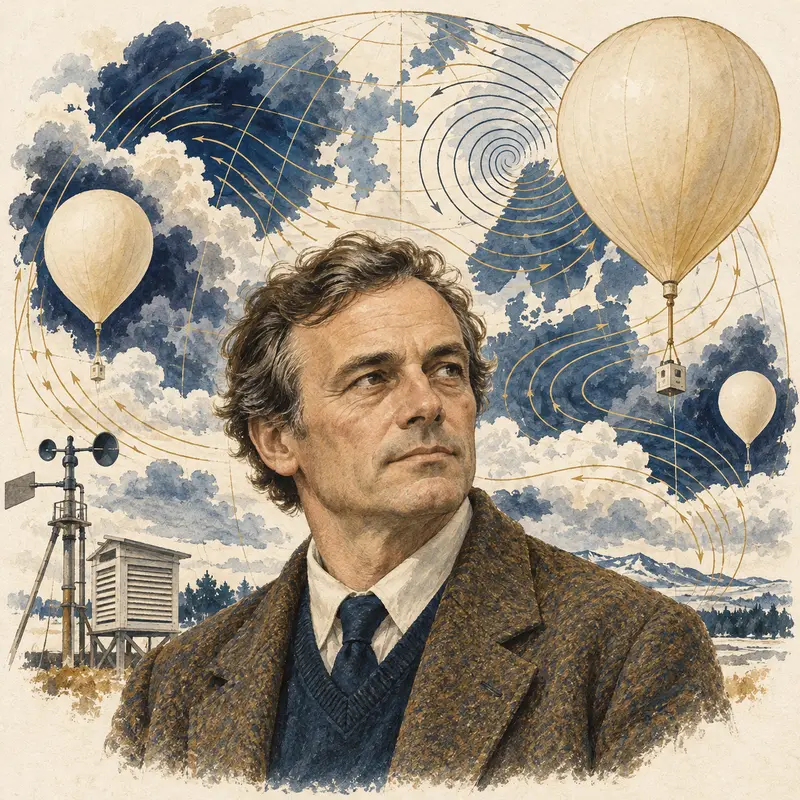
About the chemist
Paul Crutzen
1933-2021 · Netherlands · Nobel Chemistry 1995
Ozone chemistry; nitrogen oxides