Biography · Chemist no. 195 of 350
Robert J. Lefkowitz (born 1943): From Cardiologist to Receptor Pioneer
Introduction
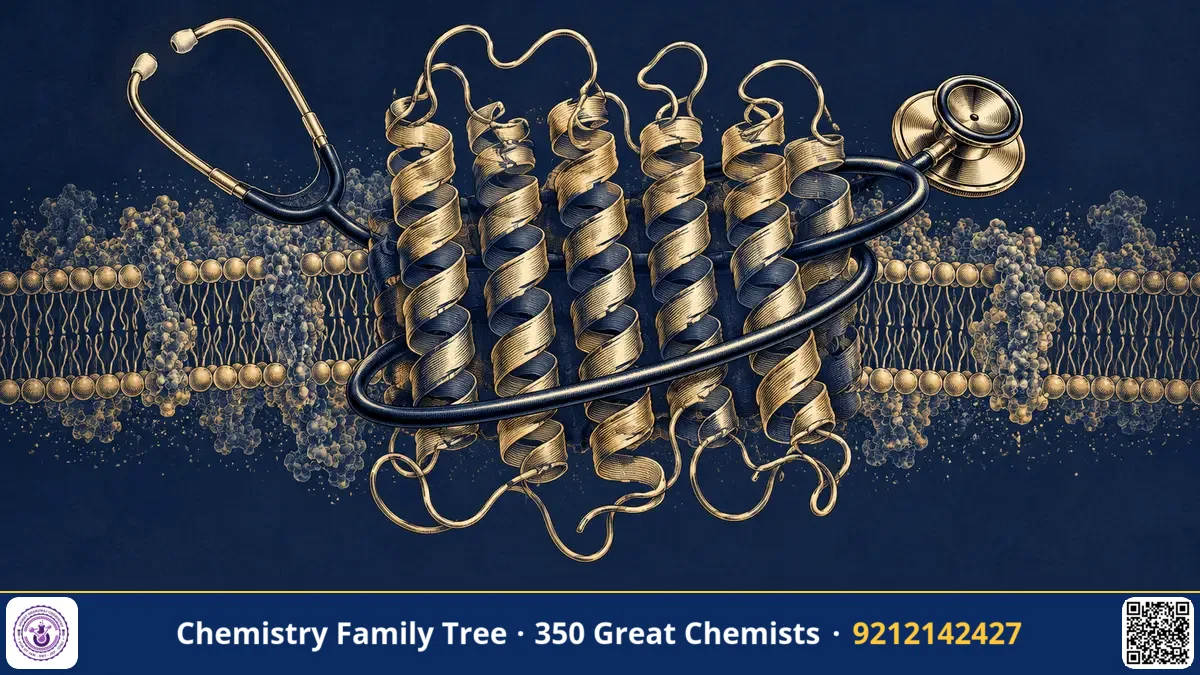
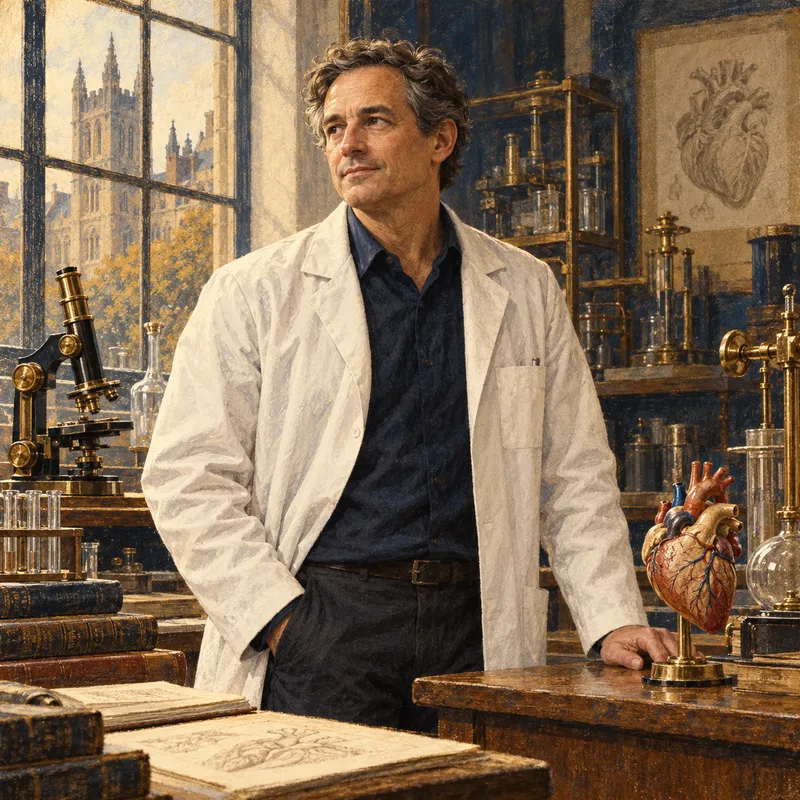
Robert Joseph Lefkowitz is an American physician and biochemist who trained as a cardiologist and became one of the most influential scientists in receptor biology. At Duke University he made the invisible "receptor" visible, then cloned the genes of adrenaline receptors and uncovered the large GPCR family. He shared the 2012 Nobel Prize in Chemistry with Brian Kobilka. His legacy can be seen in your medicine cabinet: a large share of modern drugs act on the receptors he studied.
Early Life and Family
Lefkowitz was born on 15 April 1943 in the Bronx, New York City, into a Jewish family. His father worked in the family business, and the household valued hard work and education. He grew up in New York, was drawn early to medicine, and went on to study at Columbia. He is married to Lynda Lefkowitz, and they have children. Beyond these basics we leave out details that cannot be verified, and keep the focus on his science.
Education and Mentors
Lefkowitz studied chemistry at Columbia College, graduating in 1962, and then attended the College of Physicians and Surgeons at Columbia University, where he received his MD in 1966. He did his medical internship and residency at Columbia-Presbyterian Hospital in New York. In 1968 he moved to the National Institutes of Health (NIH) in Bethesda, Maryland, as a research associate, a posting through which he began to study hormone action using radioactive labels. There he started work on the receptor for the hormone ACTH. After a period of clinical training in cardiology at Massachusetts General Hospital in Boston, he joined Duke University in 1973.
Career Timeline
| Year | Event |
|---|---|
| 1943 | Born in the Bronx, New York |
| 1962 | BA in chemistry, Columbia College |
| 1966 | MD, Columbia University |
| 1968 | Research associate at the NIH |
| 1973 | Joined Duke University Medical Center |
| 1976 | Became an Investigator of the Howard Hughes Medical Institute (HHMI) at Duke |
| 1980s | Purified the beta-adrenergic receptor and discovered receptor kinases |
| 1986 | Cloned the beta₂-adrenergic receptor gene with Brian Kobilka and others |
| 1990s | Characterised beta-arrestins and receptor desensitisation |
| 2012 | Nobel Prize in Chemistry |
Major Scientific Contributions
Lefkowitz's work can be summarised in four steps. First, he used radioactive iodine-labelled hormones to prove that hormone receptors are real, measurable molecules. Second, he showed how receptors interact with G proteins, giving the idea of high- and low-affinity states. Third, he and his team purified and cloned the beta-adrenergic receptor, revealing the seven-transmembrane architecture that defines GPCRs. Fourth, his group discovered the machinery that switches receptors off: GPCR kinases and arrestins. Later he helped uncover the concept of biased signalling through arrestins. See our companion discovery post for the chemical details and exam points.
Awards, Honours and Nobel Prize
- Nobel Prize in Chemistry 2012, shared with Brian Kobilka, "for studies of G-protein-coupled receptors".
- National Medal of Science (2007), the highest scientific honour in the United States.
- Membership of the US National Academy of Sciences, the Institute of Medicine and the American Academy of Arts and Sciences.
- James B. Duke Professor at Duke University and Investigator of the Howard Hughes Medical Institute.
Personality, Struggles and Lesser-Known Facts
- From clinic to bench. He once described himself as having trained to be a heart doctor and then, at the NIH, realising he loved research more than patient care.
- Shared credit. After the Nobel announcement he repeatedly credited the many students and postdoctoral fellows in his laboratory for the discoveries.
- Training a generation. His laboratory at Duke trained many postdoctoral fellows, including Brian Kobilka, who became a Nobel laureate himself.
- Persistence with a hard problem. Purifying a receptor present in tiny amounts took years of effort and vast quantities of tissue.
- Love of teaching. He is known for passion in mentoring and for an enthusiastic style in lectures.
Legacy and Influence on Modern Chemistry
GPCRs are now the most important drug targets in the human genome. Lefkowitz's methods, from radioligand binding to receptor cloning, are standard teaching in pharmacology and biochemistry. His discovery that arrestins both turn off and redirect signals created the modern field of biased agonism, giving drug designers a new way to separate beneficial effects from side effects. By training scientists such as Kobilka, he also helped bring structural biology to GPCRs. Colleagues describe the Duke group as a model of how clinical insight and rigorous chemistry can combine.
Lessons for Students
- Make the abstract concrete. Receptors were an idea until someone measured them.
- Develop tools. A better assay (radioligand binding) opened a whole field.
- Choose collaborators well. Cloning the receptor required molecular biology skills that the group acquired through a talented postdoctoral fellow.
- Cross boundaries. A physician with a chemistry degree won a Chemistry Nobel; breadth matters.
Quick Facts Box
- Born: 15 April 1943, the Bronx, New York, USA
- Died: Living (as of writing)
- Nationality: American
- Field: Biochemistry, pharmacology, cardiology
- Famous for: Radioligand binding of receptors; cloning of the beta-adrenergic receptor; GPCR signalling and arrestins
- Nobel: Chemistry 2012 (with Brian Kobilka)
FAQ
Was Lefkowitz a chemist or a doctor?
Both. He studied chemistry as an undergraduate, then trained as a medical doctor, and he used chemical methods throughout his research.
Where did he work most of his life?
At Duke University in Durham, North Carolina, from 1973 onwards.
Who was his famous postdoctoral student?
Brian Kobilka, with whom he shared the 2012 Nobel Prize in Chemistry.
Why is his work important for medicine?
Drugs such as beta-blockers and asthma inhalers act on receptors he characterised, and understanding them allows safer, more selective drugs.
Published by ABC Chemistry — IIT-JAM | CSIR-NET | GATE Chemistry Coaching. Visit abcchemistry.com
About the chemist
Robert Lefkowitz
1943- · United States · Nobel Chemistry 2012
G-protein-coupled receptors