Biography · Chemist no. 82 of 350
Rudolph A. Marcus: The Theorist Who Explained How Electrons Jump
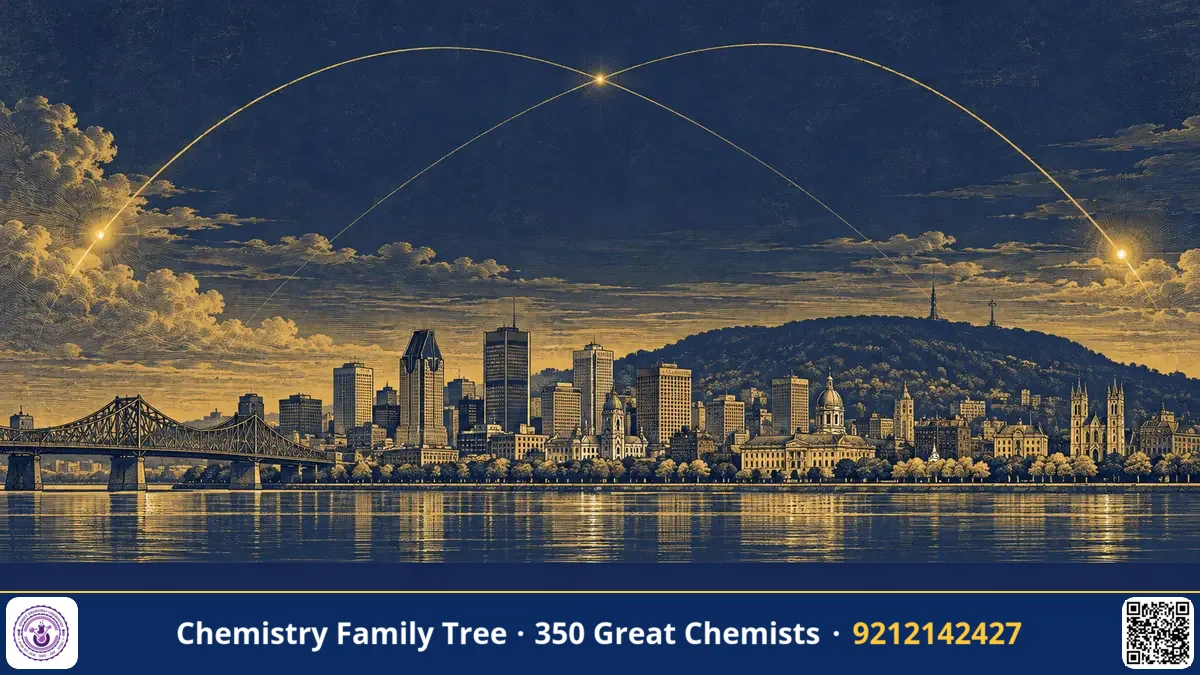
Rudolph Arthur Marcus is a Canadian-born American theoretical chemist, born in 1923, whose equations describe how fast electrons transfer between molecules. His legacy in one line: he gave chemistry a simple, powerful formula that links the speed of electron transfer to the energy of the reaction and the "reorganisation" of the surroundings. He won the 1992 Nobel Prize in Chemistry. Students meet his name in physical chemistry, electrochemistry and photochemistry, and sometimes in questions on unimolecular reactions through RRKM theory.
Early Life & Family
Marcus was born on 21 July 1923 in Montreal, Quebec, Canada. He grew up in the city and went through the local school system, where he showed a strong ability in science and mathematics. Montreal, with its English-speaking McGill University, offered a good route to higher education. The years of his childhood included the Great Depression, and the Second World War began as he reached university age.
Education & Mentors
Marcus studied chemistry at McGill University, earning his bachelor's degree in 1943 and his PhD in 1946. His doctoral supervisor was Carl A. Winkler, a physical chemist who worked on reaction kinetics. After completing his doctorate, Marcus did postdoctoral work at the National Research Council of Canada in Ottawa, a centre of physical chemistry led by Ernest Steacie. He then moved to the University of North Carolina to work with Oscar K. Rice, an expert in unimolecular reaction theory. This period shaped his first major achievement, the work that became RRKM theory, which combines the earlier RRK theory (Rice, Ramsperger, Kassel) with transition-state theory.
Career Timeline
| Year | Event |
|---|---|
| 1923 | Born in Montreal (21 July) |
| 1943 | Bachelor's degree, McGill University |
| 1946 | PhD, McGill University, under Carl A. Winkler |
| 1946-1951 | Postdoctoral work in Ottawa and at the University of North Carolina |
| 1951 | Joins the Polytechnic Institute of Brooklyn; develops RRKM theory |
| 1956-1960s | Publishes the theory of electron transfer and the Marcus equation |
| 1964 | Moves to the University of Illinois at Urbana-Champaign |
| 1978 | Joins the California Institute of Technology (Caltech) |
| 1984 | Experimental confirmation of the inverted region by Closs, Miller and co-workers |
| 1992 | Nobel Prize in Chemistry |
Major Scientific Contributions
- RRKM theory: a quantitative theory of unimolecular reaction rates as a function of energy and pressure, in which the rate constant depends on the number of states at the transition state compared with the density of states of the energised reactant.
- Marcus theory of electron transfer: ΔG‡ = (λ + ΔG°)² / 4λ links rate to driving force and reorganisation energy.
- The inverted region: the prediction that a very large driving force can make electron transfer slower.
- The cross relation: estimating the rate of a cross electron-transfer reaction from two self-exchange rates.
- Later theory: work on electron transfer at electrodes and across interfaces, on proton transfer and on reactions at the surface of water.
The equations and the three regions of the Marcus curve are explained in the companion discovery blog on Marcus theory.
Awards, Honours & Nobel Prize
The Nobel Prize in Chemistry 1992 was awarded to Marcus alone "for his contributions to the theory of electron transfer reactions in chemical systems". Other major recognitions include the Wolf Prize in Chemistry (1985) and the US National Medal of Science. He is a member of national academies and a long-serving professor at Caltech, where he held the Noyes Professorship of Chemistry.
Personality, Struggles & Lesser-Known Facts
- His first famous theory, RRKM, is about gas-phase reactions; his second, about electron transfer in solution, came after he changed fields. Strong scientists can build a second reputation.
- When he proposed the inverted region, many experimental chemists doubted it. It took about three decades before clear experiments confirmed it.
- Marcus was a theorist who listened to experimentalists and often interpreted their results. His theory became popular because it could be tested.
- He worked in Canada, then at institutions in New York, Illinois and California, which gives a good example of the mobility of modern scientists.
- The inverted region is sometimes taught as an example of a "counter-intuitive" result that was later seen to be everywhere, from artificial photosynthesis to chemiluminescence.
Legacy & Influence on Modern Chemistry
Marcus theory is a basic tool in physical chemistry. It guides the design of dye-sensitised solar cells and of molecular systems for artificial photosynthesis, where chemists want a fast forward electron transfer and a slow back transfer. Biologists use it to understand how electrons tunnel along proteins in respiration and photosynthesis, where the reaction centre reaches nearly perfect efficiency in the first steps. Electrochemists use the Marcus-Hush description of electrode kinetics. Computational chemists use the reorganisation energy as a calculable parameter. The RRKM framework is still used in modelling combustion and atmospheric chemistry. In the Nobel story of electron transfer, Henry Taube (1983) provided the experimental mechanisms and Marcus (1992) the theory.
Lessons for Students
- A simple model can have great power. Two parabolas explained a vast range of reactions.
- Follow the maths even when it gives a strange result. The inverted region looked wrong at first, but was correct.
- Combine ideas from different areas: Franck-Condon, statistical mechanics, electrostatics and kinetics.
- Be patient. Experimental proof of the inverted region came decades after the prediction.
Quick Facts Box
- Born: 21 July 1923, Montreal, Canada
- Died: Not recorded in our source list (listed as 1923-); please check a current source
- Nationality: Canadian-born, American citizen
- Field: Theoretical and physical chemistry
- Famous for: Marcus theory of electron transfer; RRKM theory
- Nobel Prize: Chemistry, 1992
FAQ
What does the R in RRKM stand for?
RRKM stands for Rice, Ramsperger, Kassel and Marcus, the scientists behind the theory of unimolecular reactions.
Where did Marcus study?
He studied at McGill University in Montreal, where he received both his bachelor's degree and PhD.
Why did the Nobel committee honour Marcus?
For his theory of electron transfer, which explains the rates of electron-transfer reactions in solution and in biology.
What is the Marcus inverted region?
It is the region where a more negative ΔG° gives a slower rate of electron transfer, because −ΔG° is larger than the reorganisation energy.
Published by ABC Chemistry — IIT-JAM | CSIR-NET | GATE Chemistry Coaching. Visit abcchemistry.com
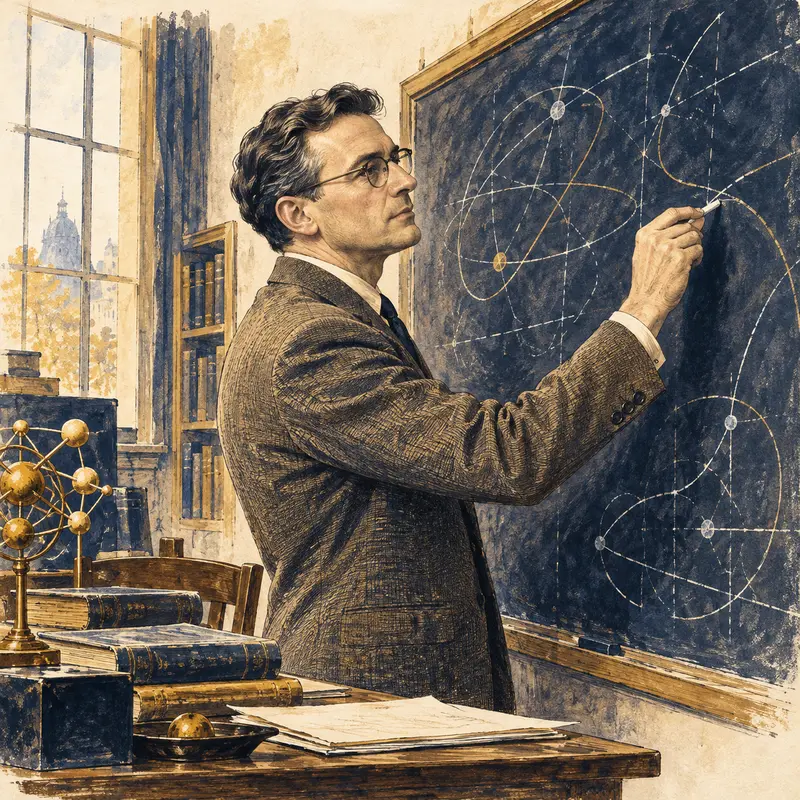
About the chemist
Rudolph A. Marcus
1923- · Canada/United States · Nobel Chemistry 1992
Marcus theory of electron transfer