The discovery, explained · Chemist no. 176 of 350
Ryoji Noyori and BINAP: Making Asymmetric Hydrogenation General
William Knowles showed in 1968 that a chiral catalyst could hydrogenate a double bond enantioselectively, but his method worked well only for a limited set of substrates. Ryoji Noyori, a professor at Nagoya University in Japan, made the idea much more general. In 1980 his group introduced BINAP, a chiral diphosphine ligand, and showed that its complexes with rhodium and ruthenium hydrogenate many types of compounds with very high enantioselectivity. He shared half of the 2001 Nobel Prize in Chemistry with Knowles; the other half went to K. Barry Sharpless.
The Scientific Problem Before the Discovery
The Rh–DIPAMP catalyst of Knowles worked beautifully for enamides, because those substrates have an amide group that binds to the metal along with the C=C. But many important molecules do not have such a group. Chemists wanted a single catalyst family that could reduce functionalised ketones, allylic alcohols, unsaturated acids and imines. The problems were that chiral ligands with a stereogenic phosphorus atom are hard to make, and the catalysts were often limited to a narrow range of substrates. Noyori wanted a ligand that was easy to make in both mirror-image forms, rigid, and effective with different metals.
The Discovery: Step by Step
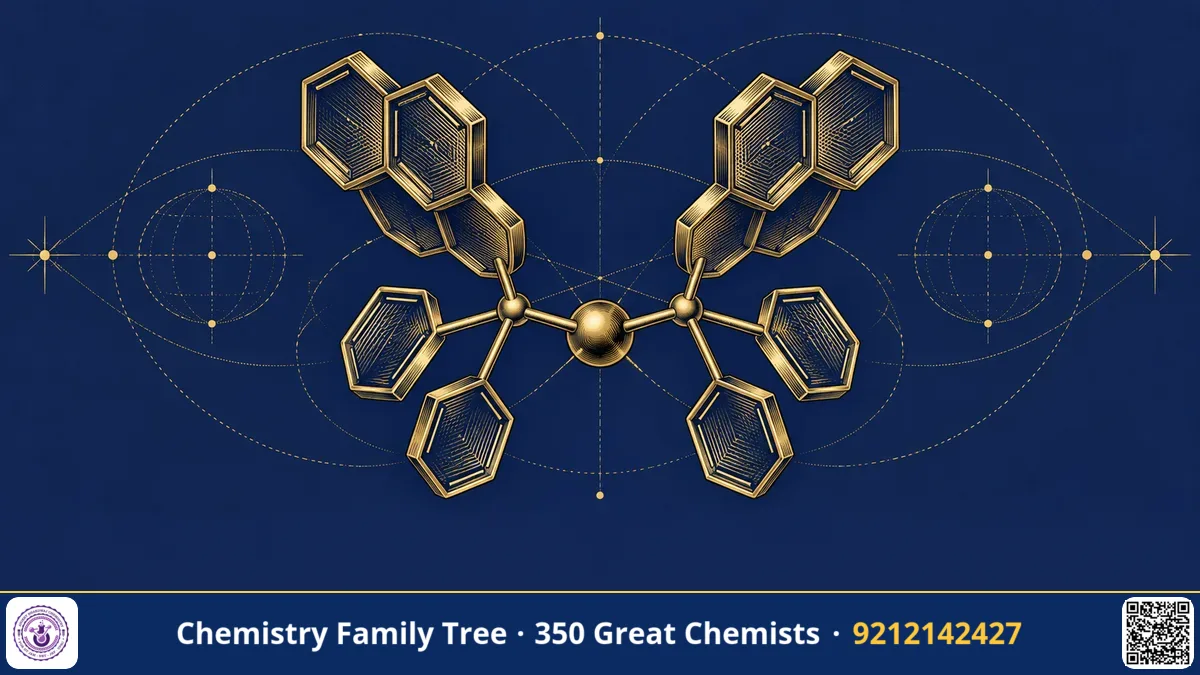
- Designing BINAP (1980). Noyori and his co-workers designed 2,2′-bis(diphenylphosphino)-1,1′-binaphthyl, named BINAP. It has two naphthalene rings joined by a single bond, with a diphenylphosphino group at each 2-position.
- Axial chirality. Because of steric hindrance between the 8,8′ hydrogens of the two naphthalene rings, rotation about the central C–C bond is blocked. The molecule therefore exists as two stable mirror-image forms, (R)-BINAP and (S)-BINAP. This is atropisomerism.
- Rhodium catalysis. Rh–BINAP catalysts hydrogenated α-(acylamino)acrylic acids with high ee, matching or exceeding earlier systems.
- Ruthenium catalysis. In the mid-to-late 1980s, Noyori's group found that Ru(II)–BINAP complexes, such as Ru(OAc)2(BINAP) and RuCl2(BINAP), hydrogenate many other substrates: allylic alcohols, β-keto esters and unsaturated carboxylic acids with 95–99% ee.
- Industrial processes. The catalysts were used in a large-scale synthesis of (−)-menthol, with Takasago International Corporation in Japan, which produces thousands of tonnes per year.
- Ketones and the Ru–diamine system. Later, Noyori developed catalysts with a BINAP ligand and a chiral diamine, such as RuCl2(BINAP)(DPEN), that hydrogenate simple ketones to chiral alcohols through a "metal–ligand bifunctional" mechanism.
The Chemistry Behind It
Axial chirality and C2 symmetry
BINAP has no stereogenic carbon, yet it is chiral because of its twisted (axial) arrangement. It also has C2 symmetry. A C2-symmetric ligand reduces the number of possible diastereomeric transition states, which usually makes the enantioselectivity higher and the mechanism easier to understand. Rotation about the binaphthyl bond is blocked at ordinary temperatures, so the two forms do not racemise.
Examples of reactions
Geraniol (allylic alcohol) + H₂ --[Ru-(S)-BINAP]--> (S)-citronellol (high ee)
Methyl acetoacetate + H₂ --[RuCl₂-(R)-BINAP]--> methyl (R)-3-hydroxybutanoate (high ee)
Naproxen precursor (unsaturated acid) + H₂ --[Ru-(S)-BINAP]--> (S)-naproxen (~97% ee)
Mechanism with Ru–diamine catalysts
For simple ketones, the RuCl2(diphosphine)(diamine) precatalyst is activated by a base, such as KOtBu, in 2-propanol and H2, to give a Ru hydride with an N–H group. The ketone is reduced in a concerted, six-membered transition state: the hydride on Ru goes to the carbonyl carbon, and the proton on N goes to the carbonyl oxygen at the same time. This is called the outer-sphere or metal–ligand bifunctional mechanism, and the substrate does not need to bind to the metal.
Other Noyori work
Noyori's group also developed asymmetric transfer hydrogenation with Ru–TsDPEN catalysts, using isopropanol or formic acid as the hydrogen source, and the Noyori asymmetric addition of dialkylzinc reagents to aldehydes catalysed by amino alcohols such as DAIB. In green chemistry, they used supercritical CO2 for hydrogenation, and aqueous hydrogen peroxide for oxidation.
Applications Today
- Flavours and fragrances: The synthesis of (−)-menthol, used in toothpaste, medicines and sweets, and of citronellol and related terpenes.
- Pharmaceuticals: Naproxen (an anti-inflammatory drug), the antibiotic family of carbapenems (key intermediate), and several other chiral drug intermediates.
- Fine chemicals: Chiral alcohols and amino acids are used to build complex molecules.
- Green chemistry: The reaction uses hydrogen gas, has high atom economy and needs only tiny amounts of catalyst.
- India context: Asymmetric hydrogenation is taught in advanced organic and organometallic courses in Indian universities and used in process development in pharmaceutical firms making chiral drugs.
Exam Corner
- BINAP = 2,2′-bis(diphenylphosphino)-1,1′-binaphthyl; chirality is axial (atropisomerism), with C2 symmetry.
- Ru–BINAP hydrogenates allylic alcohols, β-keto esters and unsaturated acids with high ee; (−)-menthol is made industrially by a related Rh–BINAP isomerisation step.
- Ru–diamine catalysts reduce ketones by a six-membered transition state with simultaneous transfer of hydride and proton.
- Bite angle and chelate ring conformation of the diphosphine control selectivity.
- Noyori shared half of the 2001 Nobel Prize in Chemistry with Knowles. Sharpless got the other half.
Common Misconceptions
- "A chiral molecule needs a chiral carbon." BINAP is chiral without any stereogenic carbon or phosphorus. Its chirality comes from restricted rotation.
- "Noyori and Knowles did the same reaction." Knowles used P-stereogenic DIPAMP for enamides. Noyori's BINAP is axially chiral and works on a far wider range of substrates.
- "Ketone hydrogenation needs the ketone to bind to Ru." In the Ru–diamine system, the reaction happens in the outer sphere.
Quick Revision Box
- BINAP introduced in 1980 by Noyori's group, Nagoya University.
- Atropisomeric (axially chiral), C2-symmetric diphosphine.
- Rh and Ru complexes hydrogenate many substrate classes with 95–99% ee.
- Industrial use: (−)-menthol (Takasago), naproxen, carbapenem intermediates.
- Ru–BINAP–diamine: bifunctional mechanism for ketones.
- Nobel Prize in Chemistry 2001 (half) with Knowles.
FAQ
What is atropisomerism?
It is stereoisomerism caused by restricted rotation about a single bond, which makes the conformers separable. BINAP is a classic example.
Why is BINAP so successful?
It is rigid, C2-symmetric, available in both enantiomeric forms and forms stable chelates with metals like Rh and Ru.
What is the difference between hydrogenation and transfer hydrogenation?
Hydrogenation uses H2 gas. Transfer hydrogenation uses a hydrogen donor such as isopropanol or formic acid.
Where did Noyori work?
Mostly at Nagoya University in Japan, and later he led the Japanese national research institute RIKEN.
Published by ABC Chemistry — IIT-JAM | CSIR-NET | GATE Chemistry Coaching. Visit abcchemistry.com
About the chemist
Ryoji Noyori
1938- · Japan · Nobel Chemistry 2001
Asymmetric hydrogenation catalysis