Biography · Chemist no. 123 of 350
Wendell Meredith Stanley: The Chemist Who Crystallised a Virus
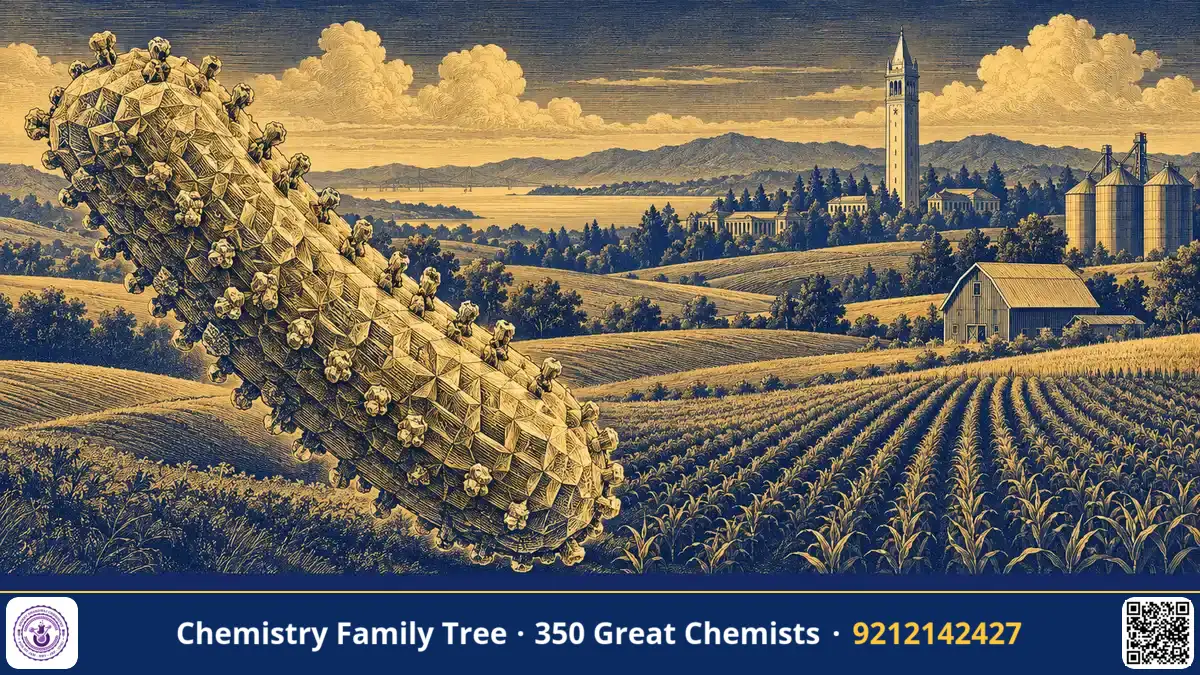
Wendell Meredith Stanley (1904-1971) was an American biochemist and virologist who was the first to crystallise a virus, tobacco mosaic virus, in 1935. He shared the Nobel Prize in Chemistry for 1946 with John Howard Northrop, while James Sumner received the other half. After the prize he built the Virus Laboratory at the University of California, Berkeley. His legacy is the chemical approach to viruses, which led to molecular virology.
Early Life & Family
Stanley was born on 16 August 1904 in Ridgeville, a small town in Indiana, in the American Midwest. He grew up in a small town in a farming area, where the pace of life was slow and the community was close. He attended the local school in Ridgeville and nearby schools before going to college.
In his youth he was fond of sports, especially football. He married Marian Staples Jay in 1929. The family moved with his changing posts.
Education & Mentors
Stanley attended Earlham College, a small Quaker college in Indiana, where he studied chemistry and played football. He had thought of making a career in football coaching, but his interest in chemistry research grew during his studies. He earned his Bachelor's degree in 1926.
He then moved to the University of Illinois at Urbana for graduate study with Roger Adams, one of the leading American organic chemists. Under Adams he worked on the chemistry of chaulmoogric acid-type compounds studied as leprosy remedies, and on the stereochemistry of biphenyls. He earned his PhD in 1929. Adams taught him rigorous methods of purification and identification. After the doctorate, he spent a period of research in Munich, Germany, with Heinrich Wieland, who was an expert in steroids and bile acids and a Nobel laureate (1927). In 1931 he joined the Rockefeller Institute for Medical Research.
Career Timeline
| Year | Event |
|---|---|
| 1904 | Born in Ridgeville, Indiana |
| 1926 | Bachelor's degree, Earlham College |
| 1929 | PhD, University of Illinois, with Roger Adams |
| 1930-1931 | Research in Munich with Heinrich Wieland |
| 1931 | Joins the Rockefeller Institute for Medical Research in New York |
| 1932 | Moves to its laboratories at Princeton, New Jersey, to start virus research |
| 1935 | Announces crystals of tobacco mosaic virus |
| 1940s | Works during the war on influenza virus purification and vaccines |
| 1946 | Shares the Nobel Prize in Chemistry |
| 1948 | Becomes professor of biochemistry at the University of California, Berkeley, and founds the Virus Laboratory |
| 1950s-1960s | Directs the Virus Laboratory; studies the chemistry of viruses and their link to cancer |
| 1971 | Dies in Salamanca, Spain, while on a visit |
Major Scientific Contributions
The most important work is the crystallisation of TMV in 1935, with the proof that the crystals are infectious and have constant properties. The details are in our discovery post. He also did the following:
- Chemistry of viruses. He studied TMV, its strains and the effects of chemical agents on them, showing that changes in the protein of the virus were linked with changes in properties.
- Influenza virus. During the Second World War, he and his group developed methods to purify and concentrate influenza virus using centrifugation, which supported vaccine development.
- Early training in organic chemistry. His doctoral work on the stereochemistry of biphenyls and on chaulmoogra-type acids was classical organic chemistry.
- Berkeley Virus Laboratory. He recruited a team that included Heinz Fraenkel-Conrat, who worked on the structure and reconstitution of TMV.
- Cancer virus studies. In his later years he studied the possible role of viruses in cancer, and he was a strong supporter of virus research in the United States.
Awards, Honours & Nobel Prize
Stanley's share of the Nobel Prize in Chemistry for 1946 was given "for the preparation of enzymes and virus proteins in a pure form", which he shared with John Howard Northrop. The other half of the prize went to James Batcheller Sumner "for his discovery that enzymes can be crystallized". Stanley was elected to the National Academy of Sciences and received honorary degrees from several universities. He is remembered at Berkeley as the founder of its Virus Laboratory and of molecular virology there.
Personality, Struggles & Lesser-Known Facts
- Almost a football coach. He planned a career in football coaching when he started college, and chemistry became his career by a change of mind during his studies.
- A ton of leaves. The first TMV preparations required a ton of infected tobacco leaves to give a small quantity of crystals.
- A conclusion that needed correction. He first said that the virus was a pure protein. Bawden and Pirie found RNA, and Stanley accepted the new evidence. This is a good example of how science corrects itself.
- Died on the move. He died of a heart attack in 1971 in Salamanca, Spain, while on a trip abroad. He was 66 years old.
Legacy & Influence on Modern Chemistry
Stanley's crystal of TMV started the chemical study of viruses. It led to the knowledge that viruses are assemblies of nucleic acid and protein with a definite structure, and to X-ray studies of virus structure by Bernal, Franklin and Klug. His laboratory trained a generation of virologists, and the later reconstitution of TMV from its parts proved that RNA is the genetic material in this virus. The methods of purification of viruses are the basis of vaccine production worldwide, and the idea of studying viruses as molecules supports modern work on viral proteins and drug design. Indian students meet this story in the chapters on biomolecules, nucleic acids and the structure of viruses.
Lessons for Students
- Interests can change. A future football coach became a Nobel laureate in chemistry.
- Take a method from one field and apply it in another. Stanley used protein purification methods on a virus.
- Accept correction. When new evidence showed RNA in TMV, he did not resist.
- Build teams. His Berkeley Virus Laboratory trained scientists who made further discoveries.
Quick Facts Box
- Born: 16 August 1904, Ridgeville, Indiana, USA
- Died: 15 June 1971, Salamanca, Spain
- Nationality: American
- Field: Biochemistry, virology
- Famous for: Crystallisation of tobacco mosaic virus
- Nobel: Chemistry, 1946 (shared with John Howard Northrop; James Sumner received the other half)
FAQ
Who was Stanley's doctoral supervisor?
Roger Adams at the University of Illinois.
Where did Stanley found the Virus Laboratory?
At the University of California, Berkeley, in 1948.
What did Stanley first conclude about TMV, and what was the correction?
He first concluded it was a protein. Later work showed that it is a nucleoprotein containing RNA, and the RNA is the genetic material.
What was the Nobel Prize awarded for?
For the preparation of enzymes and virus proteins in a pure form, in the Chemistry prize of 1946.
Published by ABC Chemistry — IIT-JAM | CSIR-NET | GATE Chemistry Coaching. Visit abcchemistry.com
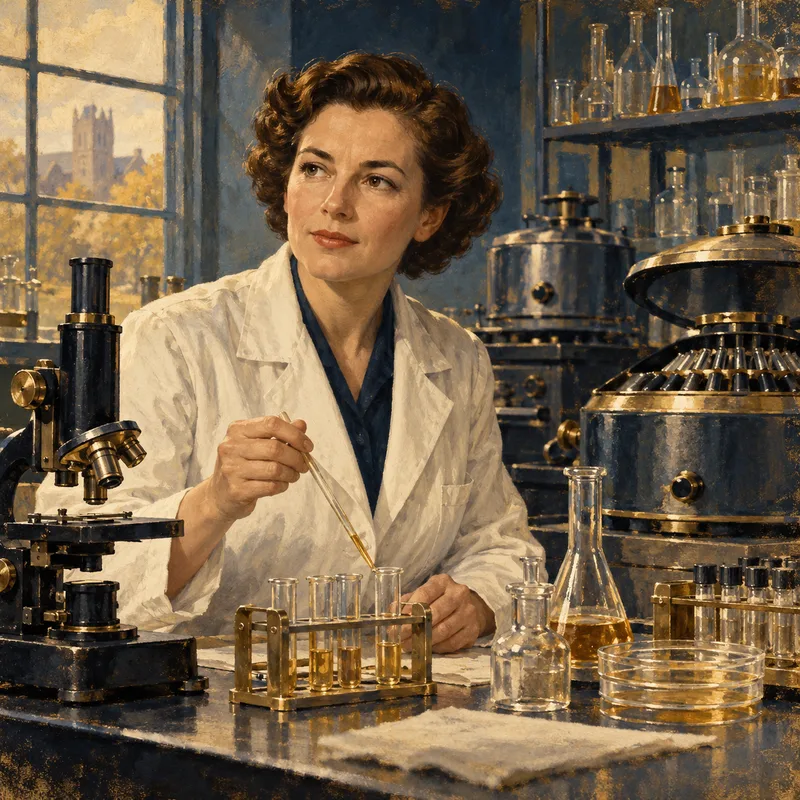
About the chemist
Wendell Meredith Stanley
1904-1971 · United States · Nobel Chemistry 1946
Crystallization of tobacco mosaic virus