Biography · Chemist no. 155 of 350
Yuan T. Lee: Complete Life and Legacy of a Chemical Dynamics Pioneer
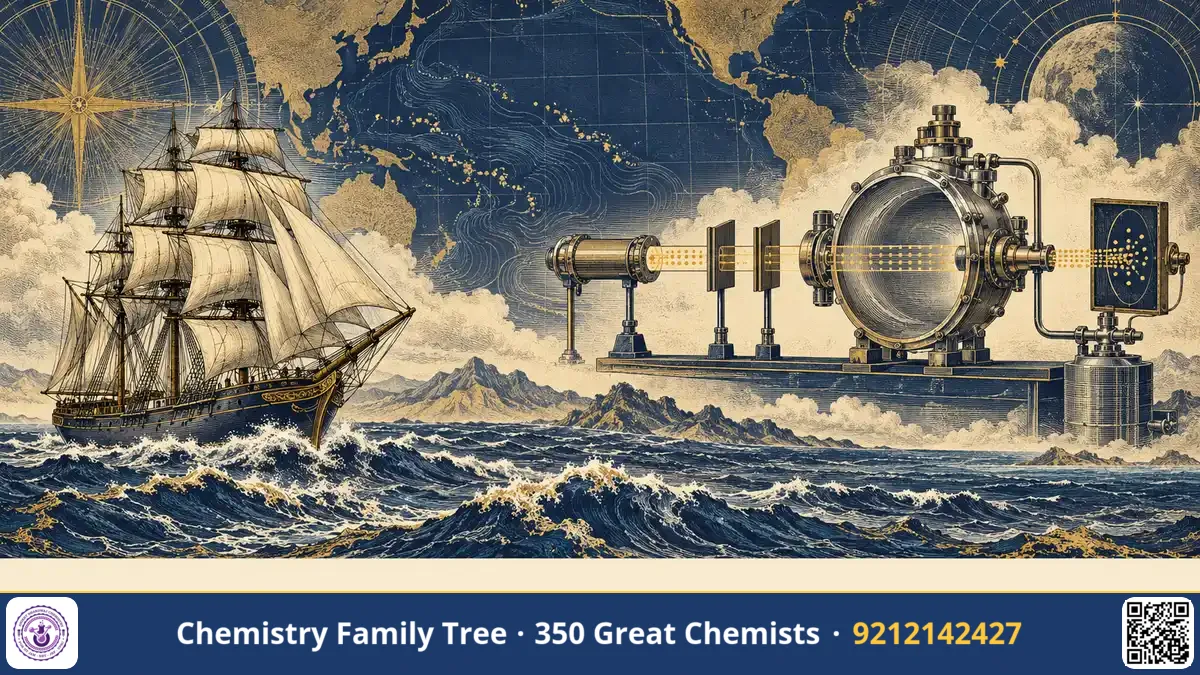
Yuan Tseh Lee, born in 1936 in Hsinchu, Taiwan, is a chemist who studied how individual molecules collide and react. He shared the 1986 Nobel Prize in Chemistry with Dudley Herschbach and John Polanyi. After a distinguished career in the United States at the University of Chicago and the University of California, Berkeley, he returned to Taiwan, where he led Academia Sinica. His legacy includes the universal crossed molecular beam machine, a generation of students in chemical physics, and a strong voice for science education and the responsible use of science.
Early Life and Family
Lee was born on 19 November 1936 in Hsinchu, Taiwan. His father, Lee Tse-fan, was an artist, and his mother, Tsai Pei, was a teacher. Taiwan was at that time under Japanese administration, and the period during and after the Second World War was difficult for many families. Lee has spoken about growing up in a time of shortages and about the encouragement he got from teachers. He did well at school and entered National Taiwan University, then one of the leading universities in the region.
Education and Mentors
Lee earned a bachelor's degree in chemistry at National Taiwan University in 1959 and a master's degree at National Tsing Hua University in 1961. He then went to the University of California, Berkeley, where he obtained his PhD in 1965 under Bruce Mahan, working on ion-molecule reactions. After the doctorate he joined Dudley Herschbach's group at Harvard as a postdoctoral researcher. There he learned the crossed molecular beam technique and began thinking about how to extend it to many more kinds of molecules. This mix of training, ion chemistry at Berkeley and beam dynamics at Harvard, prepared him to design a powerful new machine.
Career Timeline
| Year | Event |
|---|---|
| 1936 | Born in Hsinchu, Taiwan |
| 1959 | BSc in chemistry, National Taiwan University |
| 1961 | MSc, National Tsing Hua University |
| 1965 | PhD, University of California, Berkeley |
| 1967 | Postdoctoral work with Dudley Herschbach at Harvard, then joined the University of Chicago |
| 1974 | Moved to the University of California, Berkeley, as professor |
| 1986 | Shared the Nobel Prize in Chemistry |
| 1994 | Returned to Taiwan to become President of Academia Sinica |
Major Scientific Contributions
Lee's central achievement was the design of the universal crossed molecular beam apparatus. Using differential pumping, a rotating source and a mass spectrometer detector, the machine could detect almost any neutral product and measure its speed through time-of-flight. With it, Lee and his group examined reactions of halogen atoms with hydrogen and hydrocarbons, reactions of oxygen atoms and many other systems. They also worked on photodissociation, where light breaks a molecule into fragments whose speeds and angles reveal how the molecule falls apart, and on collisions involving clusters and ions.
Chemists often summarise his message this way: instead of guessing mechanisms from rate laws, observe the products as they leave the collision. The velocity and angle maps of the products show how the available energy is divided, which tells us about the potential energy surface of the reaction.
Awards, Honours and Nobel Prize
The 1986 Nobel Prize in Chemistry was awarded jointly to Dudley R. Herschbach, Yuan T. Lee and John C. Polanyi for their contributions concerning the dynamics of chemical elementary processes. Lee became a US citizen in 1974. He later also held a leading position in Taiwan, and he was a member of national academies in several countries. He also served in senior international roles, including leading the International Council for Science (ICSU) as President from 2008 to 2011.
Personality, Struggles and Lesser-Known Facts
- Artistic family: His father was a painter, and Lee has spoken about the influence of this creative environment on his thinking.
- Table tennis: Lee has mentioned that he played table tennis in his youth, a game in which quick reactions and angles matter, much like scattering.
- From Taiwan to the world: He studied in Taiwan, trained in the United States, and later returned to lead science in Taiwan.
- Science and society: After the Nobel Prize he spoke strongly about education, energy and the environment, and about the social responsibility of scientists.
- Builder of machines: Lee is known for building very large and complex vacuum machines with his own group, relying on careful design and patience.
Legacy and Influence on Modern Chemistry
Today, almost every laboratory studying gas-phase reaction dynamics uses ideas pioneered by Lee: collision zones in ultra-high vacuum, mass-selective detection and time-of-flight analysis. His students have gone on to lead research groups in the United States, Taiwan and many other countries. Photodissociation experiments help to explain atmospheric chemistry, such as how sunlight breaks down molecules in the stratosphere. Reaction dynamics also informs fields such as combustion and astrochemistry. In India, students encounter this subject in advanced physical chemistry and in instrumental topics such as mass spectrometry.
Lessons for Students
- Build the tool you need. When the detector limited the science, Lee built a better one.
- Learn across fields. Ion chemistry, vacuum technology and mass spectrometry all came together in his work.
- Work with patience. The signals were tiny, and progress needed years of careful improvement.
- Use science for society. A Nobel laureate can also speak for education and for the environment.
Quick Facts Box
- Born: 19 November 1936, Hsinchu, Taiwan
- Died: Not covered here
- Nationality: Taiwanese-born; US citizen from 1974
- Field: Physical chemistry, chemical dynamics
- Famous for: Universal crossed molecular beam machine
- Nobel: 1986, Chemistry (shared with Herschbach and Polanyi)
FAQ
Where did Yuan T. Lee do his PhD?
At the University of California, Berkeley, in 1965, under Bruce Mahan.
What position did he hold in Taiwan?
He became President of Academia Sinica, Taiwan's national academy, in 1994.
Was his Nobel Prize in Chemistry?
Yes, the 1986 Nobel Prize in Chemistry, shared with Dudley Herschbach and John Polanyi.
Why is he important for chemistry students?
His work shows how rate constants and mechanisms arise from individual molecular collisions, and it ties together kinetics, spectroscopy and mass spectrometry.
Published by ABC Chemistry — IIT-JAM | CSIR-NET | GATE Chemistry Coaching. Visit abcchemistry.com
About the chemist
Yuan T. Lee
1936- · Taiwan · Nobel Chemistry 1986
Crossed molecular beam dynamics