Biography · Chemist no. 212 of 350
George P. Smith: The Quiet Genius Behind Phage Display
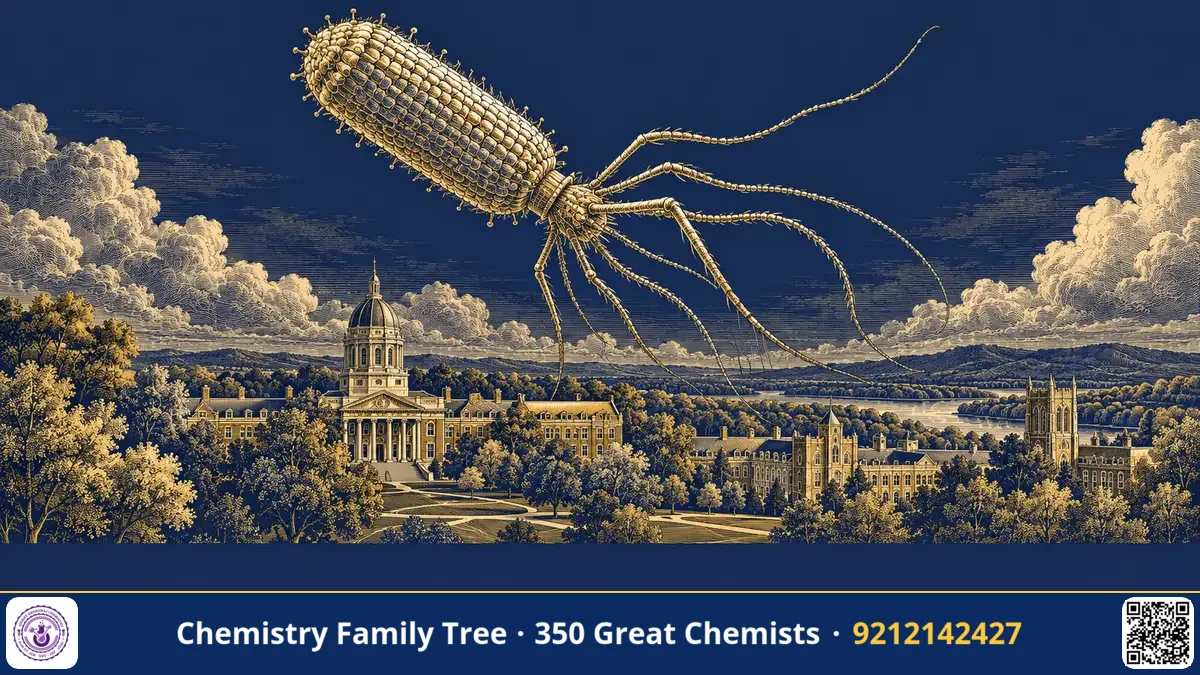
George Pearson Smith (born 10 March 1941) is an American biochemist, now Curators' Distinguished Professor Emeritus at the University of Missouri in Columbia. In 2018 he shared the Nobel Prize in Chemistry with Sir Gregory Winter, the other half of the prize that year going to Frances Arnold. His legacy in one line: he invented phage display, which connects a protein to its gene and allows chemists to evolve useful molecules in the laboratory.
Early Life and Family
Smith was born in Norwalk, Connecticut, in the United States. He grew up in the post-war years and, according to his own recollections, was a curious student with a taste for solitary thinking. He studied at schools in the north-eastern United States. Because few personal details of his family are well documented, we focus on his education and scientific path.
Education and Mentors
Smith earned a bachelor's degree in zoology at Haverford College in Pennsylvania in 1963. He then moved to Harvard University, where he received his PhD in bacteriology and immunology in 1970. At Harvard he trained in bacterial and phage genetics, the basis of his later work with filamentous phage. He then did postdoctoral research at the University of Wisconsin-Madison, and joined the University of Missouri in 1975, where he remained for the rest of his career.
Career Timeline
| Year | Event |
|---|---|
| 1941 | Born in Norwalk, Connecticut, USA |
| 1963 | Bachelor's degree at Haverford College |
| 1970 | PhD at Harvard University |
| 1970s | Postdoctoral research at the University of Wisconsin-Madison |
| 1975 | Joins the Division of Biological Sciences at the University of Missouri |
| 1985 | Publishes the first demonstration of phage display in the journal Science |
| 1990s | Develops random peptide libraries and uses them for selection with others |
| 2018 | Shares the Nobel Prize in Chemistry |
Major Scientific Contributions
- Phage display (1985): fusion of a foreign peptide to the pIII coat protein of a filamentous phage, so that the peptide is shown on the virus surface while its gene is carried inside.
- Affinity selection: demonstration that phages displaying a given peptide can be enriched using an antibody.
- Peptide libraries: development of large combinatorial libraries of random peptides on phage for finding binders.
- Study of phage biology: work on gene duplication and filamentous phage genetics.
Our companion post on the phage display discovery has the full chemistry of the method.
Awards, Honours and Nobel Prize
The Nobel Prize in Chemistry 2018 was divided: one half to Frances H. Arnold "for the directed evolution of enzymes", and the other half jointly to George P. Smith and Sir Gregory P. Winter "for the phage display of peptides and antibodies". Smith is a member of the United States National Academy of Sciences and has received other honours before and after the Nobel, and the University of Missouri named him a Curators' Distinguished Professor.
Personality, Struggles and Lesser-Known Facts
- Not a famous name for years: For a long time, phage display was known mainly to specialists, and the person behind it received limited public attention.
- Small-lab scientist: He did his key work in a modest academic laboratory in the American Midwest, not in a large elite institute.
- A teacher: He loved teaching and mentoring students at the University of Missouri.
- Surprised by the call: He has described the Nobel announcement as a total surprise.
- Phage as a lifelong subject: Filamentous phage remained his research focus for decades, long before the Nobel Prize.
Legacy and Influence on Modern Chemistry
Phage display became one of the most successful technologies in drug discovery. It led to antibody drugs for autoimmune disease and cancer, and provided a general method to find peptides and proteins that bind any target. It also changed how chemists think about evolution: instead of designing molecules purely by rational thought, one can use diversity and selection. The 2018 Chemistry Nobel recognised this shift. For Indian students, the key takeaway is that biology and chemistry now meet in the laboratory evolution of molecules.
It is useful to place Smith's invention in context. In the mid-1980s, molecular biologists could make and sequence DNA, but they could not easily search through huge collections of protein variants. Phage display turned a laborious screening problem into a simple selection problem: let the molecules compete, keep the winners, and read the winning sequences from the DNA. This is the logic of natural selection applied in a test tube, and it was later extended by others into ribosome display, yeast display and mRNA display. The same ideas underlie directed evolution of enzymes, the other half of the 2018 Chemistry Nobel Prize. Smith's quiet persistence at a state university shows that major tools can come from small laboratories if the idea is clear and general. His example is encouraging for students in colleges and universities across India, where much talented work is done without the largest budgets.
Lessons for Students
- A simple idea can change a field. Linking protein to gene was elegant and general.
- Use nature's tools. Smith repurposed a virus.
- Do not wait for a big lab. Good ideas can come from small groups.
- Be ready to be patient. Recognition came decades after the discovery.
- Combine disciplines. Genetics, immunology and chemistry all mattered.
Quick Facts Box
- Born: 10 March 1941, Norwalk, Connecticut, USA
- Died: Living (as of this writing)
- Nationality: American
- Field: Biochemistry, molecular biology
- Famous for: Invention of phage display
- Nobel: Chemistry 2018 (with Gregory Winter; other half to Frances Arnold)
FAQ
Which university is George Smith associated with?
The University of Missouri in Columbia.
Who was the third laureate in 2018?
Frances Arnold, for the directed evolution of enzymes.
What did he publish in 1985?
A paper in Science describing filamentous phage displaying a foreign peptide on its surface.
Is phage display part of chemistry exams?
It appears in biochemistry and chemical biology topics, and the 2018 Nobel Prize is a frequent general-knowledge question.
Published by ABC Chemistry — IIT-JAM | CSIR-NET | GATE Chemistry Coaching. Visit abcchemistry.com
About the chemist
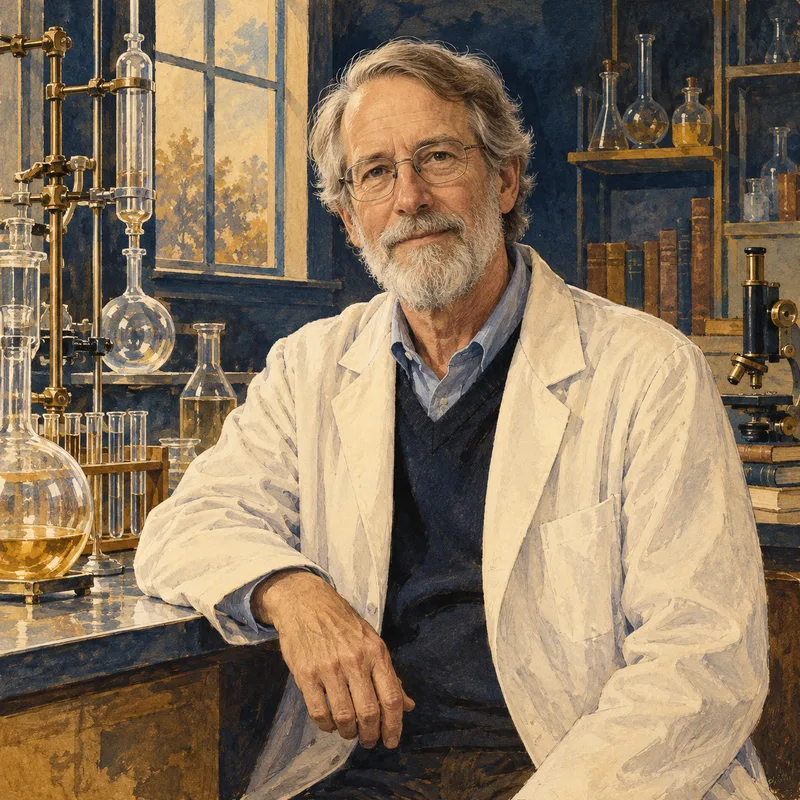
George P. Smith
1941- · United States · Nobel Chemistry 2018
Phage display of peptides and antibodies