Biography · Chemist no. 213 of 350
Sir Gregory Winter: The Scientist Who Made Antibodies into Drugs
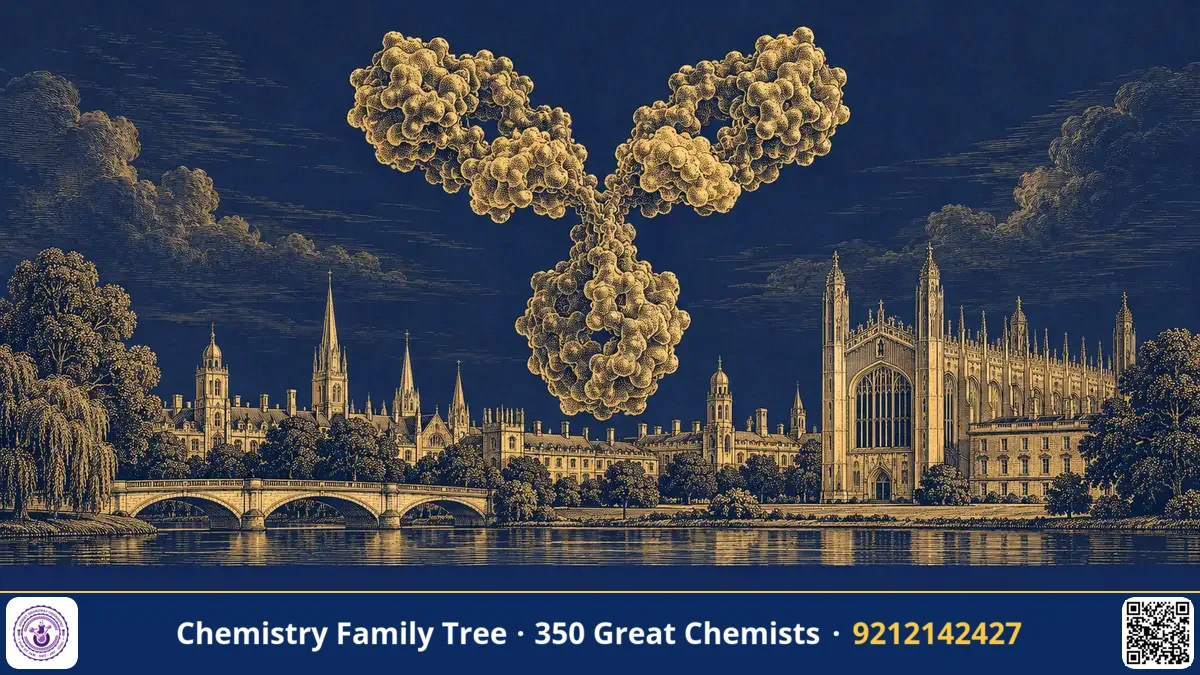
Sir Gregory Paul Winter (born 14 April 1951) is a British molecular biologist at the MRC Laboratory of Molecular Biology in Cambridge. In 2018 he shared half of the Nobel Prize in Chemistry with George P. Smith. His legacy in one line: he turned antibodies from laboratory tools into a major class of human medicines by humanising them and by evolving fully human antibodies with phage display.
Early Life and Family
Winter was born in Leicester, England. He has described his early schooling in the English Midlands and his interest in science during the 1960s. He was curious about biology and chemistry from school days. Other details of his family are not well documented, and we do not speculate on them.
Education and Mentors
Winter went to Trinity College, Cambridge, where he studied natural sciences and graduated in biochemistry. He stayed at Cambridge for his doctorate, which he did at the MRC Laboratory of Molecular Biology, working on protein sequencing and the structure and function of enzymes. He joined the LMB staff and in the 1970s worked with Alan Fersht on tyrosyl-tRNA synthetase, using site-directed mutagenesis to study how enzymes work. This training in protein engineering prepared him for his later antibody work. At the LMB he was also close to César Milstein, who was working on antibodies in the same laboratory.
Career Timeline
| Year | Event |
|---|---|
| 1951 | Born in Leicester, England |
| 1970s | Studies and doctorate at Cambridge; work on tyrosyl-tRNA synthetase mutants with Alan Fersht |
| 1986 | Reports antibody humanisation by CDR grafting |
| 1989 | Co-founds Cambridge Antibody Technology (company based on his antibody work) |
| Early 1990s | Develops phage display libraries of human antibody fragments |
| 2002 | Adalimumab, developed using phage display, is approved for rheumatoid arthritis |
| 2018 | Shares the Nobel Prize in Chemistry |
Major Scientific Contributions
- Protein engineering: early use of site-directed mutagenesis to study enzyme mechanisms.
- Antibody humanisation (1986): CDR grafting from mouse into human antibodies.
- Phage display antibody libraries: libraries of human antibody fragments for selection of binders without immunisation.
- Affinity maturation in vitro: mutation and selection to improve binding.
- Biotechnology company building: he helped found Cambridge Antibody Technology and later Domantis, helping move laboratory ideas into medicines.
The technical chemistry of antibodies and phage display is explained in our companion discovery post.
Awards, Honours and Nobel Prize
Winter shared half of the Nobel Prize in Chemistry 2018 with George P. Smith, "for the phage display of peptides and antibodies"; Frances Arnold received the other half for directed evolution of enzymes. Winter is a Fellow of the Royal Society and was knighted in 2018 for services to science. He has held the position of Master of Trinity College, Cambridge, from 2019. Earlier, he received other awards for his contribution to antibody engineering.
Personality, Struggles and Lesser-Known Facts
- Science to industry: He was an academic scientist who launched biotech companies to develop his discoveries.
- Humira's journey: Adalimumab, a drug that came from phage display, became one of the best-selling medicines in the world.
- Quiet persistence: Antibody humanisation was initially seen as a technical trick, and its importance became clear as clinical results appeared.
- Same corridor as Milstein: Working in the same laboratory as the inventor of monoclonal antibodies helped him see their medical potential.
- Interest in new formats: Later, his group explored bicyclic peptides as a new class of drug.
Legacy and Influence on Modern Chemistry
Winter's work opened the era of antibody therapeutics. Today, monoclonal antibodies are among the most successful drugs, treating cancers, autoimmune diseases and infections. His techniques are used to discover and optimise antibodies worldwide. Beyond drugs, his example showed that laboratory evolution can create molecules with no natural counterpart. In India and elsewhere, biosimilar versions of antibody drugs make these treatments more affordable.
The path from Winter's laboratory to patients is a good example of translational chemistry. Humanised antibodies reduced the immune reaction that had limited mouse antibodies, and phage display allowed human antibodies to be found without using animals for immunisation. These approaches made it possible to design drugs against targets that had been hard to reach, such as inflammatory signalling molecules and cancer-related receptors. Antibody drugs are now among the best-selling medicines in the world, and in India many companies produce biosimilar versions, which makes treatment more affordable for patients. Winter's career also demonstrates how an academic scientist can move between basic research and company building without losing scientific focus. In later years he turned to small, constrained peptides as a drug format, again combining chemistry with selection methods. Students can learn from this that a good method is a platform, and that platforms keep producing new discoveries.
Lessons for Students
- Learn the basics deeply. Understanding protein structure made antibody engineering possible.
- Translate research. Discoveries become useful when taken to patients.
- Look at what others discard. Mouse antibodies were useful, once modified.
- Collaborate. Colleagues like Neuberger, Fersht and Milstein shaped the environment.
- Keep innovating. He moved from antibodies to new peptide drug formats.
Quick Facts Box
- Born: 14 April 1951, Leicester, England
- Died: Living (as of this writing)
- Nationality: British
- Field: Molecular biology, protein engineering, antibody therapeutics
- Famous for: Humanised antibodies; phage display of antibodies
- Nobel: Chemistry 2018 (half, with George P. Smith)
FAQ
What is adalimumab?
A fully human monoclonal antibody that blocks TNF-alpha and treats inflammatory diseases such as rheumatoid arthritis.
Where does Winter work?
At the MRC Laboratory of Molecular Biology in Cambridge, and he was also Master of Trinity College.
Who shared the 2018 prize with him?
George P. Smith shared his half of the prize. The other half went to Frances Arnold.
Is the prize in Medicine?
No. It was the Nobel Prize in Chemistry.
Published by ABC Chemistry — IIT-JAM | CSIR-NET | GATE Chemistry Coaching. Visit abcchemistry.com
About the chemist
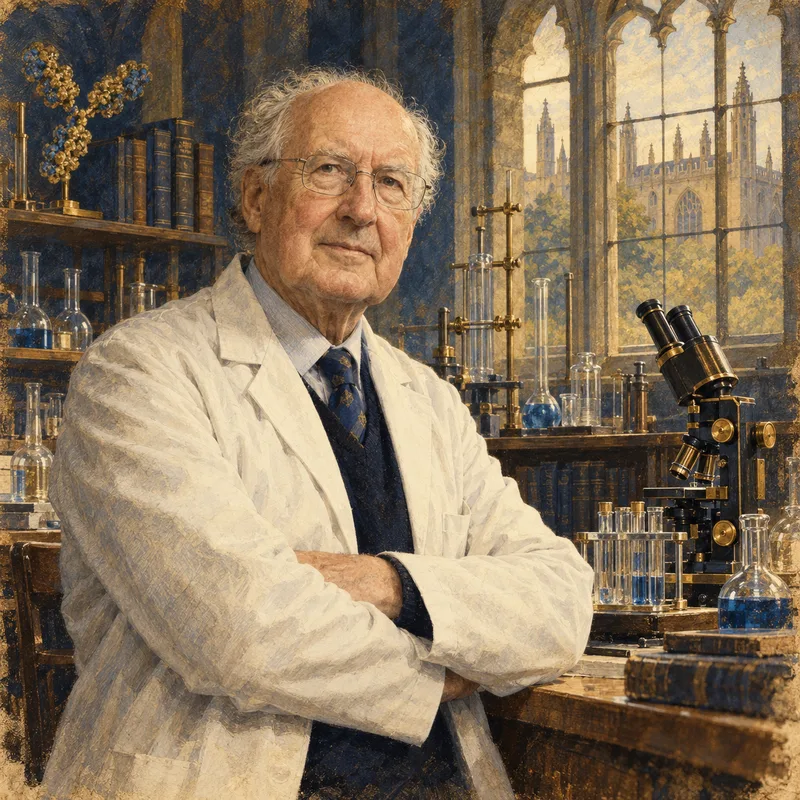
Gregory Winter
1951- · United Kingdom · Nobel Chemistry 2018
Phage display of antibodies