Biography · Chemist no. 204 of 350
Paul Modrich (born 1946): The Biochemist Who Explained How Cells Proofread Their DNA
Introduction
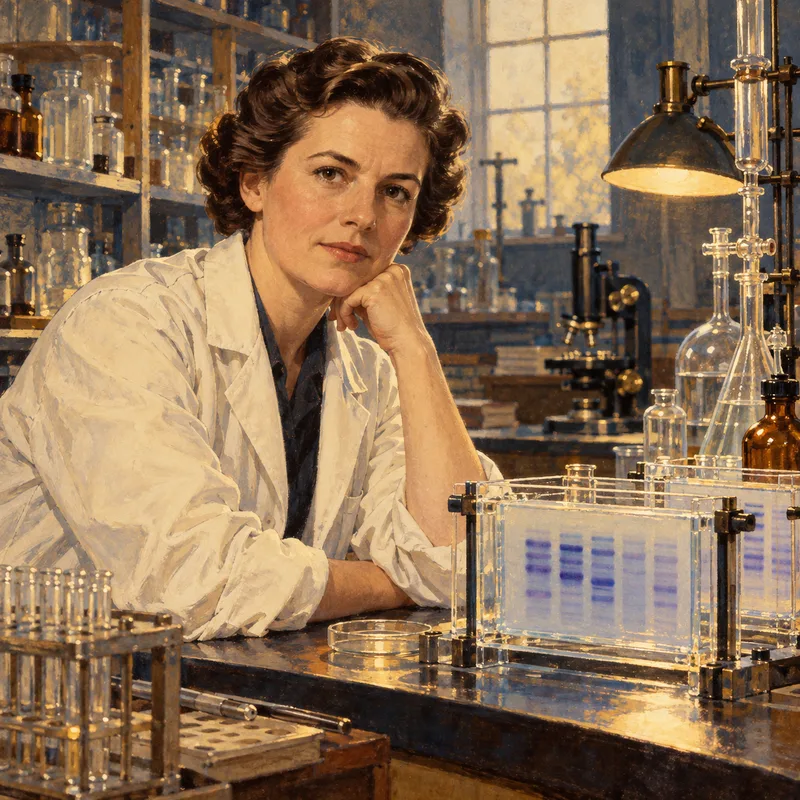
Paul Lawrence Modrich is an American biochemist and a James B. Duke Professor at Duke University School of Medicine, also an investigator of the Howard Hughes Medical Institute. For decades he worked on one question: how does a cell correct the errors that DNA polymerase leaves behind? By purifying the proteins of the mismatch repair system and rebuilding the process in a test tube, he gave a molecular explanation for a key mechanism that protects our genome and prevents cancer. He shared the 2015 Nobel Prize in Chemistry with Tomas Lindahl and Aziz Sancar.
Early Life and Family
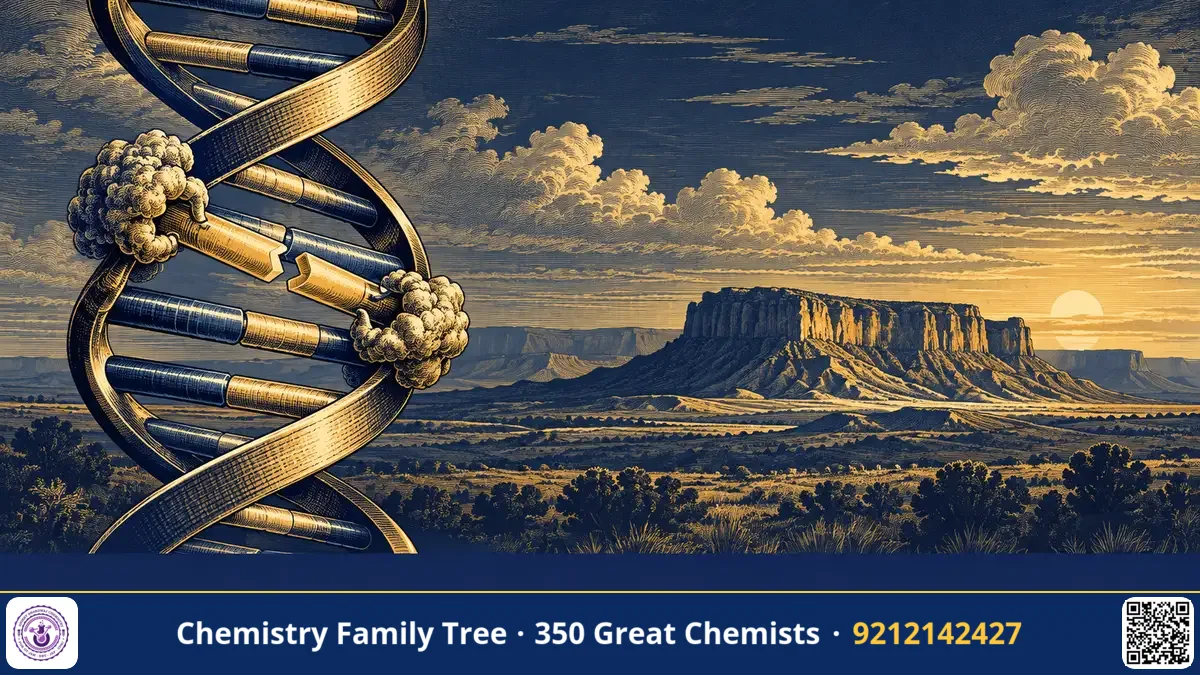
Modrich was born on 13 June 1946 in Raton, New Mexico, a small town in the American Southwest close to the Colorado border. He grew up in Raton and attended school there. In interviews he has spoken of his small-town upbringing and of his early interest in science. He is married to Vickers Modrich, and they have a family.
Education and Mentors
Modrich studied biology at the Massachusetts Institute of Technology (MIT) and received his bachelor's degree in 1968. He then went to Stanford University for graduate study in biochemistry, completing his PhD in 1973 under Robert Lehman, a pioneer of DNA enzymology who had studied DNA ligase and DNA polymerase. This training gave Modrich skills in the purification and characterisation of enzymes that would shape his entire career. As a postdoctoral researcher, he worked on restriction enzymes such as EcoRI, which cut DNA at specific sequences and were then becoming key tools of genetic engineering. He joined the faculty of Duke University in 1976.
Career Timeline
| Year | Event |
|---|---|
| 1946 | Born in Raton, New Mexico |
| 1968 | BS in biology, MIT |
| 1973 | PhD in biochemistry, Stanford University (with Robert Lehman) |
| 1970s | Postdoctoral research on restriction enzymes such as EcoRI |
| 1976 | Joined Duke University |
| 1980s | Developed an in vitro system for methyl-directed mismatch repair in E. coli |
| 1989 | Reconstituted mismatch repair from purified proteins |
| 1993-1996 | Linked human mismatch repair genes to hereditary colon cancer; purified human repair proteins |
| 1995 | Became an investigator of the Howard Hughes Medical Institute |
| 2015 | Nobel Prize in Chemistry |
Major Scientific Contributions
Modrich's main achievement is the biochemical description of DNA mismatch repair. In E. coli he showed that the system uses methylation of GATC sequences to choose the strand to repair and that it requires MutS, MutL, MutH, UvrD, exonucleases, DNA polymerase III, SSB and DNA ligase. He demonstrated the mechanism by reconstituting the entire process with purified components. He then extended the work to humans, showing that human proteins homologous to MutS and MutL perform a similar task, and that defects explain hereditary nonpolyposis colorectal cancer (Lynch syndrome) and many sporadic tumours. In addition, he studied how ATP-driven conformational changes in MutS and MutL transmit signals along DNA. Read the companion discovery post for the chemistry and exam points.
Awards, Honours and Nobel Prize
- Nobel Prize in Chemistry 2015, shared with Tomas Lindahl and Aziz Sancar, "for mechanistic studies of DNA repair".
- Membership of the US National Academy of Sciences and of the American Academy of Arts and Sciences.
- Investigator of the Howard Hughes Medical Institute, and James B. Duke Professor of Biochemistry at Duke University.
Personality, Struggles and Lesser-Known Facts
- Small-town origins. A boy from Raton, New Mexico, went on to one of the highest honours in science.
- A long, patient project. From the first cell-extract experiments to the fully reconstituted system, the mismatch repair work took more than a decade of purification and testing.
- Biochemist's approach. Modrich believes strongly in purifying proteins and reconstructing biological processes in the test tube, to understand what each component does.
- Credit to the team. He has emphasised that the mismatch repair story was built by many students, postdoctoral fellows and collaborators over decades.
- Link between lab and clinic. His basic research led to understanding of a hereditary cancer syndrome, a connection he often cites as a motivation for fundamental research.
Legacy and Influence on Modern Chemistry
Modrich showed that DNA replication accuracy depends on three layers: base selection by the polymerase, proofreading and mismatch repair. His work explains how genomes remain stable across generations. The clinical outcome is considerable: Lynch syndrome can now be detected by genetic tests, family members can be screened and preventive care can be offered. Tumours lacking mismatch repair, shown by microsatellite instability, are identified in routine pathology and respond to certain immunotherapies. His reconstitution approach is a model for studying other biological pathways at the molecular level.
Lessons for Students
- Know your enzymes. A good biochemist learns to purify and characterise proteins carefully.
- Ask "how does the cell know?" Strand discrimination was the key puzzle in mismatch repair.
- Link basic and applied science. Fundamental work on bacteria explained human cancer.
- Origins do not limit you. A small-town beginning can lead to a Nobel Prize.
Quick Facts Box
- Born: 13 June 1946, Raton, New Mexico, USA
- Died: Living (as of writing)
- Nationality: American
- Field: Biochemistry, DNA repair
- Famous for: Mechanism of DNA mismatch repair; reconstitution of the system in vitro; link to Lynch syndrome
- Nobel: Chemistry 2015 (with Tomas Lindahl and Aziz Sancar)
FAQ
Which repair pathway did Modrich study?
DNA mismatch repair, which corrects errors made during DNA replication.
Who was his PhD supervisor?
Robert Lehman at Stanford University.
What disease is linked to his work?
Lynch syndrome, an inherited form of colorectal and other cancers caused by defective mismatch repair genes.
Which university does he work at?
Duke University in Durham, North Carolina, where he has worked since 1976.
Published by ABC Chemistry — IIT-JAM | CSIR-NET | GATE Chemistry Coaching. Visit abcchemistry.com
About the chemist
Paul Modrich
1946- · United States · Nobel Chemistry 2015
Mismatch repair of DNA