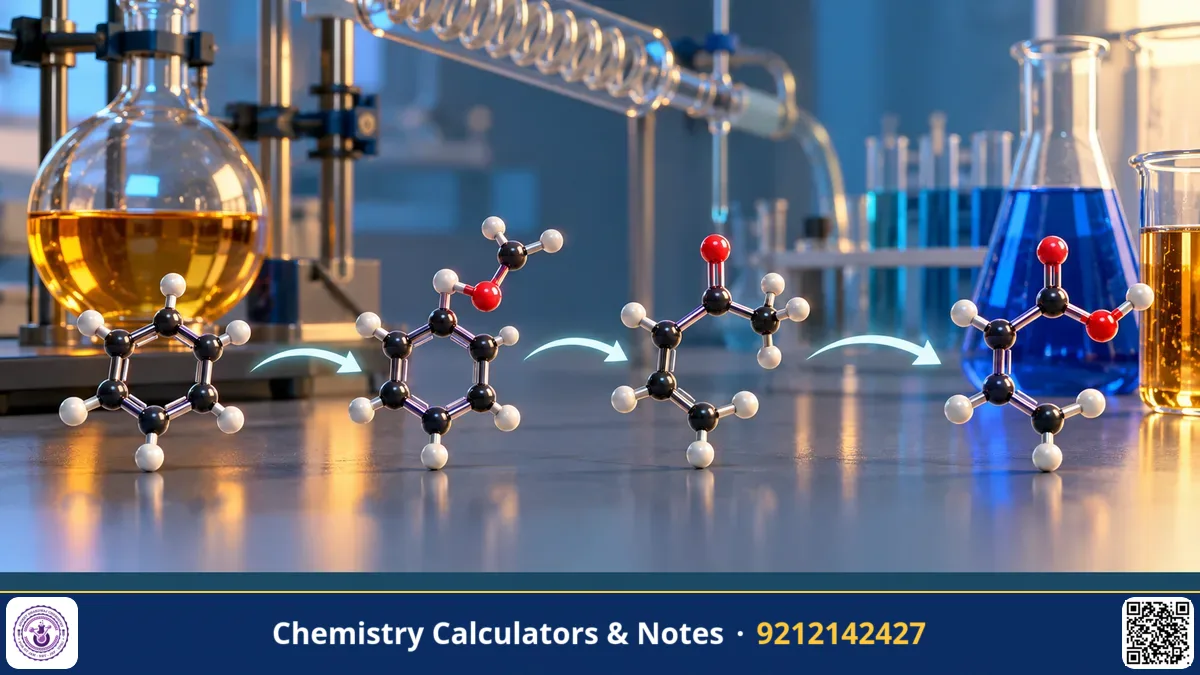
CSIR NET organic chemistry: reaction mechanism plan
Master CSIR NET organic mechanisms across pericyclic reactions, rearrangements, and reagents with practice problems and a structured four-week plan.
Organic reaction mechanisms describe how chemical bonds cleave and form during multi-step transformations. This guide provides a practical preparation method for CSIR NET Chemical Science, complete with practice problems, stereochemical deductions, and a structured study plan.
Core mechanism pillars: pericyclic steps, rearrangements, and reagents
Organic mechanisms in advanced chemical science rest on three foundations: pericyclic reactions, molecular rearrangements, and selective reagent transformations. Defining the boundaries of each pillar prevents confusion during complex multi-step problems.
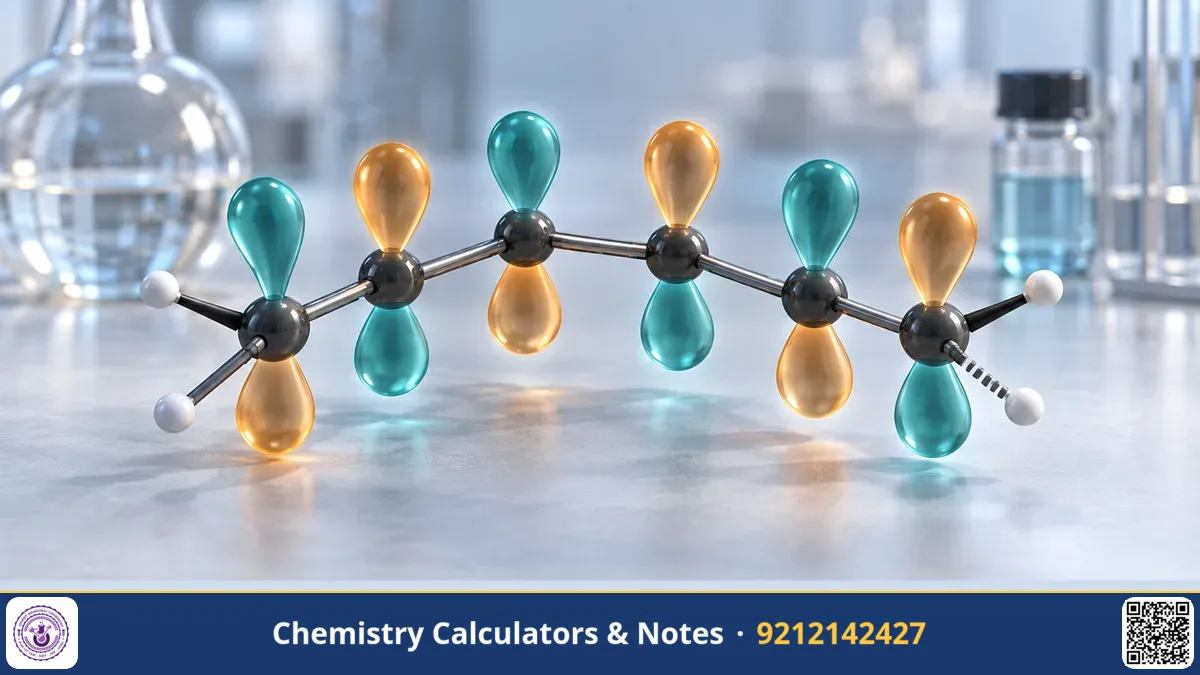
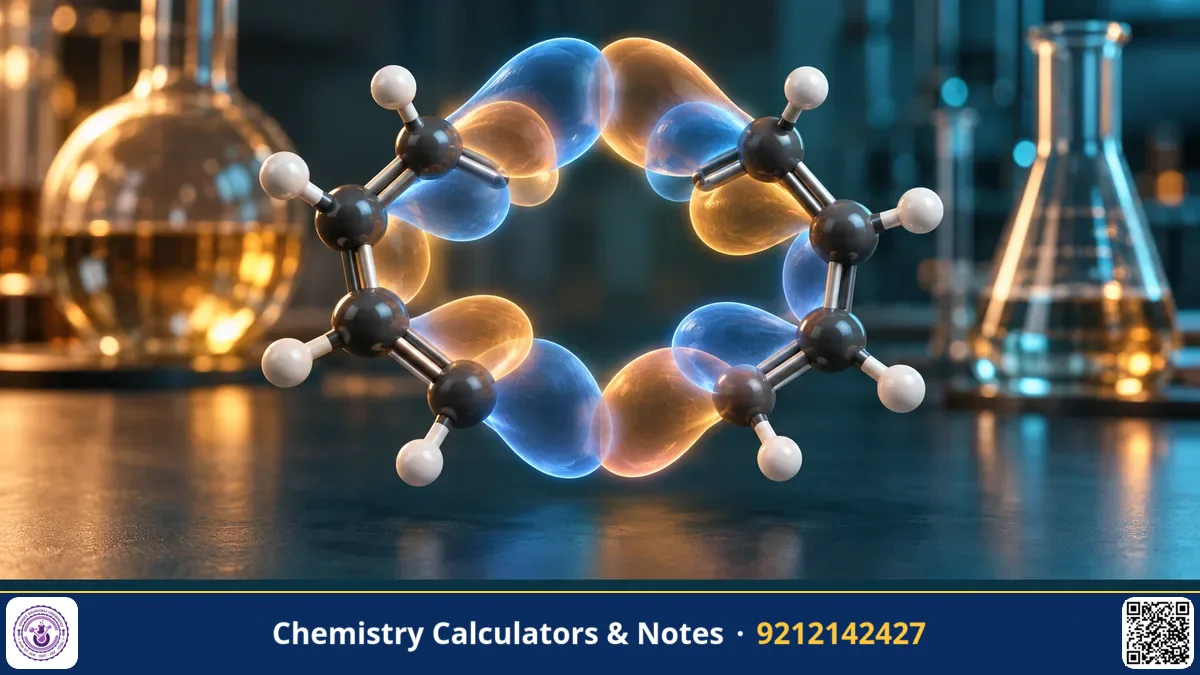
Pericyclic reactions are concerted transformations proceeding through a single cyclic transition state without ionic or radical intermediates. These reactions depend on orbital symmetry and frontier molecular orbitals. The highest occupied molecular orbital and lowest unoccupied molecular orbital determine whether ring closures, cycloadditions, or sigmatropic shifts occur thermally or photochemically. Because no open intermediate forms, stereospecificity is absolute.
Molecular rearrangements involve group migration to an adjacent electron-deficient atom. Key pathways include carbocation shifts, migrations to electron-deficient nitrogen, and migrations to electron-deficient oxygen. Stereochemical retention at the migrating group and established migratory aptitudes decide the final product.
Reagents act as functional levers to drive transformations. You must assess each reagent across three parameters: chemoselectivity, regioselectivity, and stereoselectivity. Distinguishing between related reagents, such as mild hydride donors versus dissolving metals, sets the direction of a multi-step sequence.
How mechanistic problems appear in the exam
Mechanistic questions in the chemical science paper rarely test isolated single-step reactions. Instead, examination problems evaluate your ability to connect multiple principles into a coherent sequence.
Advanced questions frequently feature tandem transformations where the product of a stereospecific ring formation or reduction undergoes an immediate rearrangement or cyclisation. You must determine the relative stereochemistry of adjacent stereocentres, often evaluating chair-like transition states or facial selectivity.
Another frequent challenge involves distinguishing between kinetic and thermodynamic control. Lower temperatures trap intermediates having lower activation barriers, whereas higher temperatures allow reversible steps to equilibrate to the most stable product. Check reaction temperature, solvent polarity, and steric hindrance before predicting outcomes.
Do not guess structures based on overall appearance. Write formal charges, identify primary nucleophiles and electrophiles, and trace arrow-pushing steps systematically on paper.
Practice question 1: orbital symmetry in electrocyclic transformations
Practice question (QID: NET-OC-3102): Identify major product A formed when (2E,4Z,6E)-octa-2,4,6-triene is heated under thermal conditions. Subsequently, determine product B formed when product A is irradiated with ultraviolet light.
Step-by-step solution:
1. Classification: The starting triene contains 6 π electrons, fitting a (4n + 2) system with n = 1. Under thermal conditions, orbital symmetry rules dictate that electrocyclic ring closures of (4n + 2) systems proceed via a disrotatory pathway.
2. Frontier orbital analysis: Ground-state configuration places the highest occupied molecular orbital at the third molecular orbital (Ψ3), which has mirror symmetry. To achieve bonding overlap between terminal lobes of identical sign, terminal carbon atoms must rotate in opposite directions.
3. Stereochemical outcome for product A: In (2E,4Z,6E)-octa-2,4,6-triene, both terminal methyl groups point outward. Under disrotatory motion, both methyl groups rotate toward the same face of the new ring, adopting a cis relationship. Product A is cis-5,6-dimethylcyclohexa-1,3-diene.
4. Photochemical ring opening: Irradiation promotes an electron to the fourth molecular orbital (Ψ4*), possessing twofold rotational symmetry. Under photochemical activation, a 6 π electrocyclic process proceeds through a conrotatory pathway.
5. Stereochemical outcome for product B: Conrotatory ring opening requires terminal carbons to rotate in the same direction. Starting from cis-dimethyl stereochemistry, rotating both carbons in the same direction swings one methyl group outward and the other inward. Product B is (2E,4Z,6Z)-octa-2,4,6-triene.
Practice question 2: tandem sigmatropic rearrangement and electrophilic cyclisation
Practice question (QID: NET-OC-3108): Allyl phenyl ether is heated to 200 °C to yield compound C. Compound C is subsequently treated with molecular iodine (I2) and sodium bicarbonate (NaHCO3) in dichloromethane to afford product D. Deduce the structures of compound C and product D.
Step-by-step solution:
1. Rearrangement to compound C: Heating allyl phenyl ether triggers a concerted [3,3]-sigmatropic rearrangement. The reaction proceeds through a six-membered chair-like transition state, cleaving the allylic carbon-oxygen bond and forming a new carbon-carbon bond at the adjacent aromatic carbon.
2. Aromatisation: The rearrangement forms 6-allylcyclohexa-2,4-dien-1-one. Driven by recovery of aromatic resonance energy, this intermediate undergoes spontaneous keto-enol tautomerisation to give compound C, 2-allylphenol.
3. Electrophilic addition: When 2-allylphenol encounters molecular iodine, the electron-rich alkene attacks iodine, forming a transient three-membered iodonium intermediate across the terminal carbons.
4. Intramolecular cyclisation: The base enables phenolic oxygen to act as a nucleophile. Ring closure can occur at the internal carbon (5-exo-trig) or terminal carbon (6-endo-trig). Stereoelectronic rules favour 5-exo-trig cyclisation because it provides proper orbital overlap with lower ring strain.
5. Structure of product D: Nucleophilic attack by phenolic oxygen opens the iodonium ring at the internal position, yielding an exocyclic iodomethyl group. Product D is 2-(iodomethyl)-2,3-dihydrobenzofuran.
Structured four-week study plan for mechanisms
Mastering mechanisms requires progressive practice rather than passive reading. Follow this four-week framework to coordinate conceptual review with chapter-wise problem sets.
| Week | Mechanistic module | Core focus areas | Weekly practice task |
|---|---|---|---|
| Week 1 | Pericyclic reactions | Frontier molecular orbitals, electrocyclic ring closures, [4+2] cycloadditions, sigmatropic shifts | Solve 50 stereochemical problems on ring closures |
| Week 2 | Rearrangements | Carbocation 1,2-shifts, vicinal diol rearrangements, oxime to amide conversions, acyl azide migrations | Trace migratory aptitude across 40 rearrangement problems |
| Week 3 | Reagents and selectivity | Complex hydrides, dissolving metals, selective oxidants, organocuprates | Map chemoselective outcomes across functional groups |
| Week 4 | Multi-step synthesis | Tandem sequences, cascade cyclisations, retrosynthetic analysis | Complete timed chapter-wise sets and review errors |
Dedicate two hours daily to pen-and-paper derivations. When reviewing missed problems from your question bank, identify whether errors arose from misidentifying reactive centres, confusing orbital symmetry rules, or losing stereochemical tracking. Use weekly doubt sessions to clarify ambiguities before beginning the next module.
Key takeaways
- Classify reaction pathways by electron movement, intermediate stability, and orbital symmetry before predicting products.
- For pericyclic steps, count π electrons to determine whether thermal or photochemical conditions require conrotatory or disrotatory motion.
- In molecular rearrangements, assess migratory aptitude by carbocation stabilization and preserve configuration at migrating carbons.
- Break multi-step questions into individual reagent transformations, verifying chemoselectivity and ring-closure preferences at each step.
- Solve chapter-wise question bank drills on paper to build speed and reduce transition-state errors.
Frequently asked questions
How do I determine conrotatory versus disrotatory motion in electrocyclic reactions?
Count participating π electrons. For thermal reactions, 4n systems undergo conrotatory motion, while (4n + 2) systems undergo disrotatory motion. Under photochemical activation, these selections invert: 4n systems operate through disrotatory motion, and (4n + 2) systems follow conrotatory motion.
What controls migratory aptitude in ketone oxidations to esters?
Migratory aptitude depends on the ability of the migrating group to stabilize positive charge in the transition state. The general migration order is tertiary alkyl > secondary alkyl ≈ benzyl > phenyl > primary alkyl > methyl. Electron-donating substituents on an aromatic ring accelerate migration.
Why does 5-exo-trig cyclisation dominate over 6-endo-trig in iodocyclisations?
Stereoelectronic principles dictate the trajectory required for nucleophilic attack. In a 5-exo-trig ring closure, the nucleophile attacks the electrophilic carbon along a favorable approach path with minimal strain. A 6-endo-trig pathway requires unfavorable distortion of the transition state in this frame.
How should I approach multi-step organic reaction problems under timed conditions?
Draw intermediate structures after each reagent step rather than jumping mentally to the final product. Check formal charges, verify stereochemistry at newly formed centres, and confirm that unreacted functional groups remain unchanged under the reaction conditions.