Q6 · CSIR-NET Chemistry, December 2011

Paper: CSIR-NET December 2011 · Subject: Organic Chemistry · Chapter: Reagents, Reaction Mechanisms & Named Reactions · Topic: Reagents, Reaction Mechanisms & Named Reactions – General · Marks: 2 · Difficulty: Easy

Under review — part of this question (a structure or an option) is not clear in the source scan. 4AB is checking it against the original book; the answer shown may change.
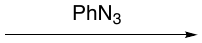
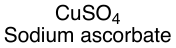
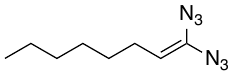
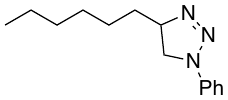
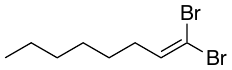
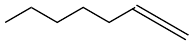
The major products A and B in the following reaction sequence are Question structure 1 of 12, ABC26OR0185 Question structure 2 of 12, ABC26OR0185 Question structure 3 of 12, ABC26OR0185 Question structure 4 of 12, ABC26OR0185 Question structure 5 of 12, ABC26OR0185 Question structure 6 of 12, ABC26OR0185 Question structure 7 of 12, ABC26OR0185 Question structure 8 of 12, ABC26OR0185 Question structure 9 of 12, ABC26OR0185 Question structure 10 of 12, ABC26OR0185 Question structure 11 of 12, ABC26OR0185 Question structure 12 of 12, ABC26OR0185
(a)Option (a) structure 1 of 3, ABC26OR0185 Option (a) structure 2 of 3, ABC26OR0185 Option (a) structure 3 of 3, ABC26OR0185
(b)Option (b) structure 1 of 4, ABC26OR0185 Option (b) structure 2 of 4, ABC26OR0185 Option (b) structure 3 of 4, ABC26OR0185 Option (b) structure 4 of 4, ABC26OR0185
Answer
Under review — not yet confirmed.
Answer: D
Explanation
Corey–Fuchs: CBr₄/PPh₃ gives the 1,1-dibromoalkene and excess n-BuLi converts it to the terminal alkyne 1-octyne (A); CuAAC with phenyl azide gives the 1-phenyl-4-hexyl-1,2,3-triazole (B) — (d).

Study loop for Reagents, Reaction Mechanisms & Named Reactions

1. Practise the PYQsPrevious-year questions, with answers

· Browse this chapter in the app