Q23 · CSIR-NET Chemistry, December 2013
Paper: CSIR-NET December 2013 · Subject: Organic Chemistry · Chapter: Reagents, Reaction Mechanisms & Named Reactions · Topic: Named Reactions · Marks: 2 · Difficulty: Easy
The major product formed in the following reaction is: 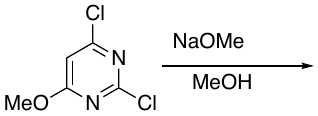
(a)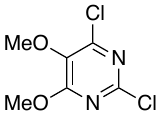
(b)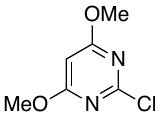
(c)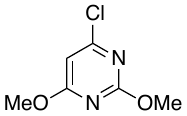
(d)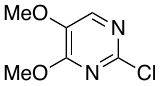
Answer
Answer: C ✓ checked by 4AB · confidence medium
The source book printed B; on checking, C is correct — see the explanation.
Restores the printed key (c). The 6-OMe donor makes 2,4-dichloro-6-methoxypyrimidine C-2-selective in S_NAr, so the earlier override to (b), based on the generic C-4 rule, ignored the 6-substituent effect.
Explanation
In 2,4-dichloropyrimidines C-4 is normally the more reactive position for S_NAr. Here, however, C-6 carries an electron-donating OMe group. For 6-alkoxy (and 6-amino) 2,4-dichloropyrimidines the usual selectivity reverses: the LUMO/transition-state analysis and experiment both favour attack at C-2. Methoxide therefore displaces the C-2 chlorine, giving 4-chloro-2,6-dimethoxypyrimidine — option (c).
Study loop for Reagents, Reaction Mechanisms & Named Reactions