Q16 · CSIR-NET Chemistry, December 2014

Paper: CSIR-NET December 2014 · Subject: Organic Chemistry · Chapter: Reagents, Reaction Mechanisms & Named Reactions · Topic: Reagents, Reaction Mechanisms & Named Reactions – General · Marks: 2 · Difficulty: Medium

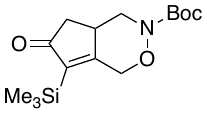
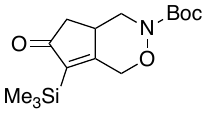
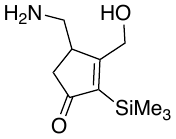
The products A and B in the following reaction sequence are: Question structure 1 of 5, ABC26OR0244 Question structure 2 of 5, ABC26OR0244 Question structure 3 of 5, ABC26OR0244 Question structure 4 of 5, ABC26OR0244 Question structure 5 of 5, ABC26OR0244
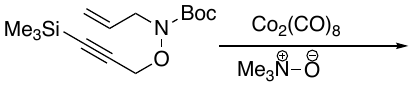
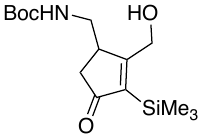
(a)Option (a) structure 1 of 3, ABC26OR0244 Option (a) structure 2 of 3, ABC26OR0244 B = Option (a) structure 3 of 3, ABC26OR0244
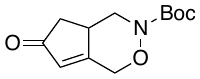
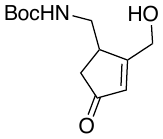
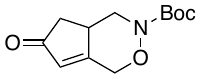
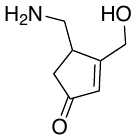
(b)Option (b) structure 1 of 3, ABC26OR0244 Option (b) structure 2 of 3, ABC26OR0244 B = Option (b) structure 3 of 3, ABC26OR0244
(c)Option (c) structure 1 of 3, ABC26OR0244 Option (c) structure 2 of 3, ABC26OR0244 B = Option (c) structure 3 of 3, ABC26OR0244
(d)Option (d) structure 1 of 3, ABC26OR0244 Option (d) structure 2 of 3, ABC26OR0244 B = Option (d) structure 3 of 3, ABC26OR0244
Answer
Answer: A ✓ checked by 4AB · confidence high
Explanation
Co₂(CO)₈/NMO Pauson–Khand of the enyne gives the fused cyclopentenone with the TMS at the α-carbon (A); SmI₂ cleaves the N–O bond of the isoxazolidine, leaving the Boc-amine and the primary alcohol (B) — (a).

Study loop for Reagents, Reaction Mechanisms & Named Reactions

1. Practise the PYQsPrevious-year questions, with answers

· Browse this chapter in the app