Q15 · CSIR-NET Chemistry, December 2017
Paper: CSIR-NET December 2017 · Subject: Organic Chemistry · Chapter: Reagents, Reaction Mechanisms & Named Reactions · Topic: Reagents, Reaction Mechanisms & Named Reactions – General · Marks: 2 · Difficulty: Medium
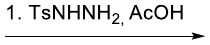
Major products A and B in the following reaction sequence are: 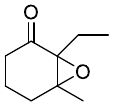



(a)
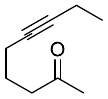
(b)
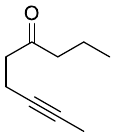
(c)A = 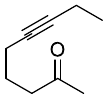
(d)A = 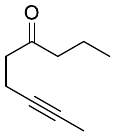
Answer
Answer: C ✓ checked by 4AB · confidence high
Explanation
Eschenmoser–Tanabe fragmentation of the α,β-epoxy ketone: the tosylhydrazone fragments to the alkynone CH₃CO(CH₂)₃C≡CEt (A); Lindlar hydrogenation gives the (Z)-alkene (c).
Study loop for Reagents, Reaction Mechanisms & Named Reactions