Q12 · CSIR-NET Chemistry, December 2018
Paper: CSIR-NET December 2018 · Subject: Organic Chemistry · Chapter: Reagents, Reaction Mechanisms & Named Reactions · Topic: Reagents, Reaction Mechanisms & Named Reactions – General · Marks: 2 · Difficulty: Medium
Under review — part of this question (a structure or an option) is not clear in the source scan. 4AB is checking it against the original book; the answer shown may change.
The structures of products A and B formed in the Edman degradation of dipeptide are- 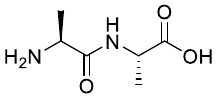


(a)
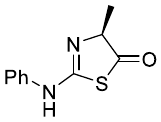 B =
B = 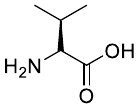
B = (b)
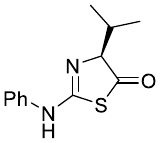 B =
B = 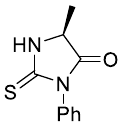
B = (c)A = 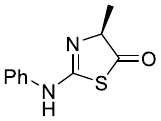 B =
B = 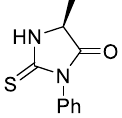
B = (d)A = 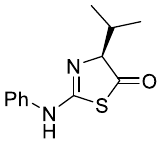 B =
B = 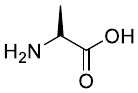
B = Answer
Under review — not yet confirmed.
Answer (as printed): D
Explanation
The mechanism of the reaction is shown below: Edman degradation method is used for N-terminal analysis of protein. Since this method can label and cleave the peptide from N-terminal and forms corresponding and forms corresponding phenylthiohydonation derivative of amino acid.
Explanation as extracted from the printed page; notation may be imperfect.
Study loop for Reagents, Reaction Mechanisms & Named Reactions