Q96 · CSIR-NET Chemistry, June 2011

Paper: CSIR-NET June 2011 · Subject: Organic Chemistry · Chapter: Pericyclic Reactions · Topic: Pericyclic Reactions – General · Marks: 2 · Difficulty: Medium

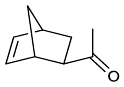
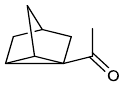
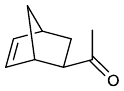
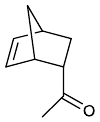
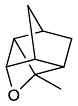
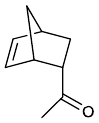
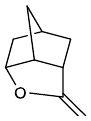
The structures of the major products X and Y in the following transformation are Question structure 1 of 3, ABC26OR1016 + Question structure 2 of 3, ABC26OR1016 $\xrightarrow{\Delta}$ X Question structure 3 of 3, ABC26OR1016 Y
(a)Option (a) structure 1 of 4, ABC26OR1016 Option (a) structure 2 of 4, ABC26OR1016 Option (a) structure 3 of 4, ABC26OR1016 Option (a) structure 4 of 4, ABC26OR1016
(b)Option (b) structure 1 of 4, ABC26OR1016 Option (b) structure 2 of 4, ABC26OR1016 Option (b) structure 3 of 4, ABC26OR1016 Option (b) structure 4 of 4, ABC26OR1016
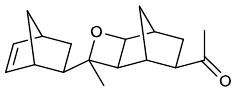
(c)X= Option (c) structure 1 of 3, ABC26OR1016 Option (c) structure 2 of 3, ABC26OR1016 Option (c) structure 3 of 3, ABC26OR1016
(d)Option (d) structure 1 of 4, ABC26OR1016 Option (d) structure 2 of 4, ABC26OR1016 Option (d) structure 3 of 4, ABC26OR1016 Option (d) structure 4 of 4, ABC26OR1016
Answer
Answer: C ✓ checked by 4AB · confidence high
Explanation
Endo Diels–Alder adduct X; on irradiation the ketone C=O and the nearby norbornene C=C undergo an intramolecular Paternò–Büchi [2+2], giving the caged oxetane Y (c).

Study loop for Pericyclic Reactions

1. Practise the PYQsPrevious-year questions, with answers

· Browse this chapter in the app