Q14 · CSIR-NET Chemistry, June 2015
Paper: CSIR-NET June 2015 · Subject: Organic Chemistry · Chapter: Reagents, Reaction Mechanisms & Named Reactions · Topic: Reagents, Reaction Mechanisms & Named Reactions – General · Marks: 2 · Difficulty: Medium
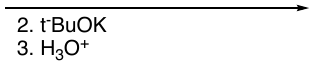
The major product formed in following reaction sequence is 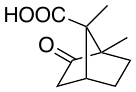


(a)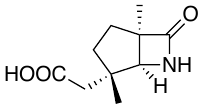
(b)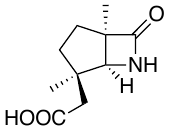
(c)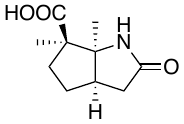
(d)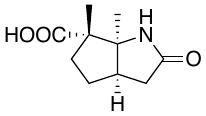
Answer
Answer: C ✓ checked by 4AB · confidence medium
Explanation
The acyl azide gives the isocyanate by Curtius rearrangement, and MeOH traps it as the carbamate. tBuOK then opens the camphor ketone (retro-Claisen-type), and H₃O⁺ closes the cis-fused bicyclic γ-lactam acid (c, as in the source key).
Study loop for Reagents, Reaction Mechanisms & Named Reactions