In the reaction, (X) + Acetone + 2 Formaldehyde Compound X is · ABC26OR0502
Subject: Organic Chemistry · Chapter: Natural Products · Topic: Natural Products & – General · Exam: GATE 2000-2022 · Marks: 2 · Difficulty: Medium
In the reaction, 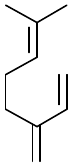
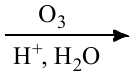 (X) + Acetone + 2 Formaldehyde Compound X is
(a)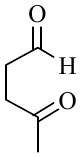
(b)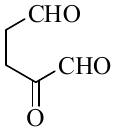
(c)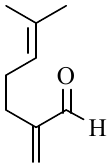
(d)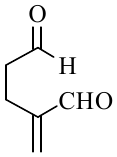
Answer
Answer: B ✓ checked by 4AB · confidence high
The source book printed no answer; this one was worked out and checked — see the explanation.
The scan shows myrcene ozonolysis giving X + acetone + 2 HCHO, so X = OHC–CH2CH2–C(=O)–CHO, which is option (b). The stored key A and the Sanger-reagent explanation belong to a different question.
Explanation
Myrcene, (CH₃)₂C=CH–CH₂CH₂–C(=CH₂)–CH=CH₂, has three C=C bonds. Ozonolysis followed by non-oxidative aqueous work-up (H⁺, H₂O) cleaves each one to carbonyl groups: the Me₂C= end gives acetone, the two terminal =CH₂ groups give 2 HCHO, and the central fragment becomes OHC–CH₂CH₂–C(=O)–CHO (2-oxopentanedial). X = (b).
Study loop for Natural Products