The major product P of the given reaction is · ABC26OR0554
Subject: Organic Chemistry · Chapter: Pericyclic Reactions · Topic: Pericyclic Reactions – General · Exam: GATE 2000-2022 · Marks: 2 · Difficulty: Easy
The major product P of the given reaction is 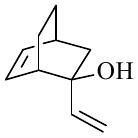
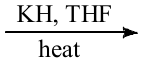
(a)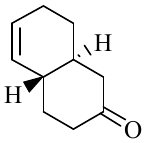
(b)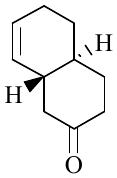
(c)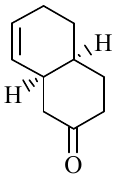
(d)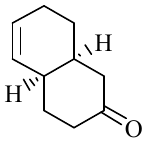
Answer
Answer (as printed): D
Explanation
KH gives the potassium alkoxide, which undergoes an anionic oxy-Cope [3,3] shift. The vinyl C=C and the ring C=C of the bicyclo[2.2.2]octene form the 1,5-diene. The C(O⁻)–bridgehead σ-bond breaks and a new C–C bond forms between the vinyl terminus and the ring alkene carbon. This opens the bicycle into a fused 6/6 system: a cyclohexene ring plus a ring that carries the enolate, which becomes the ketone on work-up. The rigid bicyclic frame forces a boat-like transition state, so the two ring-fusion H atoms end up on the same face, giving a cis-fused octalone. In (d) the ketone sits β to the non-allylic ring-fusion carbon and both junction H are hashed (cis). Answer (d).
Study loop for Pericyclic Reactions