The most suitable reagent combination to effect the following conversion is · ABC26OR0687
Subject: Organic Chemistry · Chapter: Reagents, Reaction Mechanisms & Named Reactions · Topic: Reagents, Reaction Mechanisms & Named Reactions – General · Exam: GATE 2000-2022 · Marks: 2 · Difficulty: Medium
The most suitable reagent combination to effect the following conversion is 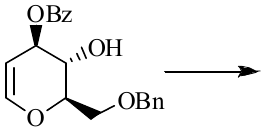
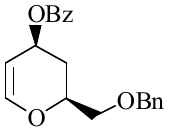
(a)(i) NaH, $\mathrm{CS_2}$, then MeI; (ii) $\mathrm{Bu_3SnH}$, AIBN, $\mathrm{C_6H_6}$, Reflux
(b)(i) $\mathrm{I}_{2}, \mathrm{PPh}_{3}$, imidazole; (ii) $\mathrm{H}_{2}, 10 \% \mathrm{Pd}-\mathrm{C}, \mathrm{AcOH}$, high pressure
(c)(i) $\mathrm{Me_3SiCl}$, pyridine, DMAP; (ii) $\mathrm{Bu_3SnH}$, AIBN, $\mathrm{C_6H_6}$, reflux
(d)(i) MsCl, pyridine, DMAP; (ii) $\mathrm{LiAlH_4}$, THF, reflux
Answer
Answer: A ✓ checked by 4AB · confidence medium
Explanation
Barton–McCombie deoxygenation: NaH/CS₂/MeI forms the xanthate, Bu₃SnH/AIBN removes it, replacing OH by H while leaving benzoate and benzyl ethers intact (a).
Study loop for Reagents, Reaction Mechanisms & Named Reactions