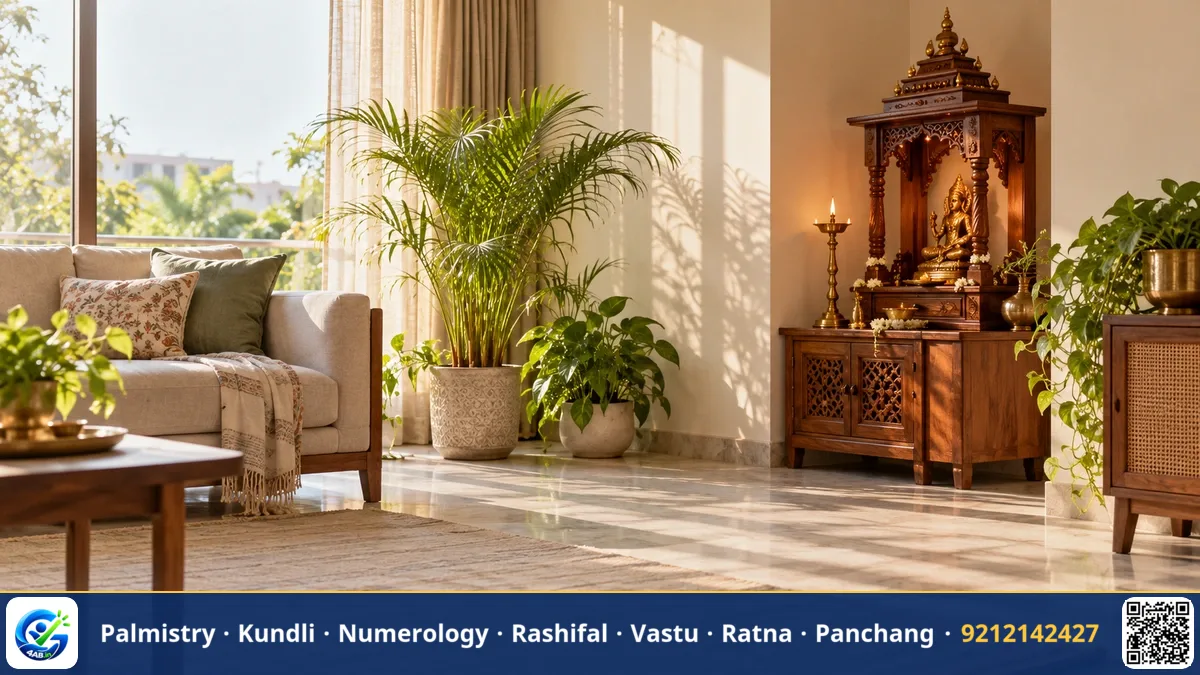
Guest room Vastu: where to place it and how to arrange it
A guest room is used for a few nights at a time, so people often place it wherever space is left. Vastu Shastra, the traditional Indian approach to orienting a home to light, air and direction, offers a simpler way to decide.
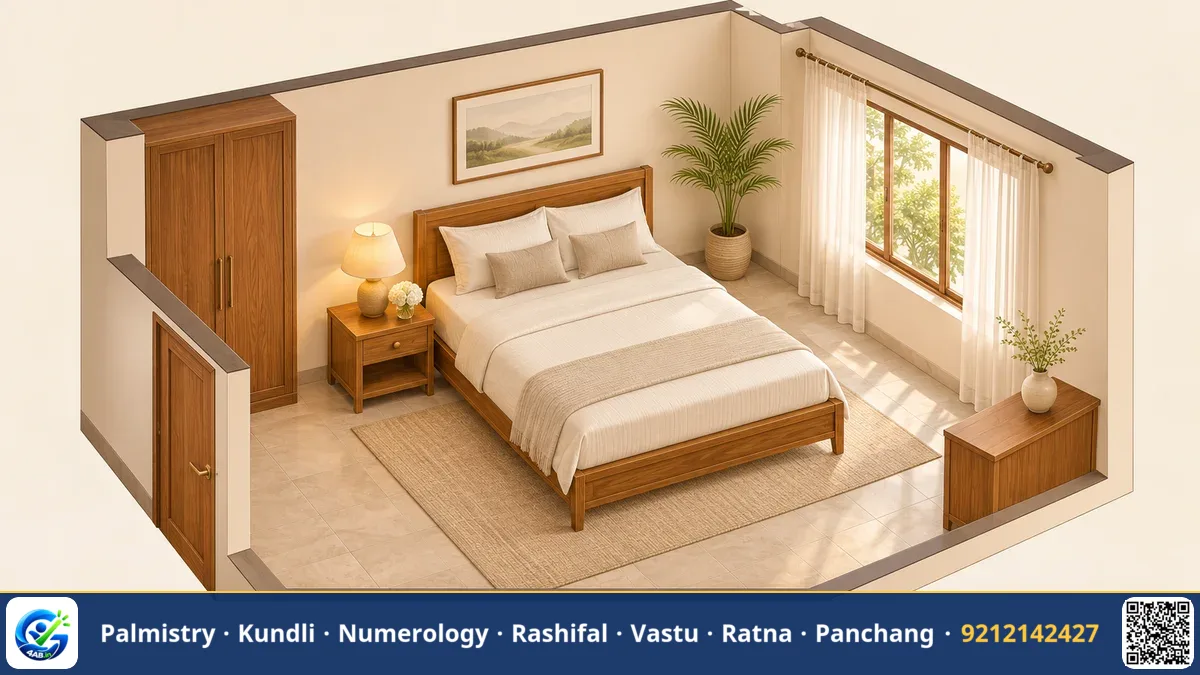
This post tells you which direction is traditionally preferred, how to arrange the bed, door and cupboard, and what to do if your room cannot move.
Why the north-west is traditionally preferred for guests
Vastu divides a home into eight directions around a centre called the Brahmasthan. Each direction is linked with a quality. The north-west is traditionally linked with air and with movement. Guests come and go, so the north-west is considered a natural place for them. This is a traditional view, not a measured fact.
The reasoning is easy to follow. A room for temporary stay suits a zone of movement. The bedrooms of the people who live in the house suit a steadier zone. Traditionally, the south-west is kept for the head of the family, as it is linked with stability.
So the first idea to remember is this: the permanent residents take the steady part of the house, and guests take the moving part.
Find your direction before you move anything
Do not guess. Stand at the centre of your home and use a phone compass. A phone compass is accurate enough for this purpose. Then note the direction in which the guest room lies.
The directions are read as sectors of a compass circle. As a worked example from the Vastu page on this site, a bearing of 50° falls in the north-east sector, which runs from 22.5° to 67.5°. The same method works for any room: find the bearing, then see which sector it sits in.
The Direction & Placement Finder on the Vastu page lets you enter your main entrance direction, or an exact bearing in degrees, and then set the rooms you know against the traditional preference. Rooms you are unsure about can be left as "Not sure". The page marks a room as "Differs" when tradition usually prefers another direction. That label is not a defect. Most homes differ somewhere.
Which direction suits a guest room, and which does not
The table below gives a practical reading. It is a summary of traditional preference. It does not predict anything about your guests or your home.
| Direction of guest room | Traditional view | What to do |
|---|---|---|
| North-west | Preferred. Linked with air and movement, suits short stays. | Keep windows usable and the room airy. |
| West | Acceptable for a guest room. | Use light colours so the room does not feel heavy. |
| North | Acceptable, as it is open and light. | Keep it free of heavy storage. |
| North-east (Ishaan) | Traditionally kept light and open, linked with worship and water. | Better used for prayer or an open space than for a bed. |
| South-west | Traditionally kept for the head of the family. | If the guest room is here, treat it as a regular bedroom and keep it orderly. |
The north-east deserves a note. Tradition keeps this corner light and open. If your only spare room is there, do not panic. Use the room, keep it clean and bright, and avoid stacking boxes in it.
How to arrange the furniture inside the room
Once the room is chosen, arrangement matters more than most people expect. Follow these steps in order.
- Place the bed first. Traditionally, the head of the bed points to the south or west, so the sleeper lies with the head towards that side. Keep the bed away from the exact centre of the room.
- Keep a clear path to the door. A guest should be able to enter and reach the bed without walking around boxes.
- Do not put the bed directly in line with the door. Shift it a little to one side so the door does not open straight onto the sleeper's feet. This also gives privacy, which is a practical reason for the same rule.
- Put heavy furniture on the south or west wall. A wardrobe or cupboard is the heaviest item in the room. Traditionally, heavy things sit on the south and west sides, leaving the north and east lighter.
- Keep the centre of the room open. The centre of a home is the Brahmasthan, and tradition keeps it clear. In a single room, too, leave the middle free of furniture.
A small bedside table and a lamp are enough. A guest room does not need to be filled. An empty corner is better than a crowded one.
Colour, light and keeping the room clear
This site suggests only low-cost, non-structural adjustments: light, colour, placement and keeping a zone clear. These apply well to a guest room.
- Light: Open the curtains in the morning. Fresh air and daylight are the basic idea behind Vastu, which is about orienting a home to light, air and direction.
- Colour: Choose soft, pale shades for walls and bed linen. Very dark colours make a small room feel closed.
- Placement: Keep a mirror away from the foot of the bed if you can, as a guest waking at night may be startled by it.
- Clearing: Do not use the guest room as a store for old suitcases, broken items or festival leftovers. A room that is stored full tells the guest they are not expected.
Airing the room between visits is a simple habit that costs nothing. Wash the linen before each stay, even if the room has been unused.
If your guest room is in the "wrong" direction
Many homes cannot follow the ideal. A flat has fixed walls, and you cannot move a room. Do not break or rebuild anything for Vastu. Any change to the structure of a building belongs with a licensed architect or structural engineer, and Vastu is a traditional design philosophy, not architecture or engineering.
Instead, work with what you can change:
- Shift the bed so the head points to the south or west.
- Move heavy furniture to the south or west wall.
- Lighten the colours and clear the clutter.
- Keep the centre of the room open.
Treat a "Differs" result as a prompt to tidy and adjust, not as a problem to fear. No arrangement can guarantee any outcome in health, wealth or relationships, and this post makes no such promise.
Key takeaways
- Traditionally, the north-west is preferred for a guest room, because it is linked with air and movement.
- Check the direction with a phone compass before you change anything.
- Bed head to the south or west, heavy furniture on the south or west wall, centre of the room left open.
- Use light, colour, placement and clearing as your remedies. Do not alter the structure.
Frequently asked questions
Which direction is best for a guest room in Vastu?
Traditionally, the north-west is preferred, as it is linked with air and movement and suits people who stay for a short time. The west and north are also considered acceptable.
Can a guest room be in the north-east?
Tradition keeps the north-east, the Ishaan corner, light and open, and links it with worship and water. If a guest room must be there, keep it bright and free of clutter.
Is a room marked "Differs" a defect?
No. "Differs" only means tradition usually prefers another direction for that room. It is not a defect, and most homes differ somewhere.
Should I rebuild a wall to fix the direction?
No. Vastu here means only low-cost, non-structural changes. Any structural change should be decided with a licensed architect or structural engineer.
Does the Vastu page on this site check my rooms?
Yes. You enter your main entrance direction or its bearing in degrees, mark where your rooms are, and the page sets each room against traditional preference.
What to do next. Try it yourself on the page below.
Vastu Shastra — Directions, Rooms & Remedies →