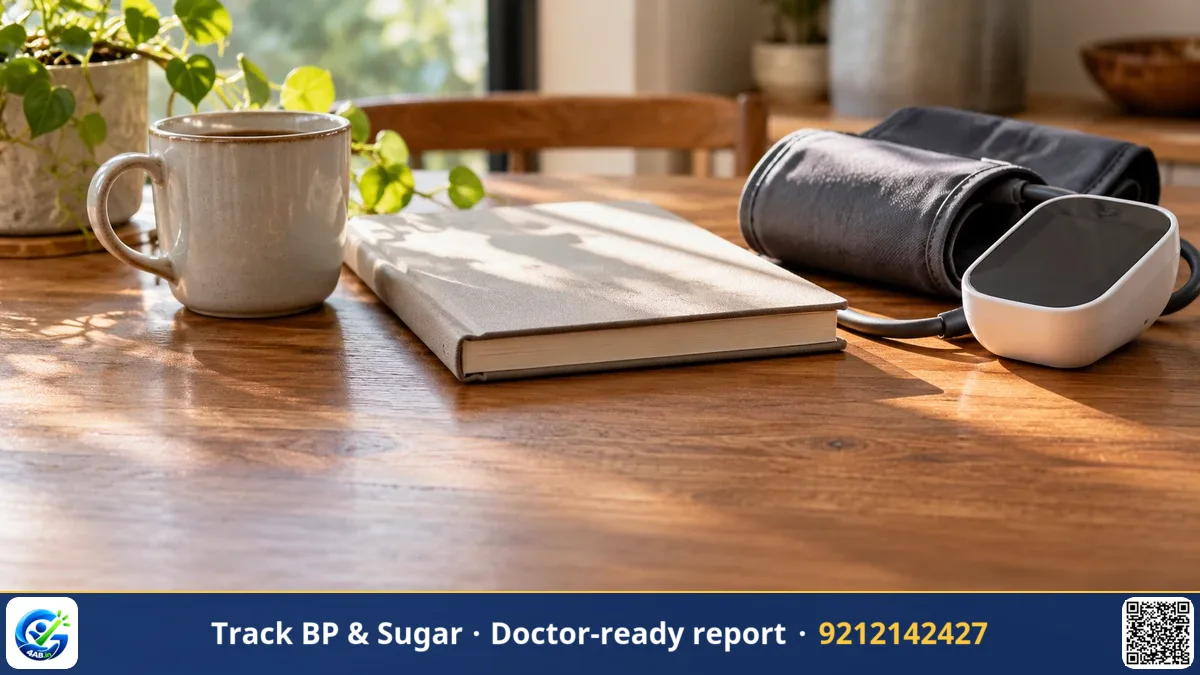
How to Remember to Check Your Numbers Every Day

This guide explains how to build a daily testing routine for your blood pressure and blood sugar. You will learn how to anchor checks to daily habits, read charts, and know when to consult your doctor.
Why remembering your numbers is a habit problem, not a memory problem
Many patients feel guilty when a day passes without logging their numbers. In my twenty years of teaching, when students struggle with daily tasks, the cause is rarely lack of care. They rely on willpower instead of routine. When morning chores, family tasks, or work duties begin, an intention to test your blood pressure quickly disappears.
Human memory requires a trigger. Remembering a task at an unspecified hour creates mental fatigue. When you link a test to an existing daily action, checking becomes automatic. This approach is called habit stacking. You attach the new health check directly to an established habit. Once the trigger happens, your monitor is already in place, and the effort to test disappears.
Health tracking also breaks down when records are scattered across paper slips, phone photos, chats, and machine memory. This disorganisation makes logging feel burdensome. Storing your numbers in a single structured record removes friction, allowing you to maintain an honest log that your doctor can interpret.
How to build daily cues and habit stacks
To build a lasting checking routine, attach your tests to fixed daily events. A morning blood pressure check pairs naturally with waking up or brushing your teeth. A fasting blood sugar check fits best right before your morning tea or breakfast.
Understanding the standard terms on your monitor makes tracking straightforward:
- Systolic blood pressure: The top number, measuring arterial pressure when your heart muscle beats.
- Diastolic blood pressure: The bottom number, measuring arterial pressure when your heart rests between beats.
- Fasting blood sugar: Blood glucose measured in mg/dL or mmol/L following an overnight fast.
- Post-meal blood sugar: Blood glucose measured approximately two hours after finishing a meal.
Keep your equipment visible. Place your cuff on your bedside table and glucometer near the breakfast area so you never search for them.
| Daily Anchor Event | Health Check | Context to Record Alongside Reading |
|---|---|---|
| Morning teeth brushing | Blood pressure and pulse | Arm used, sitting position, and device |
| Before morning tea | Fasting blood sugar | Hours fasted overnight and wake time |
| Two hours after lunch | Post-meal blood sugar | Meal contents, portion size, and carbs |
| Preparing for bed | Evening blood pressure and medicines | Bedtime, medicine taken or missed, and symptoms |
Using digital reminders and simple recording routines
Physical cues work well at home, but travel and errands can interrupt them. Digital reminders provide a secondary safeguard. Set separate reminders for readings, medicines, meals, physical activity, and sleep. Distinct reminders prevent alarm fatigue, which happens when a single generic alarm rings repeatedly and gets dismissed without action.
Speed of entry is crucial. If logging requires navigating complex screens, you will put it off. Use quick-add buttons on your phone to enter readings in seconds. An offline tracker lets you log values without an active internet connection. If you are rushed, photographing your monitor screen lets you confirm values and record them later.
Always record context. Note whether you took your medicine or missed a dose. Note what you ate before an elevated sugar reading, or if you felt symptoms like dizziness, a headache, or weakness. Context helps your doctor see the circumstances behind the numbers.
How to read your charts and spot patterns
After two to three weeks of consistent logging, numbers form clear visual patterns. Daily blood pressure and blood sugar fluctuate naturally with exertion, stress, meals, hydration, and sleep quality. An isolated high reading is rarely a reason to panic.
Instead of focusing on a single reading, examine your long-term trends. Check your 7-day, 30-day, and 90-day averages, alongside your minimum and maximum numbers. A rising average over several weeks signals a true trend requiring medical review, whereas a single high number after poor sleep is simply temporary variance.
Ramesh logs his morning blood pressure and fasting glucose daily for two weeks.
- Week 1: Blood pressure averages 128/82 mmHg. Fasting blood sugar averages 112 mg/dL. On Thursday, blood pressure reaches 138/88 mmHg after poor sleep.
- Week 2: Blood pressure averages 126/80 mmHg. Fasting blood sugar averages 110 mg/dL. On Sunday, post-meal sugar reaches 142 mg/dL after two rotis and curd.
- Interpretation: Ramesh avoids panicking over Thursday's reading because his 14-day average remains steady at 127/81 mmHg. His medicine log confirms full adherence. At his appointment, his doctor evaluates this stable two-week range rather than an isolated spike.
When to share reports with your doctor and when to seek emergency care
A tracker records and summarises the numbers you enter; it does not diagnose conditions or adjust prescription medicines. Daily logging provides your healthcare provider with clear, objective facts so they can guide your treatment safely.
Before your appointment, prepare a printed doctor-ready report. A complete summary includes test counts, averages, ranges, medicine adherence figures, and recorded symptoms on one page. Sharing this organised record saves clinical time and removes the need for guesswork.
Schedule an appointment whenever your averages show persistent numbers above target levels, or if you record repeated symptoms like dizziness or headaches.
However, routine clinic visits are for steady management, not emergencies. If you or someone you care for develops any of the following critical warning signs, do not wait to check an app or review a chart:
- Severe chest pain or crushing tightness
- Severe breathlessness or difficulty breathing
- Sudden confusion or difficulty speaking
- Fainting, collapse, or loss of consciousness
In an emergency, contact emergency medical services or go immediately to the nearest hospital casualty department.
Key takeaways
- Connect your daily health checks to regular habits like morning brushing or tea to make testing automatic.
- Keep your monitoring equipment visible and accessible in the room where your routine occurs.
- Configure separate digital reminders for tests, medicines, and meals to avoid alarm fatigue.
- Evaluate your health progress using 7-day, 30-day, and 90-day averages rather than reacting to single readings.
- Print an organised summary for your doctor, but seek immediate emergency care for chest pain, breathlessness, confusion, or fainting.
Frequently asked questions
What should I do if I forget to log my morning reading?
Do not take extra tests to compensate. Continue with your next scheduled check, such as your post-meal or evening reading. Note that the morning entry was missed so your weekly record remains honest and accurate.
Why should I look at averages instead of single readings?
Daily blood pressure and blood sugar shift with stress, activity, and meals. A single test represents only one moment. Evaluating averages over 7, 30, or 90 days reveals true trends without distortions from daily fluctuations.
Can a tracking app change my medicine doses?
No. A tracking tool only records and summarises data you enter. It does not diagnose medical conditions, advise on medicines, or determine medical causes. Any change to your treatment plan must be decided directly by your doctor.
What information should I take to my next doctor appointment?
Bring a printed doctor report showing your averages, minimum and maximum ranges, medicine adherence rates, and symptom history for the selected period. This gives your physician an accurate, complete picture of your daily health.
What to do next. Try it yourself on the page below.
BP & Sugar Tracker — Track blood pressure, blood sugar & →