Q25 · CSIR-NET Chemistry, December 2013
Paper: CSIR-NET December 2013 · Subject: Organic Chemistry · Chapter: Reagents, Reaction Mechanisms & Named Reactions · Topic: Reagents, Reaction Mechanisms & Named Reactions – General · Marks: 2 · Difficulty: Easy
The major product formed in the following reaction sequence is: 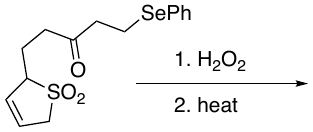
(a)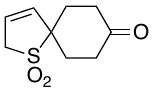
(b)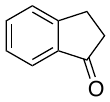
(c)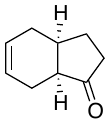
(d)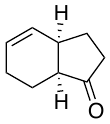
Answer
Answer: D ✓ checked by 4AB · confidence high
The source book printed C; on checking, D is correct — see the explanation.
Restores the printed key (d). In the IMDA of a 1-substituted diene the new C=C (diene C2=C3) sits next to the fusion carbon bearing the CH₂ side. Option (c) places the C=C away from both fusion carbons, which this diene cannot give.
Explanation
H₂O₂ oxidises the selenide to the selenoxide, which syn-eliminates to give the vinyl ketone. On heating, the 3-sulfolene loses SO₂ (cheletropic extrusion) and releases a 1-substituted 1,3-diene. The tether between the diene and the dienophile is three atoms long (CH₂–CH₂–C=O), so the intramolecular Diels–Alder forms a five-membered ring. Diene C-1 bonds to the dienophile carbon α to C=O, and the new ring double bond forms between diene C-2 and C-3. That double bond is next to the ring-fusion carbon that is not adjacent to the carbonyl. The product is the cis-fused hydrindenone in option (d).
Study loop for Reagents, Reaction Mechanisms & Named Reactions