Q26 · CSIR-NET Chemistry, December 2013
Paper: CSIR-NET December 2013 · Subject: Organic Chemistry · Chapter: Reagents, Reaction Mechanisms & Named Reactions · Topic: Reagents, Reaction Mechanisms & Named Reactions – General · Marks: 2 · Difficulty: Medium
In the following transformation, the reagent A and the major product B, respectively, are  $\xrightarrow{\ \text{A}\ }$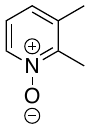
 → B
→ B
$\xrightarrow{\ \text{A}\ }$ → B(a)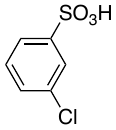 and
and 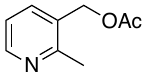
and (b)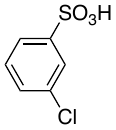 and
and 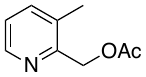
and (c)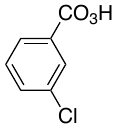 and
and 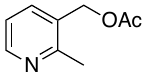
and (d)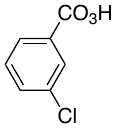 and
and 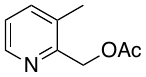
and Answer
Answer: D ✓ checked by 4AB · confidence high
Explanation
m-CPBA (A) gives the pyridine N-oxide. In the Boekelheide rearrangement with Ac₂O the 2-methyl group, which is α to the N-oxide, becomes CH₂OAc, giving 3-methyl-2-(acetoxymethyl)pyridine (d).
Study loop for Reagents, Reaction Mechanisms & Named Reactions