Q24 · CSIR-NET Chemistry, December 2015
Paper: CSIR-NET December 2015 · Subject: Organic Chemistry · Chapter: Reagents, Reaction Mechanisms & Named Reactions · Topic: Reagents, Reaction Mechanisms & Named Reactions – General · Marks: 2 · Difficulty: Medium
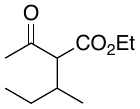
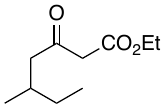
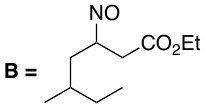
The major structures of A and B in the following reaction sequence are 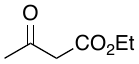
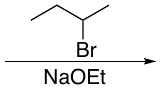
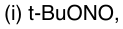


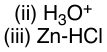
(a)
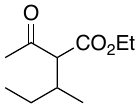 B =
B = 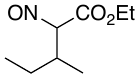
B = (b)
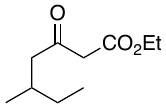

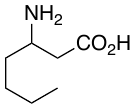
(c)
 B =
B = 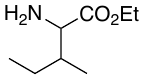
B = (d)
Answer
Answer: C ✓ checked by 4AB · confidence high
The source book printed no answer; this one was worked out and checked — see the explanation.
Explanation
NaOEt/2-bromobutane alkylates the active methylene (A). t-BuONO nitrosates the remaining α-H; acid cleaves the acetyl group (deacylation), leaving the α-oximino ester, which Zn/HCl reduces to the α-amino ester — ethyl isoleucinate, B in (c).
Study loop for Reagents, Reaction Mechanisms & Named Reactions