Q23 · CSIR-NET Chemistry, December 2015
Paper: CSIR-NET December 2015 · Subject: Organic Chemistry · Chapter: Reagents, Reaction Mechanisms & Named Reactions · Topic: Reagents, Reaction Mechanisms & Named Reactions – General · Marks: 2 · Difficulty: Medium
The major structures of A and B in the following reaction sequence are 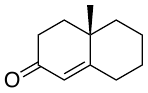



(a)
 B =
B = 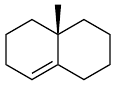
B = (b)
 B =
B = 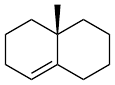
B = (c)A = 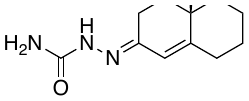 B =
B = 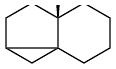
B = (d)A = 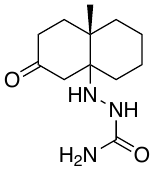
Answer
Answer: B ✓ checked by 4AB · confidence medium
Explanation
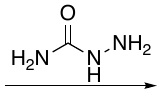
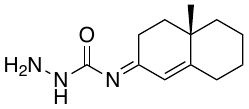
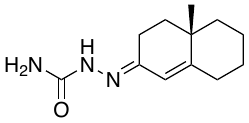
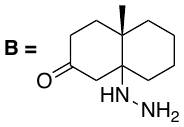
Semicarbazide condenses with the enone C=O through its terminal hydrazinic NH₂. This gives the semicarbazone R₂C=N–NH–CO–NH₂ (A as drawn in (b); option (a) shows the wrong connectivity, H₂N–NH–CO–N=). Heating with t-BuOK in diglyme/t-BuOH is a Wolff–Kishner reduction, which turns the C=N carbon into CH₂ and gives the octalin B. B is drawn the same in (a) and (b), so the A structure decides the answer: (b).
Study loop for Reagents, Reaction Mechanisms & Named Reactions