Q6 · CSIR-NET Chemistry, December 2016
Paper: CSIR-NET December 2016 · Subject: Organic Chemistry · Chapter: General Organic Chemistry · Topic: General Organic Chemistry – General · Marks: 2 · Difficulty: Hard
The correct order of the bond dissociation energies for the indicated C-H bond in following compounds is 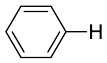

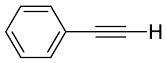 A B C
A B C
A B C(a)C $>$ B $>$ A
(b)A $>$ B $>$ C
(c)A $>$ C $>$ B
(d)C $>$ A $>$ B
Answer
Answer: D ✓ checked by 4AB · confidence high
The source book printed A; on checking, D is correct — see the explanation.
Printed key D restored. On the scan the double bond of cyclopropene B is the left edge and the indicated H sits on the right vertex, the sp3 CH2 carbon (C-3), not a vinyl carbon. An sp3 C-H is weaker than the sp2 aryl C-H of benzene (~113 kcal/mol) and the sp C-H of phenylacetylene (~133), so C > A > B. The displayed key A rested on misreading B as a vinyl C-H.
Explanation
C–H bond dissociation energy rises with the s character of the carbon orbital. In C (phenylacetylene) the indicated H is on an sp carbon (50% s, ≈133 kcal mol⁻¹), the strongest. In A (benzene) it is on an sp² carbon (≈113 kcal mol⁻¹). In B the indicated H is on C-3 of cyclopropene, the sp³ CH₂ carbon (the double bond is the opposite ring edge), so it has the lowest s character and the weakest bond. Order: C > A > B (d).
Study loop for General Organic Chemistry