Q11 · CSIR-NET Chemistry, June 2012
Paper: CSIR-NET June 2012 · Subject: Organic Chemistry · Chapter: Reagents, Reaction Mechanisms & Named Reactions · Topic: Reagents, Reaction Mechanisms & Named Reactions – General · Marks: 2 · Difficulty: Medium
Under review — part of this question (a structure or an option) is not clear in the source scan. 4AB is checking it against the original book; the answer shown may change.
The structure of the tricyclic compound formed in the following two step sequence is
(a)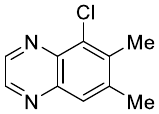
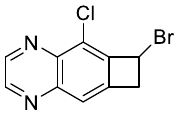
(b)


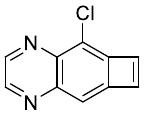
(c)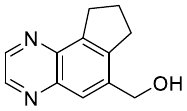
(d)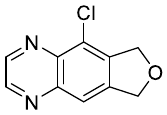
Answer
Under review — not yet confirmed.
Answer: D
Explanation
NBS (2 eq) brominates both benzylic methyls to the bis(bromomethyl) compound; aqueous NaOH converts it (via the benzylic alcohol) into the cyclic ether, the 1,3-dihydrofuro-fused tricyclic (d).
Study loop for Reagents, Reaction Mechanisms & Named Reactions