Q19 · CSIR-NET Chemistry, June 2015
Paper: CSIR-NET June 2015 · Subject: Organic Chemistry · Chapter: Reagents, Reaction Mechanisms & Named Reactions · Topic: Reagents, Reaction Mechanisms & Named Reactions – General · Marks: 2 · Difficulty: Hard
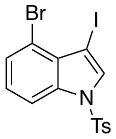
The major product formed in following reaction sequence is 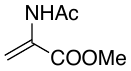

(a)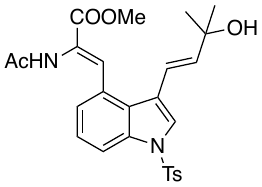
(b)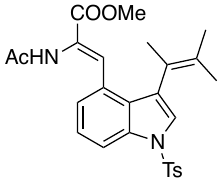
(c)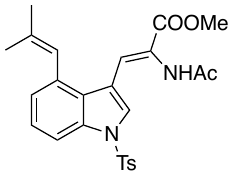
(d)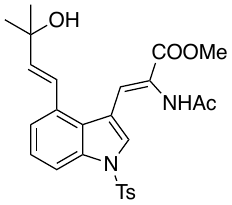
Answer
Answer: D ✓ checked by 4AB · confidence high
Explanation
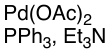
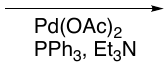
Two successive Heck reactions: the more reactive C–I at C-3 couples first with the dehydroalanine ester, then the C-4 bromide couples with 2-methylbut-3-en-2-ol, whose tertiary carbinol has no β-hydrogen, so the (E)-allylic alcohol is retained: product (d).
Study loop for Reagents, Reaction Mechanisms & Named Reactions