Q21 · CSIR-NET Chemistry, June 2015
Paper: CSIR-NET June 2015 · Subject: Organic Chemistry · Chapter: Reagents, Reaction Mechanisms & Named Reactions · Topic: Reagents, Reaction Mechanisms & Named Reactions – General · Marks: 2 · Difficulty: Hard
The major product formed in following reaction sequence is 
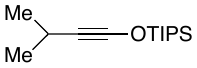
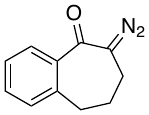
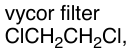

(a)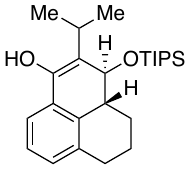
(b)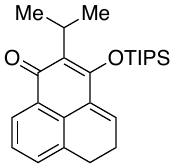
(c)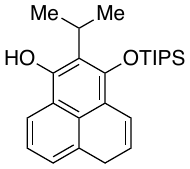
(d)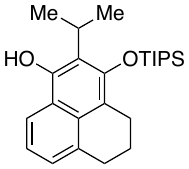
Answer
Answer: D ✓ checked by 4AB · confidence high
Explanation
Photolysis of the α-diazoketone gives a Wolff rearrangement to a ketene, which undergoes [2+2] with the silyl ynol ether; the cyclobutenone opens (4π) to a vinylketene and closes (6π) onto the aryl ring — the Danheiser benzannulation — giving the phenol (d) with the three CH₂ groups of the starting seven-membered ring intact.
Study loop for Reagents, Reaction Mechanisms & Named Reactions