Vrishabh rashi: steady nature, strengths and weak points
This post gives you the traditional description of Vrishabh rashi, the second sign of the zodiac.
You will see its strengths, its weak points, and how to use the daily sanket (indication) with a clear head.
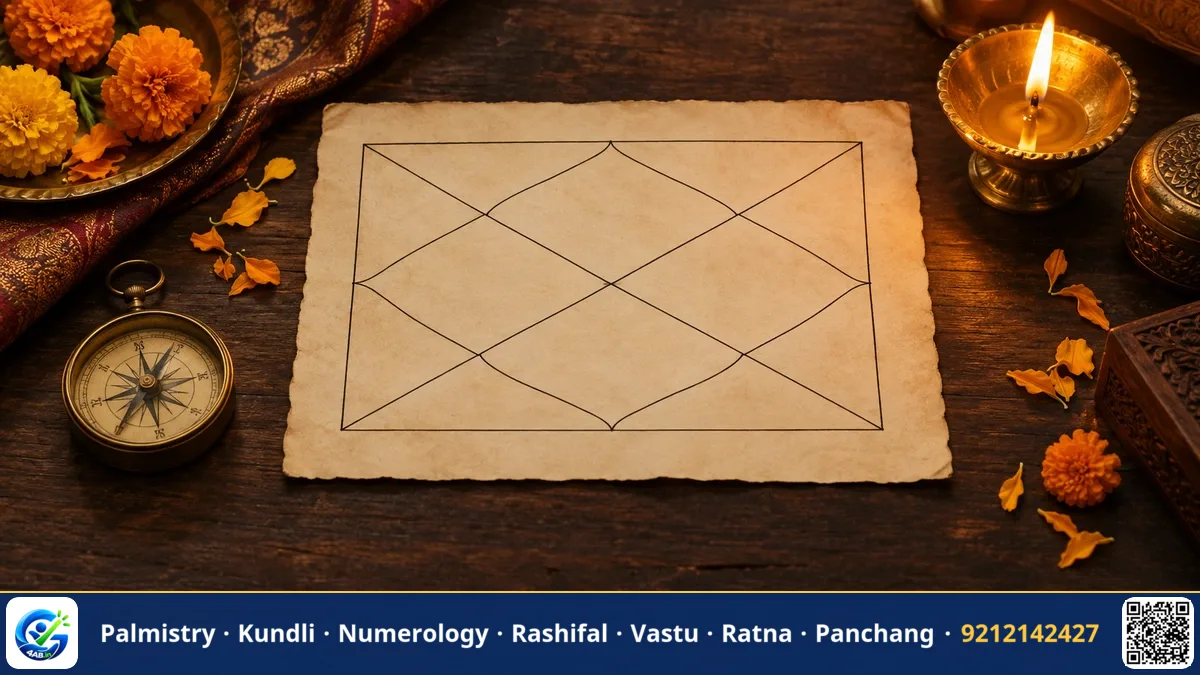
What Vrishabh rashi means
A rashi is a Moon sign. It is the zodiac sign in which the Moon stood when you were born. Vedic horoscopes are read from the Moon sign, not the Western Sun sign. So if you only know your Sun sign, find your rashi first. Otherwise you will read the wrong description.
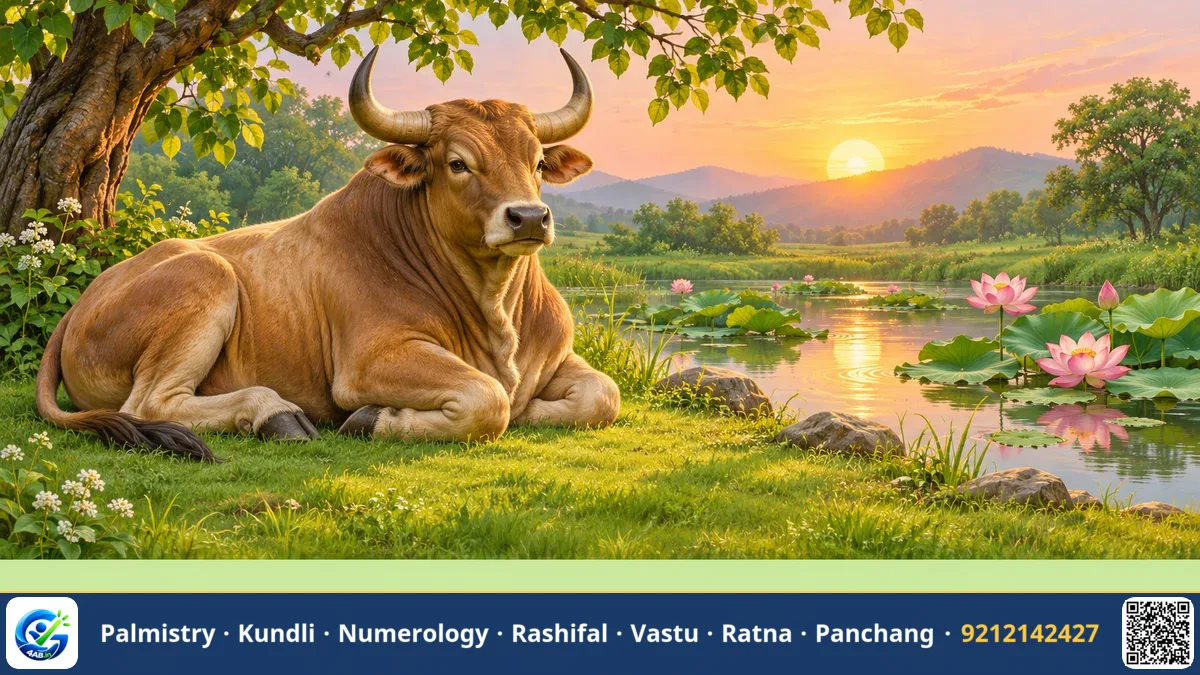
The bull is the symbol of Vrishabh. The basic details, as given in standard textbook astrology, are these:
- Position: the second sign. Mesha comes before it and Mithuna comes after it.
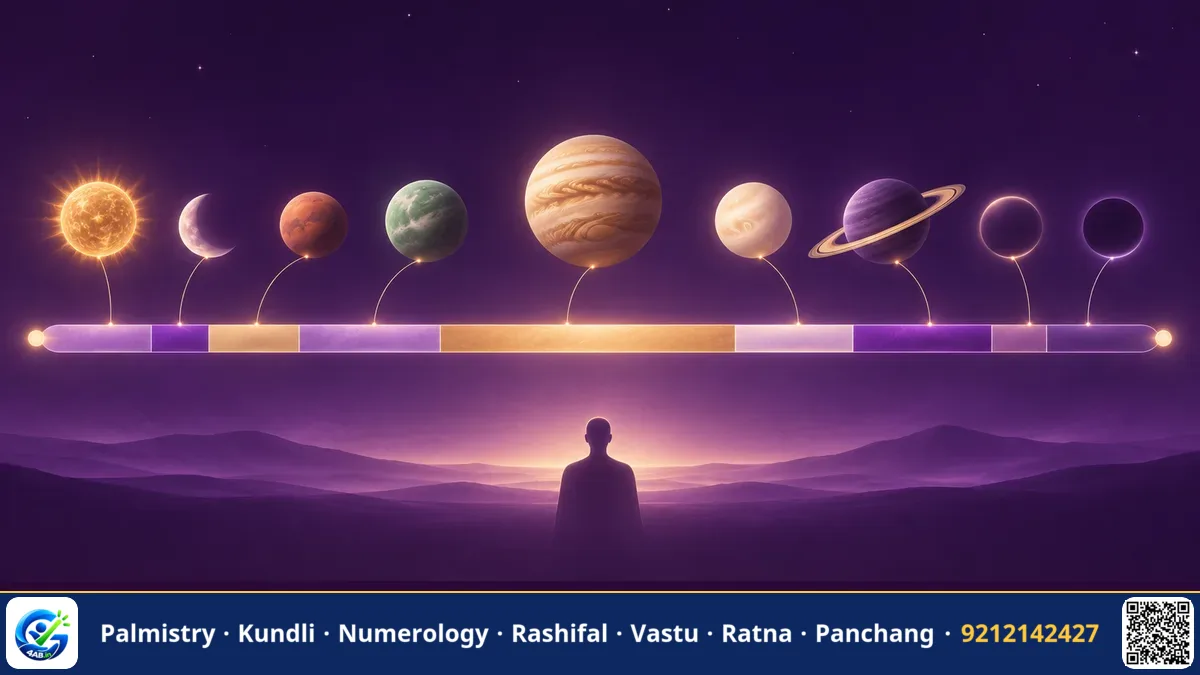
- Ruling planet: Shukra, traditionally linked with comfort, beauty, art and relationships.
- Element: earth (prithvi). Earth signs are traditionally seen as practical and grounded.
- Quality: fixed (sthir). A fixed sign holds its position and does not shift easily.
These four details explain most of what follows. Earth gives the practical side. The fixed quality gives the patience and also the stubbornness. Shukra gives the taste for comfort and beauty.
If you are not sure of your rashi, use the Rashi & Nakshatra calculator on the horoscope page before you read further.
Core personality traits
Traditionally, a person with a Vrishabh Moon is described as calm on the surface and firm underneath. The Moon stands for the mind. So this description is about how you think and feel, not about what will happen to you.
- Patient. Vrishabh people are said to take their time and finish what they start.
- Dependable. They are traditionally seen as people who keep their word.
- Practical. They prefer a plan that works to a plan that only sounds exciting.
- Fond of comfort. Because Shukra rules the sign, good food, music, clothes and a pleasant home are said to matter to them.
- Loyal. Once trust is formed, it is traditionally held to last long.
Not every person with this Moon sign will show all of these. The Moon sign is only one part of a kundli (birth chart). The other planets, the rising sign and your own upbringing all shape the final person.
Strengths of Vrishabh and how to use them
A trait becomes a strength only when you put it to work. Here is how each traditional strength can be used in daily life.
- Persistence. Choose one long task, such as a course, a skill or a saving habit. Give it a fixed time every day. Vrishabh is said to do better with routine than with short bursts of effort.
- Steady nerves. When a group starts to panic, you are the one traditionally expected to stay calm. Use this. Speak slowly and ask for facts before decisions.
- Sense of beauty. Shukra is linked with an eye for design, taste and craft. Cooking, music, gardening, stitching and decoration are natural fields to try.
- Loyalty. Keep a few deep friendships instead of many shallow ones. This suits the sign.
- Practical judgement. Before any big step, write down the cost, the time needed and your next actions in order. This habit fits an earth sign well.
Weak points to watch
The same fixed nature that gives strength also creates problems. A teacher would point these out plainly.
- Stubbornness. A fixed sign finds it hard to change its mind. When you notice you are defending a method only because it is familiar, stop and ask whether it still works.
- Slow to start. Comfort can become an excuse. Begin with a very small version of the task, so that starting is easy.
- Possessiveness. Strong attachment to people and things is traditionally linked with this sign. Give others room. Trust grows better that way.
- Overindulgence. Love of pleasure can run ahead of need. Keep a personal limit on spending and on food. This is a habit point only. For money or health, ask a qualified person.
Strength and weak point side by side
Every Vrishabh quality has two faces. The table shows both, with one simple correction for each.
| Traditional quality | When it helps | When it harms | What to do |
|---|---|---|---|
| Patience | Long studies, slow projects | Delaying a needed decision | Set a date for deciding |
| Firmness | Holding to your values | Refusing good advice | Listen fully before you reply |
| Love of comfort | Making a calm home | Avoiding effort | Start with a small step |
| Loyalty | Lasting bonds | Clinging to people | Allow space and trust |
How a Vrishabh reader should use the daily sanket
A sanket is an indication, a hint about the general mood of a period. It is not a verdict. The horoscope page gives general guidance for each of the twelve Moon signs, with daily, weekly and monthly views. You do not have to enter anything for the general reading. Select your rashi and read.
The page states clearly that readings are traditional guidance, not a prediction or a guarantee of any event. Keep that in mind. A sanket does not tell you what will happen. It gives you a reason to think about how you want to act.
Here is a simple way to use it as a Vrishabh reader:
Worked example.
- Morning: read the daily view for Vrishabh. Note one line that seems useful.
- Turn that line into one action. If it speaks of patience, you might decide not to argue in a meeting and to reply after an hour.
- Evening: write one sentence on what you did. This builds the routine habit that suits your sign.
- Weekend: read the weekly view and plan the coming days in the same way.
If you want a reading based on your own chart, create a free kundli first. The page can then read the transits (gochar, the movement of planets through the signs) against your own chart.
Sade Sati and Vrishabh
Many readers ask about Sade Sati. It is the best-known transit. Saturn spends about two and a half years in each sign. Sade Sati is the roughly seven-and-a-half-year stretch while Saturn passes through the sign before your Moon sign, the Moon sign itself and the sign after it.
For Vrishabh, the sign before is Mesha and the sign after is Mithuna. Traditionally this stretch is seen as a period that asks for discipline and patience. Vrishabh is already described as patient, so the match is natural.
Do not treat it as a threat. Use the time to build routines and finish pending work. Look at your own chart and the live transit view of your kundli before you draw any conclusion. If you are worried, speak to a trusted elder or a qualified astrologer.
Key takeaways
- Vrishabh is the second sign, ruled by Shukra, of the earth element and of fixed quality.
- Traditionally held strengths are patience, loyalty, practical sense and a feel for beauty.
- Watch for stubbornness, slow starts and possessiveness, and work on them with small habits.
- Use the daily sanket as a prompt for one action, not as a prediction.
- Confirm your rashi from the Moon sign, not the Sun sign.
Frequently asked questions
Which planet rules Vrishabh rashi?
Traditionally, Shukra rules Vrishabh. Shukra is linked with comfort, beauty, art and relationships, which is why these themes appear in the description of the sign.
Is Vrishabh rashi the same as my Sun sign?
Not necessarily. Vedic horoscopes are read from the Moon sign, the sign where the Moon stood at your birth. Your Sun sign can be different. Find your rashi first, then read the description.
Will this description match every Vrishabh person?
No. The Moon sign is only one part of a kundli. Other planets and your own life experience change how the traits appear. Take the description as traditional guidance.
Can a daily horoscope predict my day?
No. The readings on the horoscope page are traditional guidance, not a prediction or a guarantee of any event. Use them to reflect and plan, not to decide serious matters.
How do I read the Vrishabh sanket for today?
Open the horoscope page, select your rashi and choose the daily view. For a reading from your own chart, create a free kundli first.
What to do next. Try it yourself on the page below.
Daily Horoscope — Rashifal for All 12 Signs →