Heart Line in Palmistry: Common Patterns
This post shows you where the heart line sits and how to tell its common patterns apart.
You will also learn how to photograph your palm so the line can be seen clearly.
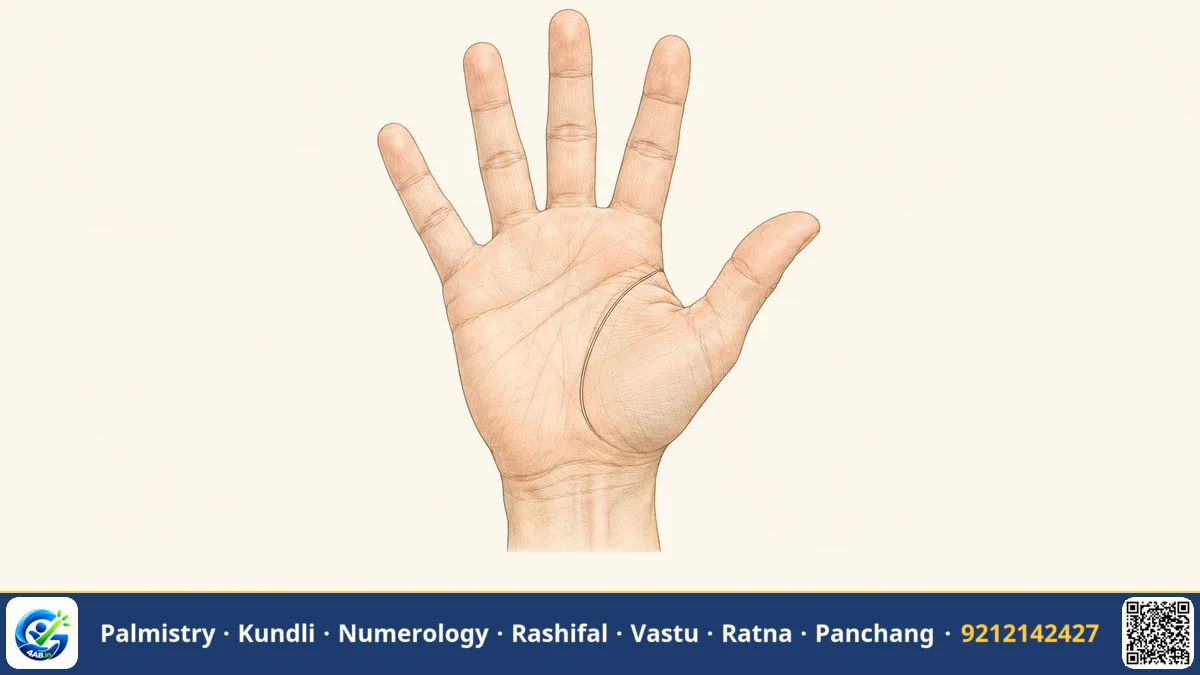
Where to find the heart line
Hold your hand open and look at the upper part of the palm, just under the base of the fingers. The heart line is the line that runs across this area. The head line runs across the middle of the palm, below it. Do not mix the two up.
In Hindi palmistry, called Hast Rekha, the heart line is one of the four main lines. The other three are the life line, the head line and the fate line. Tradition reads the heart line for emotional life: how a person feels and shows feeling. Palmistry is a traditional, belief-based practice. It is not scientifically proven, and it is not advice of any kind.
Many teachers describe the line as starting on the outer edge of the palm, below the little finger, and moving across towards the index and middle fingers. Where it ends is a big part of how it is read. Different palmistry teachings often disagree on details, so treat any single rule as one view and not a fixed truth.
Which hand to look at
Traditionally, the dominant hand is read for the life you are actively making. The dominant hand is the one you write with. The non-dominant hand is read for inherited tendencies.
Do not assume the right hand is dominant. Ask yourself, or ask the person whose hand you are looking at. Then compare both hands. Seeing where they agree and where they differ is a good way to learn.
Common patterns and how they are traditionally read
Look at four things in turn: length, curve, depth and breaks. Note each one before you read anything. Observation comes first, and reading comes second.
| What you see | How it is traditionally read |
|---|---|
| Long line that reaches far across the palm | Traditionally held to suggest a person who feels strongly and expresses it openly |
| Short line that stops early | Traditionally held to suggest a more reserved way of showing feeling |
| Strongly curved line, rising towards the fingers | Traditionally held to suggest warmth and ease in showing feeling |
| Straighter line, running flatter across the palm | Traditionally held to suggest a calmer, more controlled way of showing feeling |
| Deep, clear line | Traditionally read as steady and clear feeling |
| Faint or broken line | Traditionally read as changing or uncertain feeling; often just a sign of a light line |
This table gives general traditional views. Schools differ, so you may find a teacher who says something else. That is normal in palmistry.
Length and curve in more detail
Length. A long line and a short line are judged against the width of your own palm. Do not compare your hand with someone else's. A small hand with a line that reaches the far side is long for that hand.
Curve. Some heart lines bend upward at the end. Others run almost straight. Look at the overall shape and not at one small bend. Tradition links a rounder curve with open expression and a flatter line with a more measured style. These are descriptions of tendency. A person is far more than one line.
Depth, breaks and small marks
A deep line looks sharp and continuous. A faint line looks thin or light. Depth can change with the skin, the way the hand is held, and daily use. So do not judge depth from a quick glance.
A break is a gap in the line. A chain-like look means the line seems made of small links. Another common sight is a small branch or fork at the end. Each of these is described differently in different teachings. As a beginner, simply note what you see and write it down. Do not worry if you cannot name every mark.
Fine, light lines crossing the palm are very common. Do not treat them as a sign of anything. A reading must never be treated as medical, legal or financial advice. It also makes no claim about health or lifespan.
Photo tips for a clear heart line
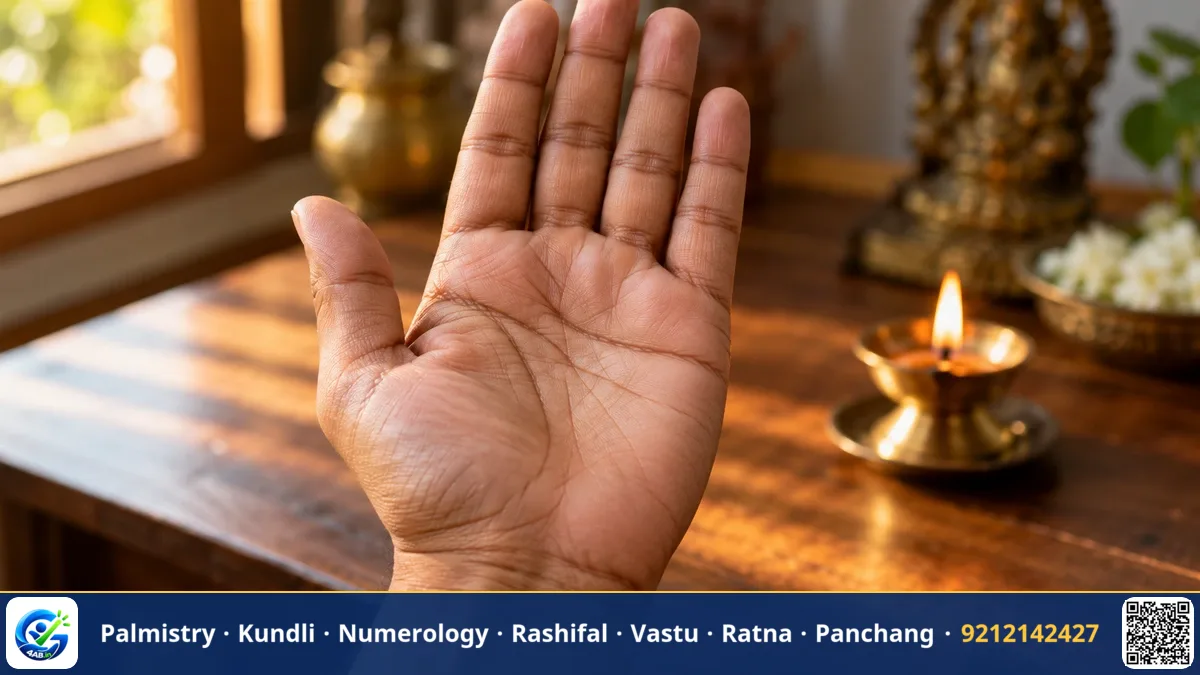
A good photo helps you study the line calmly, and compare it later. Follow these steps.
- Use daylight. Sit near a window. Avoid direct harsh sun, which makes shadows. Avoid a yellow bulb, which hides fine lines.
- Relax the hand. Open it flat but do not stretch it tight. A stretched palm flattens the lines. A tense palm creates extra creases.
- Keep the camera straight above the palm. A tilted phone makes the line look longer or shorter than it is.
- Fill the frame. Include the whole palm and the base of the fingers. The heart line sits close to the fingers, so do not cut them off.
- Take one photo of each hand. Label them as dominant and non-dominant so you do not mix them up later.
- Clean and dry the hand. Cream or sweat can create shine that hides the line.
If the line is still hard to see, look at your real palm in good light and not at the screen. The eye often sees more than the camera.
A worked example
Step 1: Sit near a window. Relax your writing hand and hold it open.
Step 2: Find the line just below the fingers. Check that the head line lies below it, across the middle.
Step 3: Write down only what you see. For example, you might note that the line is long, gently curved and fairly deep, with one small gap near the middle.
Step 4: Look up each point in the table above. You will find that some points suggest warmth and some suggest steadiness. That is normal.
Step 5: Treat the result as a reflection, a prompt to think about yourself. It is not a verdict.
You can also use the Read Your Own Hand section on our palmistry page. It asks plain questions about what you can see on your palm, and builds the reading from your answers. If you are not sure about a line, choose "Not sure". Leaving a question blank is better than guessing.
Common beginner mistakes
- Reading one line alone. Tradition looks at all the lines, the mounts, the fingers and the signs together.
- Confusing the heart line and the head line. The heart line is the upper one, close to the fingers.
- Judging by a bad photo. Poor light and a tilted camera change what you see.
- Treating a pattern as a prediction. A pattern describes a tendency. It does not state what will happen.
- Frightening yourself or others. A broken or faint line is not a bad sign. Do not use palmistry to worry anyone.
Key takeaways
- The heart line runs across the upper palm, just below the fingers. The head line is the one below it.
- Look at length, curve, depth and breaks, and note each before you read.
- Read the dominant hand for the life you are making, and the non-dominant hand for inherited tendencies.
- Use daylight, a relaxed hand and a straight camera for a clear photo.
- Palmistry is a traditional practice. Patterns describe tendencies and are not forecasts or advice.
Frequently asked questions
Which line is the heart line?
It is the line that runs across the upper palm, just below the fingers. The head line runs across the middle of the palm, below it.
What does the heart line mean in palmistry?
Tradition reads it for emotional life. Its length, curve, depth and breaks are compared. These are traditionally held views of tendency, not predictions.
Which hand should I read first?
Traditionally, the dominant hand, the one you write with, is read for the life you are actively making. The non-dominant hand is read for inherited tendencies. Do not assume the right hand is dominant.
Is a faint or broken heart line a bad sign?
No. A faint or broken line is only one pattern to note. Palmistry is not scientifically validated, and it should never be used to frighten anyone or treated as advice.
Can I read my palm from a photo?
Yes, if the photo is clear. Use daylight, a relaxed hand and a camera held straight above the palm. If the line is still unclear, look at your real palm in good light.
What to do next. Try it yourself on the page below.
Palmistry / Hast Rekha — Lines, Mounts, Fingers & Signs →