Major vs Minor Lines in Palmistry: What's the Difference?
This guide explains how to identify and classify major and minor lines on your palm.
You will learn what each line signifies, how mounts provide context, and how to photograph your hand for clear observation.
Understanding major lines on the palm
When you look at your palm, the most noticeable markings are deep, clearly etched creases. In traditional Indian palmistry (Hast Rekha), these are the major lines. The four main lines are the life line, head line, heart line, and fate line. Forming before birth, they remain relatively steady throughout life.
Major lines do not forecast fixed events. In genuine Hast Rekha, they represent traditional interpretations of baseline character, mental habits, and natural vitality. They describe tendencies rather than predetermined outcomes.
The heart line runs across the upper palm, beneath the fingers. It reflects emotional habits, empathy, and how one expresses feelings in relationships. A clear heart line is traditionally read as an even, steady emotional nature.
The head line crosses the middle of the palm beneath the heart line. It reflects cognitive style, reasoning, and problem-solving. For example, a long, clear head line is traditionally read as steady concentration—a description of a personal tendency, not a forecast.
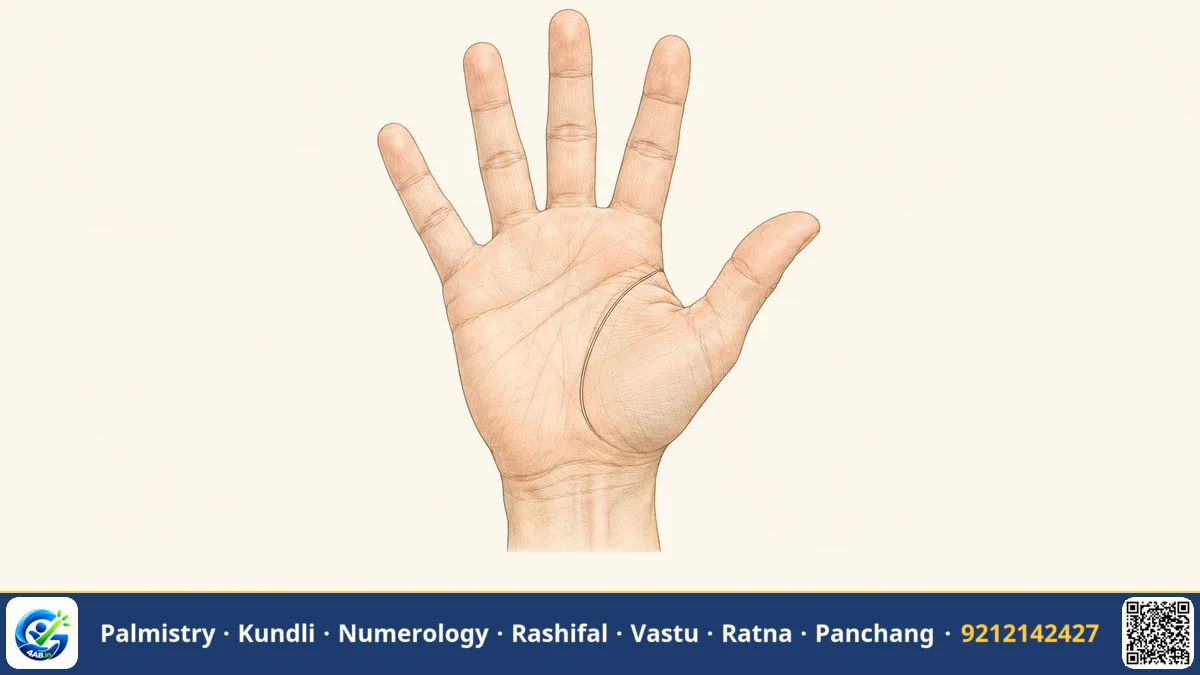
The life line arcs around the base of the thumb. Contrary to popular superstition, it makes no claims about lifespan or medical health. In Hast Rekha, it is traditionally read for physical stamina, daily energy, and how you handle major life shifts.
The fate line runs vertically upward from the base of the palm toward the middle finger. Unlike the other three lines, its presence varies widely. Some palms show a deep line, while others have a faint line or none at all. Tradition associates it with vocation, focus, and conscious life direction.
Identifying minor lines on the palm
Minor lines are smaller, shallower creases scattered across the palm. Unlike major lines, they are not present on every hand, nor are they permanent. They can deepen, fade, or multiply as habits, stress levels, and routines shift over time.
In traditional reading, minor lines act as modifiers that add detail to the foundation set by the major lines. Common minor lines include:
- Sun line: This vertical mark runs toward the ring finger. It is traditionally read for creative interest, recognition, and satisfaction at work.
- Relationship lines: These short horizontal marks lie on the outer edge of the palm below the little finger. Tradition views them as indicators of emotional ties rather than legal marriage forecasts.
- Travel lines: These fine horizontal marks sit on the lower outer palm. They are traditionally read as an interest in travel or new environments.
- Girdle of Venus: This delicate arc runs above the heart line between the index and little fingers, traditionally linked with emotional sensitivity.
Broken or faint minor lines are not negative omens. In traditional practice, they simply indicate shifting interests or temporary distractions.
How palm mounts provide context for lines
Lines do not run across a flat surface; they traverse raised muscular pads called mounts. Mounts act as geographic anchors that help classify where lines begin, travel, and end.
Each mount sits at the base of a specific finger or along the hand's outer rim:
- Mount of Jupiter: At the index finger base; traditionally linked with ambition and leadership.
- Mount of Saturn: Under the middle finger; associated with discipline, duty, and patience.
- Mount of Sun: Under the ring finger; tied to warmth, artistic flair, and public regard.
- Mount of Mercury: Beneath the little finger; connected with communication, trade, and practical analysis.
- Mount of Venus: The large pad at the thumb base; reflects vitality and affection.
- Mount of Moon: Along the lower outer palm; associated with imagination, rest, and subconscious thought.
A line's direction toward a mount shapes its traditional meaning. If a head line curves down toward the Mount of Moon, it is traditionally interpreted as an imaginative mind. If it runs straight toward the outer edge, it indicates a practical, direct thinking style.
Comparing major lines and minor lines side by side
To evaluate your palm accurately, you must distinguish primary creases from secondary marks. The table below outlines their practical differences.
| Feature | Major lines | Minor lines |
|---|---|---|
| Depth | Deep, distinct, and clearly defined. | Shallow, thin, and lightly etched. |
| Presence | Present on almost all hands (life, head, heart). | Variable; some hands have many, others very few. |
| Stability | Relatively permanent baseline framework. | Can appear, fade, or deepen over time. |
| Interpretation | Reflects foundational temperament and vitality. | Reflects transient habits, modifiers, and interests. |
Which hand to examine and practical photo tips
Beginners often ask which hand to examine. In Hast Rekha, both hands serve distinct purposes.
Traditionally, the dominant hand—the one you write and work with—is read for the life you are actively making through your choices. The non-dominant hand is read for inherited traits and innate tendencies. Do not assume your right hand is dominant; always verify which hand you naturally favor.
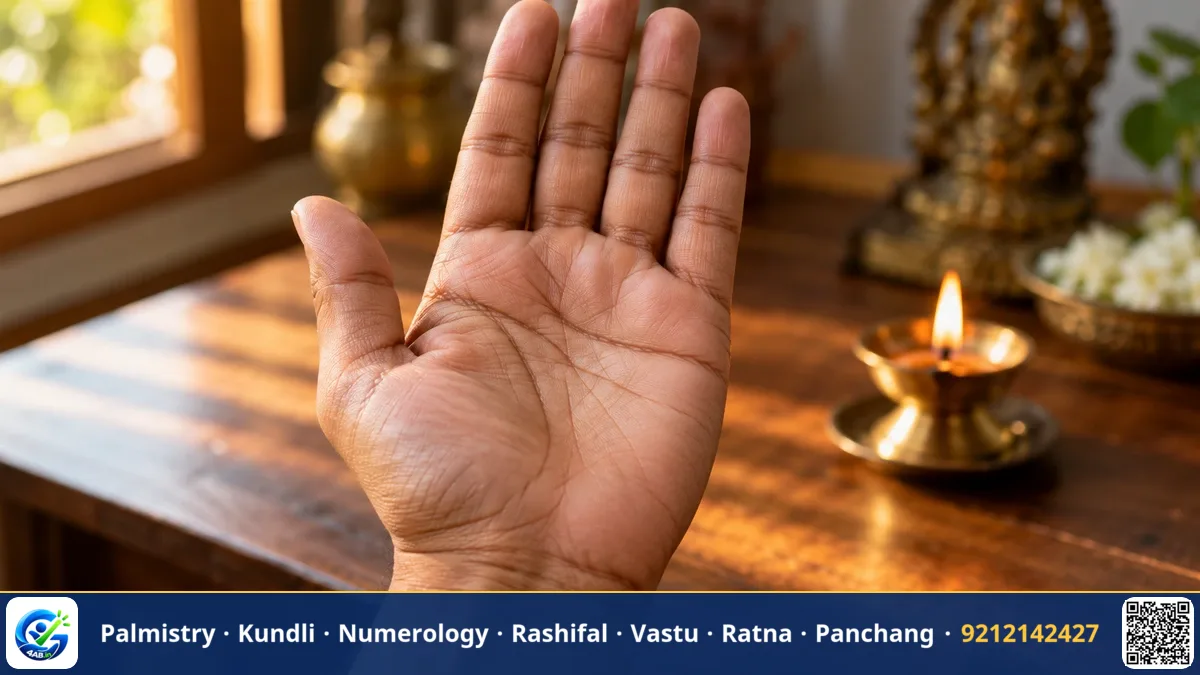
Because minor lines are faint, proper observation is essential. Follow these practical steps:
- Use natural daylight: Sit near a window in soft morning or afternoon light. Natural light reveals subtle skin texture without harsh shadows.
- Avoid camera flash: A flash flattens the skin surface and washes out faint minor lines completely.
- Keep the hand relaxed: Rest your hand flat and loose. Overstretching fingers creates artificial tension creases that look like minor lines.
- Align camera parallel: Hold your phone directly above the palm. Angled shots distort the true length and curvature of lines.
- Skip unclear marks: If a line is too faint to see with certainty, leave it unclassified. In careful self-observation, skipping an unclear line is better than guessing.
Key takeaways
- Major lines (life, head, heart, fate) show stable baseline temperament and vitality.
- Minor lines are shallow, shifting creases that reflect secondary interests and changing habits.
- Palm mounts act as geographic anchors that give context to line pathways.
- The dominant hand reflects conscious actions; the non-dominant hand reflects inherited tendencies.
- Photographing in soft daylight with relaxed fingers prevents mistaking tension folds for lines.
Frequently asked questions
Can minor lines disappear over time?
Yes. Minor lines often fade, deepen, or multiply as your daily routine, focus, and stress levels change. Traditional palmistry treats them as dynamic reflections of your present life phase.
Does a short life line mean a short life?
No. Palmistry makes no claims about lifespan or medical conditions. In traditional practice, the life line reflects energy levels and vitality, not the duration of life.
Why do some hands have very few minor lines?
Hands with few minor lines traditionally indicate a practical, uncluttered temperament with steady focus. Hands with numerous minor lines traditionally reflect an active, highly sensitive mind.
How do you tell a minor line from a skin crease?
A true minor line remains visible when the hand rests naturally open. Ordinary skin folds appear only when bending fingers or tensing the palm, and disappear upon relaxing.
What to do next. Try it yourself on the page below.
Palmistry / Hast Rekha — Lines, Mounts, Fingers & Signs →