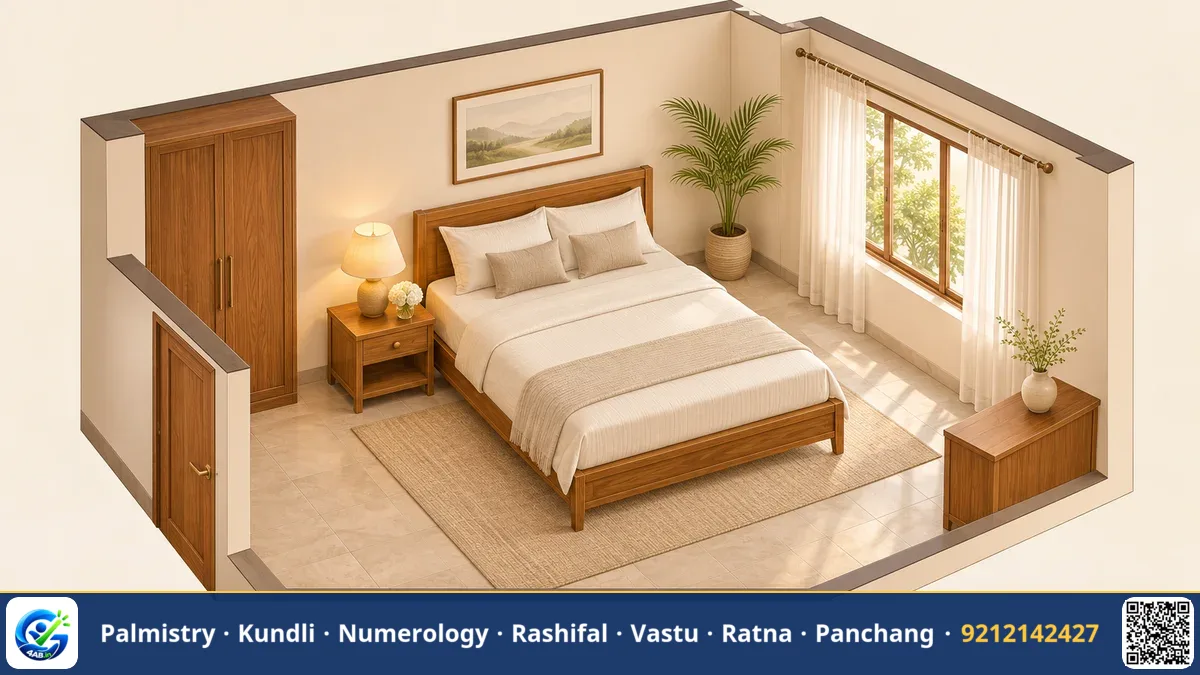
Mirrors in the Bedroom: Vastu Placement and Remedies
This guide explains how to position mirrors in your bedroom using traditional Vastu Shastra principles. You will learn preferred wall directions, practical layout corrections, and simple non-structural remedies that avoid demolition.
Understanding mirrors and reflections in bedroom Vastu
Vastu Shastra is the traditional Indian philosophy of orienting a home or workplace to light, air, and direction. In this tradition, the bedroom serves as a personal sanctuary reserved for rest, recovery, and quiet privacy. Every piece of furniture placed inside the room interacts with ambient natural light, air circulation, and daily movement.
Mirrors are distinct from standard decorative items because of their reflective surfaces. In traditional design thought, a mirror does not merely occupy wall space. It actively duplicates and bounces whatever light and motion cross its surface. Historically, mirrors are associated with the water element because water is clear, reflective, and in continuous motion. Because water represents movement, mirrors are traditionally seen as amplifiers of activity within an enclosed space.
A restful bedroom environment, however, requires visual calm and stillness. When large reflective panels constantly bounce movement and ambient light across the room, they can create subconscious distraction. It is traditionally held (माना जाता है) that an exposed mirror facing a resting person disturbs peace and produces restless sleep. As a teacher of these principles, my guidance is straightforward: evaluate how reflective glass affects the quiet quality of your room before fixing furniture permanently in place.
Preferred directions for bedroom mirror placement
To determine mirror placement, consider the layout of the eight directions surrounding the central zone of the home, known as the Brahmasthan. The compass circle runs from 0° to 360°. When reviewing your bedroom, you can check your wall orientations using a standard phone compass.
Traditional Vastu Shastra identifies clear directional preferences for positioning reflective surfaces inside a bedroom:
- North wall: The northern sector represents open, receptive space. Mounting a mirror on the northern wall allows it to face inward without generating harsh glare from direct sunlight.
- East wall: The eastern sector welcomes early morning daylight. Placing a mirror on an east-facing wall helps reflect gentle morning light deeper into the room. For example, a compass bearing of 50° lies in the north-east sector (22.5° to 67.5°), the Ishaan corner, named after the deity Ishana. Tradition keeps this sector light, clean, and open.
- West wall: The western sector is traditionally treated as a grounding zone. It often houses solid wardrobes or storage units. If a mirror must sit here, keep it enclosed inside a cabinet.
- South wall: The southern sector is traditionally kept heavy and unreflective. Placing an open mirror on this wall is traditionally discouraged, as it reflects inward toward active zones.
| Wall direction | Traditional preference | Practical design reasoning | Non-structural correction |
|---|---|---|---|
| North | Preferred | Reflects soft ambient daylight across the room. | Ensure the reflection does not face the bed directly. |
| East | Preferred | Welcomes gentle morning daylight into the interior. | Keep the surface clean and away from the main door. |
| West | Neutral | Traditionally reserved for solid, heavy furniture. | Place mirror glass on the inner side of wardrobe doors. |
| South | Discouraged | Tradition keeps this zone heavy and visually still. | Cover the glass panel with an opaque cloth at night. |
Common layout challenges in modern bedrooms
Modern homes and rented apartments frequently feature built-in storage and compact layouts that create practical placement conflicts. Homeowners encounter two common mirror dilemmas during everyday room arrangement.
The first common dilemma is a mirror directly reflecting the bed. Whether fitted onto a dressing table or installed as a mirrored wardrobe shutter, direct bed reflection creates visual disturbance. It is traditionally held (माना जाता है) that reflecting a resting body invites fatigue and mental restlessness. From a practical perspective, an uncovered mirror reflects ambient street lighting, car headlights, and nighttime movement. Catching a sudden glimpse of your own reflection when waking in the dark can also cause an unnecessary startle.
The second dilemma is a mirror placed directly opposite the bedroom entrance door. In traditional design thought, room doorways serve as transition thresholds through which fresh air and household energy circulate. Positioning a mirror directly facing the entry door is believed to bounce incoming energy straight back out of the room.
If your current layout includes either of these conditions, keep perspective. In Vastu Shastra, 'differs' simply means tradition usually prefers another direction. It is not a structural defect, and most homes differ somewhere. You never need to break walls or damage furniture to address it.
Worked example of evaluating a bedroom mirror
Here is a worked example demonstrating how a homeowner evaluates and corrects bedroom mirror placement without renovation.
The situation: A homeowner lives in an apartment with a large dressing table permanently fixed to the south wall. The mirror sits directly opposite the foot of the bed, reflecting the sleeping area each night. The tenancy agreement prohibits altering or removing the woodwork.
Step 1: Check orientation and layout. The resident uses a phone compass to check room alignment along the compass circle from 0° to 360°. The dressing table mirror stands against the south wall, facing straight across the room toward the bed.
Step 2: Compare against traditional guidance. The homeowner consults traditional Vastu principles. The south wall positioning and the direct reflection of the sleeping area differ from traditional preferences. As established, differing from tradition is not a structural fault.
Step 3: Apply a non-structural remedy. Instead of requesting carpentry modifications, the homeowner installs a simple tension rod across the top of the mirror frame. An opaque cotton drape hangs from the rod. During daytime hours, the drape stays pulled aside for dressing. At bedtime, the homeowner draws the drape closed, blocking all reflections while resting.
Practical non-structural remedies for bedroom mirrors
Vastu Shastra is a traditional design philosophy, not architecture or civil engineering. This tradition suggests only low-cost, non-structural adjustments using light, colour, placement, and keeping living zones clear. Any change to a building's structure belongs with a licensed architect or structural engineer. Demolition should never be undertaken for mirror placement.
If your bedroom mirror cannot be relocated to a north or east wall, use these low-cost non-structural solutions:
- Inside-door mounting: When installing a new dressing mirror, mount the glass on the inner side of a wardrobe shutter. This keeps the reflective surface completely concealed when the wardrobe is closed.
- Fabric covers: For exposed dressing tables or mirrored closet doors that face the bed, hang an opaque cloth cover or install a neat sliding curtain to draw closed each evening.
- Removable frosted film: If a floor-to-ceiling mirrored closet faces your bed, apply a removable frosted or matte privacy film over the lower sections that align with the mattress level.
- Freestanding folding screens: Place a lightweight fabric or wooden folding screen between your bed and the mirror to create a visual barrier at night.
- Routine maintenance: Keep all bedroom mirrors clean, level, and free of dust. Discard chipped or cracked glass, as distorted reflections create unnecessary visual clutter in a quiet room.
Key takeaways
- Mount bedroom mirrors on north or east walls to reflect soft ambient daylight into the living space.
- Avoid placing mirrors where they directly reflect your sleeping body or the bedroom entrance doorway.
- Remember that differing from traditional preference is not a defect; most homes differ somewhere.
- Use non-structural solutions such as fabric covers, inner-door mounting, or folding screens to manage reflections.
- Never carry out structural demolition for mirror placement, as structural work belongs with a licensed engineer.
Frequently asked questions
Can a bedroom mirror face the bed directly?
Traditional Vastu Shastra advises against placing a mirror directly facing the bed. It is traditionally held (माना जाता है) that reflecting a sleeping body causes restlessness and disturbed sleep. On a practical level, reflective surfaces catch nighttime shadows and outdoor lights, which can startle you when waking in the dark. If your mirror faces the bed, cover the glass with an opaque fabric cover at bedtime.
Which wall direction is preferred for bedroom mirrors?
North and east walls are the preferred locations for bedroom mirrors. Mirrors placed on these walls capture soft, indirect daylight from the northern and eastern quadrants, brightening the room naturally without introducing harsh southern glare.
Does an awkward mirror placement require breaking furniture or walls?
No. Vastu Shastra relies exclusively on low-cost, non-structural adjustments such as rearranging loose items, managing light, and using fabric covers. Structural demolition should never be conducted for mirror placement. Any physical modification to building elements belongs strictly with a licensed architect or structural engineer.
How should I check the direction of my bedroom walls?
You can check your room directions using a standard phone compass. Note your wall orientation along the compass circle from 0° to 360°. For instance, a bearing of 50° lies in the north-east sector (22.5° to 67.5°), known as the Ishaan corner. This simple check helps you understand your room layout without special tools.
What to do next. Try it yourself on the page below.
Vastu Shastra — Directions, Rooms & Remedies →